
Last updated: November 11, 2026
Medically reviewed by: Dr. Emily Carter, MD , Board-Certified Family Medicine Physician
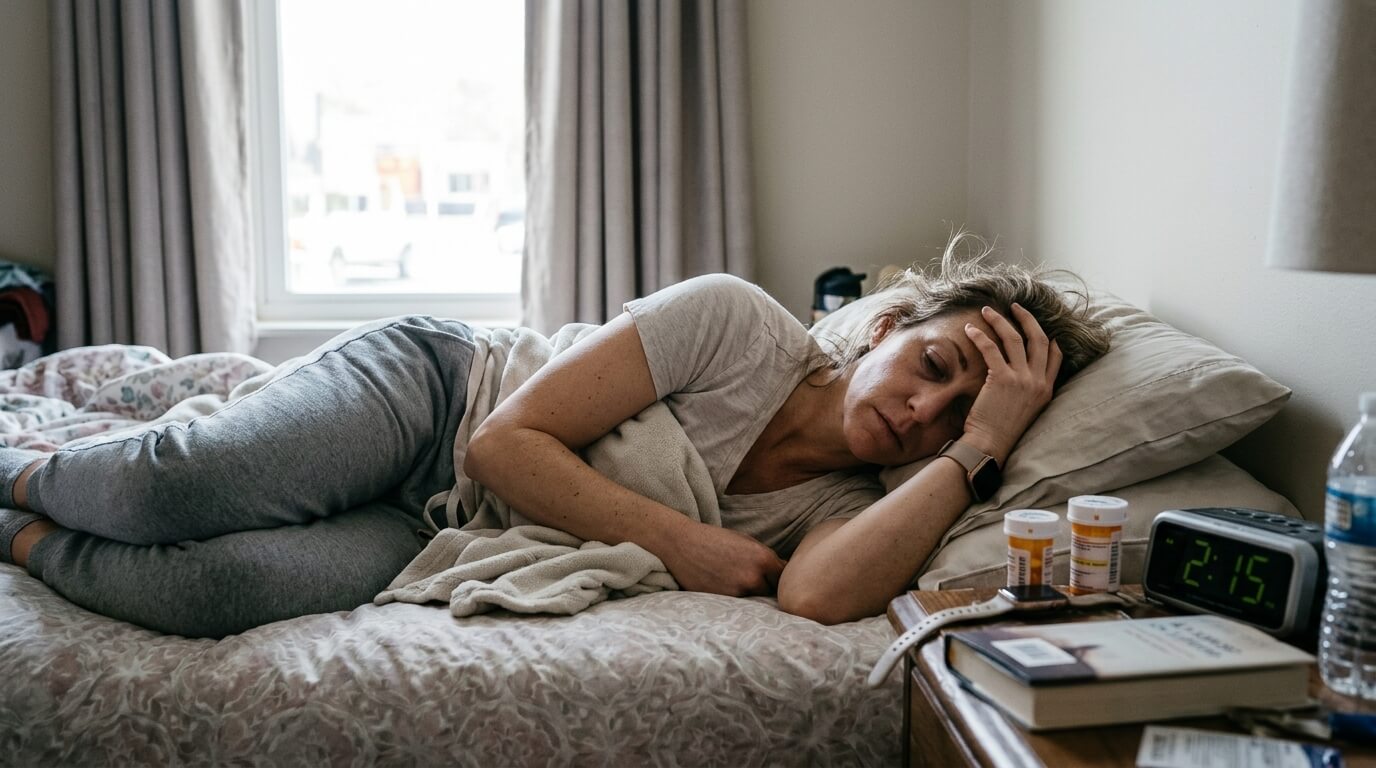
Finishing a night shift can leave you feeling like you have crossed a time zone without going anywhere. You drive home as the sun comes up, try to sleep while the rest of the neighborhood is awake, and then wake up a few hours later feeling like you barely rested.
This pattern can create night shift sleep debt, especially when short sleep happens night after night.
But can you catch up later?
The short answer is sometimes, but not completely or instantly. A person who loses sleep for one night may feel much better after getting extra sleep. That is very different from someone who has been sleeping too little for weeks or months. In that case, a couple of days off may not erase the effects of ongoing sleep loss.
There is another issue for night-shift workers: your body clock still expects you to be awake during the day and asleep at night. So even when you have enough time to sleep, daytime sleep may be shorter, lighter, or easier to interrupt.
Understanding the difference between sleep debt, recovery sleep, and circadian disruption can help you figure out what your body needs and when tiredness has become a safety concern.
What Does Sleep Debt Mean?
Sleep debt is the amount of sleep you miss compared with the amount your body needs.
For example, imagine you normally need about eight hours of sleep but get only six hours after a night shift. You have missed about two hours.
If that happens once, you may recover fairly quickly. But if you lose two hours every night for five nights, the missed sleep can add up.
Night-shift workers can run into this problem for several reasons. A shift may end at 7 a.m., but getting home, eating breakfast, showering, and settling down can take another hour or more. Then daylight, traffic, family members, pets, or neighborhood noise can make daytime sleep harder.
A person may have eight hours available between shifts but only manage five or six hours of actual sleep.
That is an important point: time in bed and time asleep are not always the same thing.
Sleep debt can also affect how you feel and how well you function. You may become more irritable, have trouble concentrating, react more slowly, or find yourself fighting sleep during quiet tasks.
Some people get used to feeling tired and stop noticing just how impaired they have become. That does not necessarily mean their body has adapted safely.
What Happens After One Short Night?
One bad night does not automatically mean you have a serious sleep problem.
Suppose you work a busy overnight shift and sleep only four or five hours afterward. You may feel tired, distracted, or unusually emotional that day. You may also notice that simple tasks take more effort.
A single short night is usually different from ongoing sleep restriction.
If you have the chance to sleep longer the next night, your body can often make up for at least some of the lost sleep. You may naturally sleep longer or more deeply when you finally get the opportunity.
That is where recovery sleep comes in.
However, recovery is not always immediate. You might sleep for eight or nine hours and still feel sluggish the next day. Your alertness may improve before every aspect of your performance returns to normal.
This is one reason it is risky to assume that one long sleep automatically makes you completely refreshed.
For someone who works nights, the problem can be even more complicated because the recovery sleep may happen during daylight hours.
What Is Recovery Sleep?
Recovery sleep is the extra sleep your body gets after a period of insufficient sleep.
It can happen naturally. After several nights of short sleep, you may find that you sleep longer when you finally have the opportunity.
Recovery sleep can help restore alertness and reduce some of the effects of short-term sleep loss. If you had one unusually short night, getting enough sleep over the following nights is much more helpful than trying to push through exhaustion.
But recovery sleep is not a magic reset button.
If someone has been sleeping five or six hours a night for months, sleeping for ten hours on Saturday does not necessarily undo everything that happened during that period.
The longer and more often sleep is restricted, the more important regular, adequate sleep becomes.
Research on sleep restriction has found that different parts of performance and body function may recover at different speeds. In other words, you might feel better before every effect of sleep loss has fully cleared.
That matters for night-shift workers who repeatedly work several nights in a row and then rely on their days off to recover.
Can Days Off Compensate for Night Shift Sleep Debt?
Days off can absolutely provide a valuable opportunity to sleep more.
But there is a difference between getting extra sleep when you need it and using your days off to repeatedly repair a large sleep deficit.
Imagine a nurse works three 12-hour night shifts. During those shifts, she sleeps about five or six hours during the day. On her first day off, she sleeps until noon. She feels better, but that does not mean the previous nights never happened.
She may also face another problem: her body clock may start shifting back toward a daytime schedule.
This can create a cycle:
Work nights → sleep during the day → days off → switch back toward daytime → return to night work.
The body does not always adjust smoothly to those repeated changes.
Sleeping longer on a day off is not bad. The bigger concern is depending on catch-up sleep while continuing to lose sleep during the workweek.
If your schedule regularly leaves you exhausted, the better goal is to protect enough sleep throughout the week instead of treating your days off as a weekly repair job.
Should Night-Shift Workers Stay on a Night Schedule on Days Off?
There is no single schedule that works for every night-shift worker.
Someone who permanently works overnight may find it easier to keep a fairly stable sleep and wake pattern. Someone who works only two or three night shifts a week may want to move closer to a daytime schedule on days off.
The important thing is to avoid making huge changes every few days whenever possible.
For example, sleeping from 9 a.m. to 4 p.m. after a night shift and then suddenly trying to sleep from 10 p.m. to 6 a.m. the next night asks your body clock to make a major adjustment.
Night-shift recovery is partly about getting enough sleep and partly about managing when that sleep happens.
Your work schedule, family life, and number of consecutive night shifts all matter.
Why Daytime Sleep Can Be So Difficult
A night worker may wonder, “If I have seven or eight hours to sleep, why can’t I stay asleep?”
Your surroundings are part of the answer, but your biology matters too.
During the day, your internal clock is sending signals that support alertness. Sunlight also tells your brain that it is daytime. Your body temperature and other biological processes are working against the kind of deep nighttime rest you might get when your schedule matches your natural rhythm.
Then there are ordinary distractions.
The garbage truck comes by. Your phone rings. A family member needs something. The dog starts barking. Someone is mowing the lawn.
Even small interruptions can make daytime sleep harder to protect.
That is why night workers should treat daytime sleep as real sleep, not as leftover time.
If you need practical ideas for making daytime sleep easier, see [How to Sleep During the Day].
Naps: Helpful, but Not a Replacement for Sleep
A well-timed nap can be useful for night-shift workers.
A short nap before work may improve alertness during the shift. A nap can also be helpful when you know you will have a long overnight period ahead.
For example, someone starting work at 7 p.m. might sleep normally after the previous shift and then take a short nap in the late afternoon before getting ready for work.
Naps can supplement your main sleep period, but they should not become your only source of sleep.
A short nap may temporarily improve alertness, but nighttime sleep provides a broader range of benefits.
Timing also matters. A nap taken too close to your main sleep period may make it harder to fall asleep later.
For more practical guidance, read [Napping Strategies].
The goal is not to nap as much as possible. It is to use naps thoughtfully when your schedule makes full sleep difficult.
Consistency Matters More Than Weekend Catch-Up
It is tempting to think about sleep like money.
“If I lose six hours during the week, I’ll pay it back on my days off.”
The comparison is useful, but it has limits.
Sleep is not a simple bank account where every lost hour can be repaid perfectly.
Regularly getting enough sleep is a better approach than repeatedly cutting sleep short and trying to fix it later.
For night workers, consistency does not necessarily mean keeping exactly the same schedule every day. That may be impossible with rotating shifts, children, school, or other responsibilities.
Instead, focus on protecting a reliable sleep opportunity whenever your schedule allows.
A dark bedroom, a cool temperature, reduced noise, and fewer interruptions can make a major difference.
Caffeine also deserves attention. It may help you stay awake at work, but using it too late in the shift can make it harder to sleep after you get home.
What About 12-Hour Night Shifts?
A 12-hour night shift creates a particularly difficult sleep situation.
If you work from 7 p.m. to 7 a.m., your workday is already long. Add the commute, eating, showering, and getting ready for bed, and there may be surprisingly little time left for sleep.
This is especially important when several 12-hour shifts happen back to back.
Long shifts can squeeze sleep from both sides.
You may stay awake longer before work because of daily responsibilities, then lose more time after work because of the commute and other tasks.
If you work this type of schedule, protecting your post-shift sleep period becomes especially important.
When Sleep Loss Becomes a Safety Issue
Feeling tired is unpleasant. Severe sleepiness can be dangerous.
This is particularly important for people who drive after working overnight.
After a long shift, you may feel that you are “almost home,” but that does not mean you are fully alert. Heavy eyelids, repeated yawning, drifting across lanes, missing turns, or struggling to remember the last few miles are warning signs.
Do not treat extreme sleepiness behind the wheel as something you simply need to push through.
If you regularly arrive at the end of a night shift feeling too tired to drive safely, your situation deserves attention.
Our guide on [Driving Home Safely] explains practical ways to reduce the risk when fatigue hits after an overnight shift.
The page Driving Home Safely can also connect this problem with the larger issue of accumulated sleep loss, because repeated short sleep can make fatigue harder to recognize and manage.
When Should You Speak With a Clinician?
Not every tired night means you have a sleep disorder.
But persistent problems deserve attention.
Consider talking with a healthcare professional if you regularly have enough time to sleep but still cannot sleep well, or if you remain extremely sleepy despite getting what should be enough sleep.
You should also bring up symptoms such as loud snoring, gasping during sleep, repeated awakenings, severe difficulty falling asleep, or falling asleep unintentionally during the day.
Night workers can develop shift work sleep disorder, a condition involving excessive sleepiness and/or insomnia related to work schedules that conflict with the body’s normal sleep-wake rhythm.
Other sleep problems, including sleep apnea and insomnia, can also make night work much harder.
If your sleep problems continue even after you improve your schedule and protect enough time for sleep, it is worth getting checked rather than assuming you simply need to “try harder” to sleep.
For more information, see [Shift Work Insomnia Symptoms].
A Simple Recovery Plan After a Night Shift
There is no perfect routine for every worker, but a few basic steps can make recovery easier.
After your shift, give yourself enough time to get home safely and wind down. Keep your bedroom dark, quiet, and comfortable. Try to protect your sleep from unnecessary interruptions.
If you are extremely sleepy before driving, do not assume caffeine will make you safe. Find a safer way home when possible.
Once home, avoid turning the morning into a long list of chores if those tasks can wait.
Your sleep period is important.
If you have several night shifts coming up, a planned nap before the next shift may help increase your total sleep time. If you are moving back toward a daytime schedule on your days off, make the change gradually when possible rather than making an extreme shift overnight.
Most importantly, look at your entire week rather than one night’s sleep.
If you repeatedly get five or six hours and then depend on one long sleep to recover, the underlying schedule may need attention.
The Bottom Line on Night Shift Sleep Debt
Yes, you can recover from some sleep loss. But catching up on sleep does not make repeated sleep deprivation harmless.
One short night is very different from months of insufficient sleep. A few extra hours of sleep after an occasional bad night can help you feel and function better. But if night work repeatedly leaves you short on sleep, days off may not completely undo the problem.
Night-shift workers also have to deal with something a typical daytime worker may not: circadian misalignment. You are trying to sleep when your body is naturally preparing to be awake.
That is why the best strategy is not to chase sleep debt every weekend. It is to protect adequate sleep as consistently as your schedule allows, use naps carefully, manage light and caffeine, and take severe fatigue seriously.
If you are regularly struggling to stay awake, cannot sleep during the day despite having enough time, or feel unsafe driving home, do not simply accept it as part of working nights. Talk with a healthcare professional and look for a schedule or sleep problem that can be addressed.
Frequently Asked Questions
Can you catch up on sleep after working night shifts?
Yes, additional sleep can help recover from short-term sleep loss. However, a few extra hours on days off should not be viewed as a complete cure for long-term sleep deprivation. If your schedule regularly leaves you short on sleep, the bigger goal is to increase your regular sleep opportunity.
How many hours should a night-shift worker sleep?
Most adults need about 7 to 9 hours of sleep per 24 hours, although individual needs vary. Night workers should focus on getting enough total sleep, even when that sleep occurs during the day.
Is six hours of sleep enough after a night shift?
For most adults, six hours is below the usual recommended amount. One short sleep period may happen occasionally, but regularly getting only six hours can lead to accumulating sleep loss.
Should I sleep all day after a night shift?
Not necessarily. The goal is to get enough sleep, not simply to stay in bed for as many daytime hours as possible. Your ideal schedule depends on when your next shift begins, how many nights you work, and whether you are trying to return to a daytime schedule.
Does sleeping longer on my days off fix sleep debt?
It can help, but it does not guarantee that all effects of repeated sleep loss are gone. Extra sleep is useful, but relying on days off to repair severe sleep restriction week after week is not the best long-term strategy.
Should I stay on a night schedule during my days off?
It depends on your work pattern. Permanent night workers may benefit from keeping a relatively stable schedule. Workers who rotate between days and nights may need a different approach. Large, repeated changes in sleep timing can make adjustment harder.
How long does it take to recover from several night shifts?
There is no fixed recovery time that applies to everyone. Recovery depends on how much sleep was lost, how many night shifts you worked, your schedule, and how well you sleep afterward. Feeling better after one long sleep does not necessarily mean every effect of sleep loss has disappeared.
What is the best way to recover from night shift sleep debt?
The most useful approach is to protect adequate sleep consistently rather than relying entirely on catch-up sleep. A dark and quiet bedroom, sensible caffeine timing, planned naps, a workable shift schedule, and attention to severe fatigue can all help.

Daniel Carter is the founder of NightShiftWell. He spent over a decade working night and rotating shifts in logistics and warehouse operations before starting this site to share what actually works — and what doesn’t — for staying healthy on an inverted schedule.