
Last updated: November 10, 2026
Medically reviewed by: Dr. Emily Carter, MD , Board-Certified Family Medicine Physician
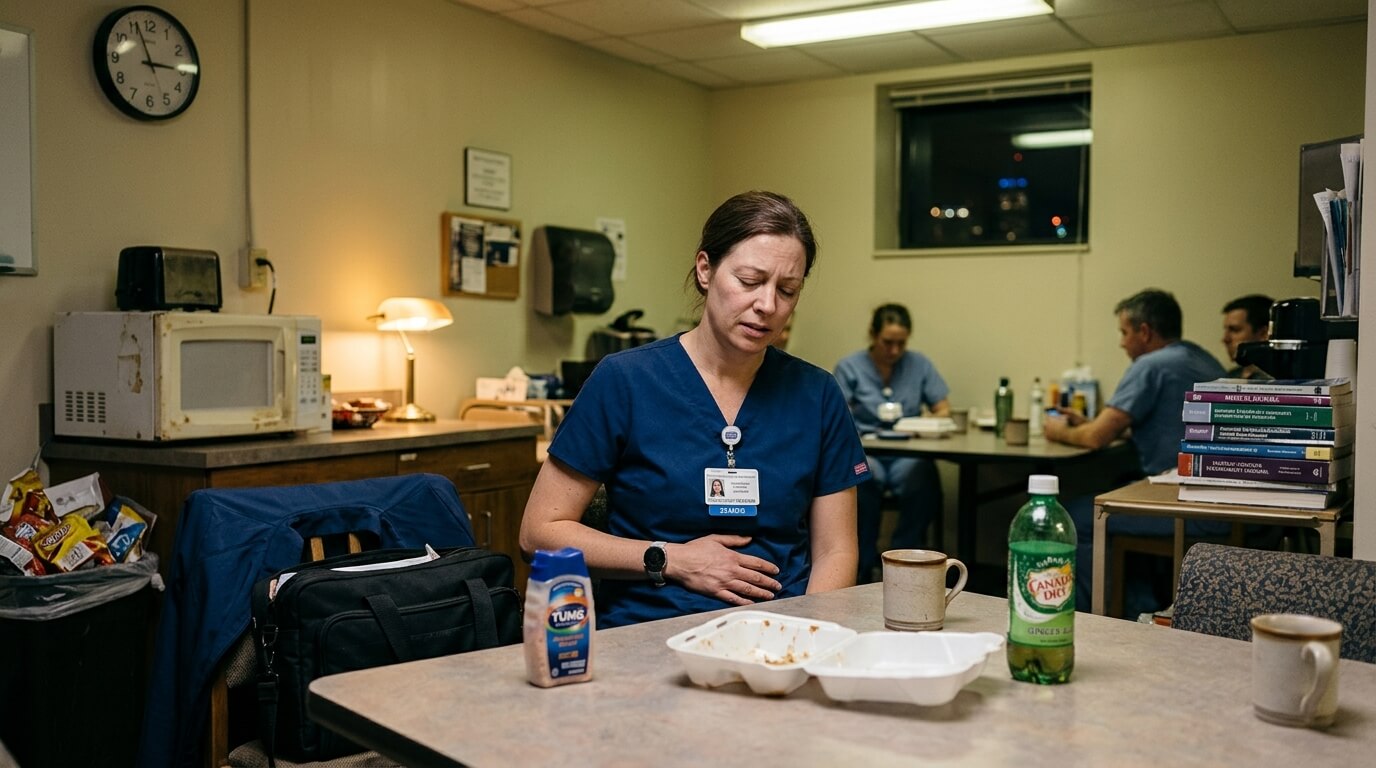
You’re only halfway through your night shift, and your stomach is already bothering you again. You ate before leaving for work, had coffee around midnight, and grabbed something from the break room when you got hungry. Now your belly feels tight, and you’re counting the hours until you can go home.
Maybe you’ve noticed this happening more often since you started working nights. Some shifts leave you feeling bloated. On other nights, you get heartburn, stomach cramps, or trouble using the bathroom.
Night shift digestive problems can happen for several reasons. Your eating hours have changed, you may not be sleeping enough, and you’re probably eating at times when you used to be in bed. What makes it frustrating is that you might eat the same food on your day off and feel perfectly fine.
So, what’s going on with your stomach? And what can you do about it without making your already busy schedule harder?
Why Does Your Stomach Feel Different During a Night Shift?
Think about the last time you worked a full night shift. Did you eat dinner before leaving home? Did you get a proper meal break, or did you end up eating whatever was available?
Maybe you didn’t eat much at all until you got home.
Your stomach has to deal with those changes, even if you’ve been working nights for years.
Your digestive system follows a daily rhythm. Your stomach keeps working while you sleep, though it handles food differently at certain hours.
How Your Body Clock Affects Digestion
Your body follows a daily routine. It helps you know when it’s time to eat, when you’re getting tired, and when you need sleep.
Your stomach and intestines follow daily patterns, too. The muscles that move food through your digestive tract don’t work at exactly the same speed all day.
When you work overnight, you’re awake and eating during hours when your body would normally expect sleep.
For some people, that change seems to go along with more bloating, stomach discomfort, or irregular bowel movements.
Why Working Against Your Sleep Schedule May Upset Your Stomach
Let’s say you finish work at 7 a.m. You get home, eat breakfast, and finally fall asleep around 9.
At noon, someone rings the doorbell. An hour later, the neighbors start making noise. You wake up feeling tired, and there’s another shift waiting for you that evening.
Poor sleep can make pain and stress harder to deal with. If you already have a sensitive stomach, you may notice more discomfort after several nights of broken sleep.
But not every stomach problem comes from working nights. Food intolerance, medication, infection, and other medical conditions can cause similar symptoms.
Why Meal Timing Changes Digestion During Night Shifts
You may have eaten lunch at noon for years without a problem. Then you switch to night work and start eating your main meal at 2 a.m.
Suddenly, you feel unusually full after eating.
That doesn’t mean there’s something wrong with the food. You might eat the same dinner on two different days and feel fine one time but uncomfortable the next. Your meal size, eating hours, and sleep could help explain why.
What Happens When You Eat While Your Body Expects Sleep?
Your stomach keeps working while you’re asleep, but things move a little differently at night. Digestion may slow down, and your body doesn’t process blood sugar quite the same way it does during the day.
So, if you sit down to a big dinner in the middle of your shift, you might feel stuffed afterward. It doesn’t happen to everyone, though. Researchers are still trying to understand which meal times work best for night shift workers.
Does Eating at Midnight Affect Everyone the Same Way?
No. Some people can eat a full dinner at midnight and feel fine.
Others may get bloated after a sandwich or feel sick after eating greasy food.
You may feel fine after eating something on your day off, but the same food might upset your stomach when you’re tired from work.
Notice how your stomach feels after meals. What works for someone else may not work for you.
Why Rotating Shifts Can Make Meal Planning Harder
If your schedule changes from days to nights every week, your eating hours may change with it.
One week, you’re having breakfast at 7 a.m. The next, you’re eating your first meal at 4 p.m.
Your bathroom habits and hunger may change, too.
Can Large Overnight Meals Cause Stomach Problems?
You’re hungry, so you finish a large meal in ten minutes.
Half an hour later, your stomach feels heavy. You wish you’d eaten a little less.
Sometimes, you don’t notice how much you’ve eaten until your break is over. An hour later, your stomach feels tight, and you wish you’d stopped eating sooner. This is more likely after a large meal, especially when you’re eating in a hurry.
Why Heavy Meals May Leave You Feeling Too Full
After a long night at work, a big meal can be tempting. But a plate full of fried food may leave you feeling heavy well into your shift. Food that’s high in fat usually stays in your stomach longer, and eating too much at once can add to that fullness.
Eating quickly may add to the problem because you can swallow extra air.
Foods That May Be Harder to Tolerate Overnight
Fried chicken, pizza, spicy takeout, and rich sauces may bother some people’s stomachs.
But that doesn’t mean these foods cause problems for everyone.
If you notice heartburn after pizza or bloating after a certain snack, write it down. You may begin to see a pattern.
Is a Smaller Meal Better During a Night Shift?
It might be, especially if large meals leave you uncomfortable.
You could eat a regular dinner before work and bring a smaller meal for your overnight break.
A sandwich, oatmeal, rice with chicken, or a small portion of leftovers may be easier to manage.
You don’t need to stay hungry through the night. Try finding a portion size that leaves you satisfied without feeling stuffed.
Acid Reflux and Heartburn During Night Shifts
You get home after a long shift, eat something, and head straight to bed.
You finish eating and feel fine at first. After eating, you notice your chest feels hot and uncomfortable. Sometimes, a sour taste comes up into your mouth, too. That’s often a sign of acid reflux, when stomach acid flows back into your food pipe.
Why You May Feel Burning in Your Chest After Eating
Heartburn can show up after a heavy meal. Greasy foods and coffee may make it worse, especially if you’re already prone to acid reflux. Some people also burp a lot or notice a sour taste coming up into their throat. Not everyone reacts to the same foods, so it helps to notice what bothers your stomach.
Eating Before Daytime Sleep and Reflux
If you lie down soon after eating, stomach contents may move upward more easily.
That’s why someone who eats a heavy breakfast and goes straight to bed may notice heartburn.
For people with reflux symptoms when lying down, the National Institute of Diabetes and Digestive and Kidney Diseases (NIDDK) suggests leaving at least three hours between eating and bedtime.
That can be hard when you’ve just finished a twelve-hour shift and feel hungry.
If reflux happens often, ask your doctor how to plan meals around your sleep schedule.
How to Reduce Reflux While Working Nights
Try eating smaller portions and taking your time during meals.
If coffee or spicy food seems to cause heartburn, see whether having less makes a difference.
Avoid lying down immediately after a large meal.
Don’t assume every burning feeling in your chest is heartburn. Severe chest pain, especially with sweating, shortness of breath, or pain spreading to your arm or jaw, needs emergency medical care.
Why Do You Feel Bloated or Gassy During a Night Shift?
Bloating can be uncomfortable when you’re stuck at work for another five hours.
Sometimes, the problem is linked to what you’ve eaten. Other times, it may be how quickly you ate or how much air you swallowed.
Eating Quickly and Swallowing Air
If you’ve only got fifteen minutes for lunch, you might rush through your food.
Eating fast can make you swallow more air.
Drinking soda quickly, chewing gum, or talking while eating may do the same thing.
That air can leave you feeling bloated or make you burp more often.
Try slowing down during meals when you can.
Foods That May Trigger Bloating
Beans, cabbage, onions, milk, and certain sweeteners can cause gas in some people.
But you don’t need to stop eating all the food that might cause gas.
If symptoms keep coming back, a food diary can help you work out which foods may be bothering you.
What to Try When Bloating Starts at Work
If your stomach feels uncomfortable, take a short walk during your break if your job allows it.
Drink water normally, and avoid forcing yourself to finish a large meal when you’re already full.
You may also feel better after skipping carbonated drinks for a while.
If bloating becomes painful, happens often, or comes with other symptoms, talk to a healthcare professional.
Constipation and Irregular Bowel Movements on Night Shifts
Before you started working nights, you might have used the bathroom at roughly the same time every morning.
Now your schedule is all over the place.
Some days, you don’t feel the need to go. Other days, you’re uncomfortable during work but can’t leave your station.
Changes in your daily routine may be part of the problem.
Why Your Bathroom Routine May Change
Your intestines have their own daily patterns.
When your sleep and eating hours change, your bowel habits may change as well.
If you’re sitting through most of your shift, barely drinking water, and eating very little fiber, going to the bathroom may become harder than usual.
How Fiber, Water, and Movement Can Help
Try adding more fruits, vegetables, and whole grains to your meals.
Oatmeal, fruit, vegetables, beans, and whole-grain bread are good sources.
If you don’t eat much fiber now, increase it slowly. Adding too much at once may cause gas and bloating.
Drink enough fluids and try to move around during your breaks.
Why You Shouldn’t Keep Ignoring the Urge to Go
When work gets busy, you may put off using the restroom.
Doing that repeatedly can make constipation harder to manage.
Try to use the bathroom when you need to, as long as it’s safe and your work duties allow it.
If constipation keeps returning or you notice blood in your stool, see a doctor.
Can Coffee and Energy Drinks Upset Your Stomach?
For many people, coffee is what gets them through a night shift.
You drink one cup before leaving home, another around midnight, and maybe an energy drink when you start feeling sleepy.
But sometimes, your stomach doesn’t agree with all that caffeine.
How Caffeine May Affect Acid Reflux and Bowel Habits
Coffee can make some people feel the need to use the bathroom soon after drinking it.
Coffee can also bring on heartburn if your stomach is sensitive to it. That energy drink might be the reason your stomach feels uncomfortable. Some have more caffeine than you may realize. Try drinking less if you notice heartburn or stomach pain afterward.
What Happens When You Drink Coffee on an Empty Stomach?
Drinking coffee before eating anything can leave some people feeling sick to their stomach.
Others can drink it first thing in the morning and feel perfectly fine.
There’s no need to avoid coffee on an empty stomach unless it seems to bother you or your doctor advises it.
How to Manage Caffeine During Overnight Work
Try having coffee earlier in your shift rather than right before going home.
Caffeine can make it harder to sleep, even when you feel exhausted.
Your stomach may bother you more after a night of broken or missed sleep.
Does Dehydration Make Night Shift Digestive Problems Worse?
Some nights are so busy that you hardly get a chance to drink water. By the time you take a break, you may realize you’ve gone hours without a sip. You might grab coffee whenever you feel sleepy but barely touch your water bottle all night.
And if you’re on your feet for hours or working in a hot place, you’re losing water as you sweat. Not drinking enough can leave you constipated.
How Drinking Too Little Water Can Affect Constipation
Your body pulls water out of waste as it passes through your gut. Without enough fluid, your poop may become dry and hard, making bathroom trips uncomfortable.
Getting enough fluids helps make stool easier to pass.
Simple Ways to Stay Hydrated During Long Shifts
Fill your water bottle before leaving home. Take it to your work area if the rules allow it. Drink some water when you eat, and use your breaks to have a little more. Don’t wait until the end of your shift to catch up.
If you’re sweating heavily, you may need more fluids than someone sitting at a desk.
You don’t need to force yourself to drink a fixed amount every hour. Your fluid needs depend on your body, activity, and health.
How to Plan Meals During a Night Shift Without Upsetting Your Stomach
Meal planning doesn’t have to mean preparing five different dishes every week.
Sometimes, it’s as simple as packing dinner before you leave home so you aren’t stuck buying chips and soda from the vending machine.
What to Eat Before Starting Your Shift
If you start work at 7 p.m., try having dinner before leaving home.
You could eat chicken with rice, a baked potato with beans, or a sandwich with fruit.
Choose a meal that leaves you comfortably full.
What to Eat During the Middle of the Night
If you get hungry at work, have something ready.
Yogurt, oatmeal, crackers with cheese, a banana, or leftovers can be easy options.
If heavy meals make your stomach uncomfortable, try eating a smaller portion during your overnight break.
Should You Eat After Your Shift Before Going to Bed?
Some people feel hungry when they get home. Others just want to sleep.
If you’re hungry, a light meal or snack may be reasonable.
However, if you get reflux when lying down, eating right before bed may make symptoms worse.
Talk to your doctor if you’re unsure how to handle meals before daytime sleep.
A Sample Meal Schedule for a 7 p.m. to 7 a.m. Shift
| Time | What you might eat |
| 5:30–6 p.m. | Dinner before leaving home |
| 9–10 p.m. | A small snack if hungry |
| 12–1 a.m. | A moderate meal during your break |
| 3–4 a.m. | Fruit, yogurt, or another light snack if needed |
| After work | A light breakfast if hungry and suitable for your reflux needs |
Your own schedule may look different depending on your breaks and sleeping hours.
How to Test Different Meal Times to See What Works for You
Maybe you’ve heard that nobody should eat after midnight. Or perhaps a coworker told you to eat every three hours.
Neither rule is right for everyone.
Try eating at times that suit your work hours and don’t upset your stomach.
Start With One Small Change
If you often eat a big meal around 2 a.m. and feel bloated afterward, try having a smaller portion next time.
Try eating a smaller portion during your next few shifts.
You could also move your main meal earlier and save a snack for later.
Changing one thing at a time makes it easier to notice what may be helping.
Give Your Stomach Time to Adjust
One bad night doesn’t tell you much.
Maybe you slept poorly, had a stressful shift, or ate faster than usual.
Keep track of how you feel over several shifts before deciding that a certain food or meal time is the problem.
When Not to Experiment With Meal Timing on Your Own
If you have diabetes, take medicine with food, are pregnant, or have a history of an eating disorder, speak with a healthcare professional before making major changes to your eating schedule.
Don’t skip meals or cut out large groups of foods just because your stomach has been bothering you.
How to Keep a Night Shift Food and Symptom Diary
A food diary can help when you can’t work out why your stomach keeps acting up.
You don’t need a special app or a complicated chart.
After each meal, jot down what you had and whether your stomach felt fine or started bothering you.
What to Record About Your Meals and Symptoms
If your belly feels swollen, you get heartburn, or you have trouble using the bathroom, write that down as well.
You may also want to record how much you slept and how much caffeine you drank.
| What to record | Example |
| Meal | Chicken sandwich and soda |
| Time | 1:30 a.m. |
| Symptoms | Bloating an hour later |
| Sleep | Five hours |
| Other details | Busy shift, two cups of coffee |
How to Look for Patterns Without Blaming Every Food
After a week or two, read through your notes.
You might notice that large meals leave you uncomfortable or that reflux happens when you eat before sleeping.
But don’t assume every symptom comes from food.
Stress, poor sleep, medicines, and medical conditions can also affect digestion.
Bring your notes to a doctor or registered dietitian if the problem continues.
When Should You See a Doctor for Night Shift Digestive Problems?
An occasional upset stomach may go away on its own.
But if you’re dealing with pain, reflux, or bowel problems every week, don’t keep putting it down to your work schedule.
Symptoms That Need a Medical Appointment
See a doctor if you have frequent heartburn, ongoing constipation or diarrhea, or stomach pain that keeps returning.
If you feel full after just a few bites, find it hard to swallow, or start losing weight without knowing why, make an appointment with your doctor.
Let your doctor know about your night shifts, what you usually eat, how much sleep you get, and any medicine you’re taking.
Digestive Warning Signs That Need Urgent Care
Vomiting blood, seeing blood in your stool, having black stools, or throwing up so much that you become dehydrated are also serious warning signs.
A very swollen abdomen with severe pain also needs prompt assessment.
If you have severe chest pain, especially with shortness of breath, sweating, or pain spreading to your arm or jaw, call 911 in the United States.
Don’t assume it’s just acid reflux.
Final Thoughts on Night Shift Digestive Problems
Ever notice how your stomach feels fine on your days off but starts acting up when you’re back on nights? Think about when you eat, how well you sleep, and how much coffee you have during work. Any of these could be upsetting your stomach. Eat a little less at each meal, drink water throughout your shift, and notice when your stomach starts bothering you.
If the same problems keep showing up, get them checked by a doctor. A busy night shift is hard enough without dealing with stomach pain, too.
Frequently Asked Questions About Night Shift Digestive Problems
Why does my stomach hurt when I work night shifts?
Changes in meal times, poor sleep, stress, or certain foods may be involved. If your stomach hurts during most shifts, talk to a doctor rather than assuming your work schedule is the only cause.
What should I eat during a night shift to avoid stomach problems?
Pack something simple, like a chicken sandwich, oatmeal, rice, or yogurt. Choose foods that usually agree with your stomach. Eat slowly when you can, and avoid anything that has upset your stomach before.
Can night shifts cause acid reflux?
They can make reflux worse for some people. You get home from your night shift, eat a big meal, and go straight to bed. Later, you wake up with a burning feeling in your chest. For some people, coffee, fried chicken, or spicy food can bring on the same discomfort.
Why am I constipated after working night shifts?
You may have been using the bathroom regularly before switching to nights. Maybe you’re not drinking enough water, eating much fiber, or getting time to use the restroom at work. If the problem keeps coming back, it’s best to talk to your doctor.
Should I eat before sleeping after a night shift?
If you’re hungry after work, you don’t have to go to bed on an empty stomach. A small meal may be enough. But if you often get heartburn, eating too close to bedtime may make it worse.

Daniel Carter is the founder of NightShiftWell. He spent over a decade working night and rotating shifts in logistics and warehouse operations before starting this site to share what actually works — and what doesn’t — for staying healthy on an inverted schedule.