
Last updated: November 17, 2026
Medically reviewed by: Dr. Emily Carter, MD , Board-Certified Family Medicine Physician
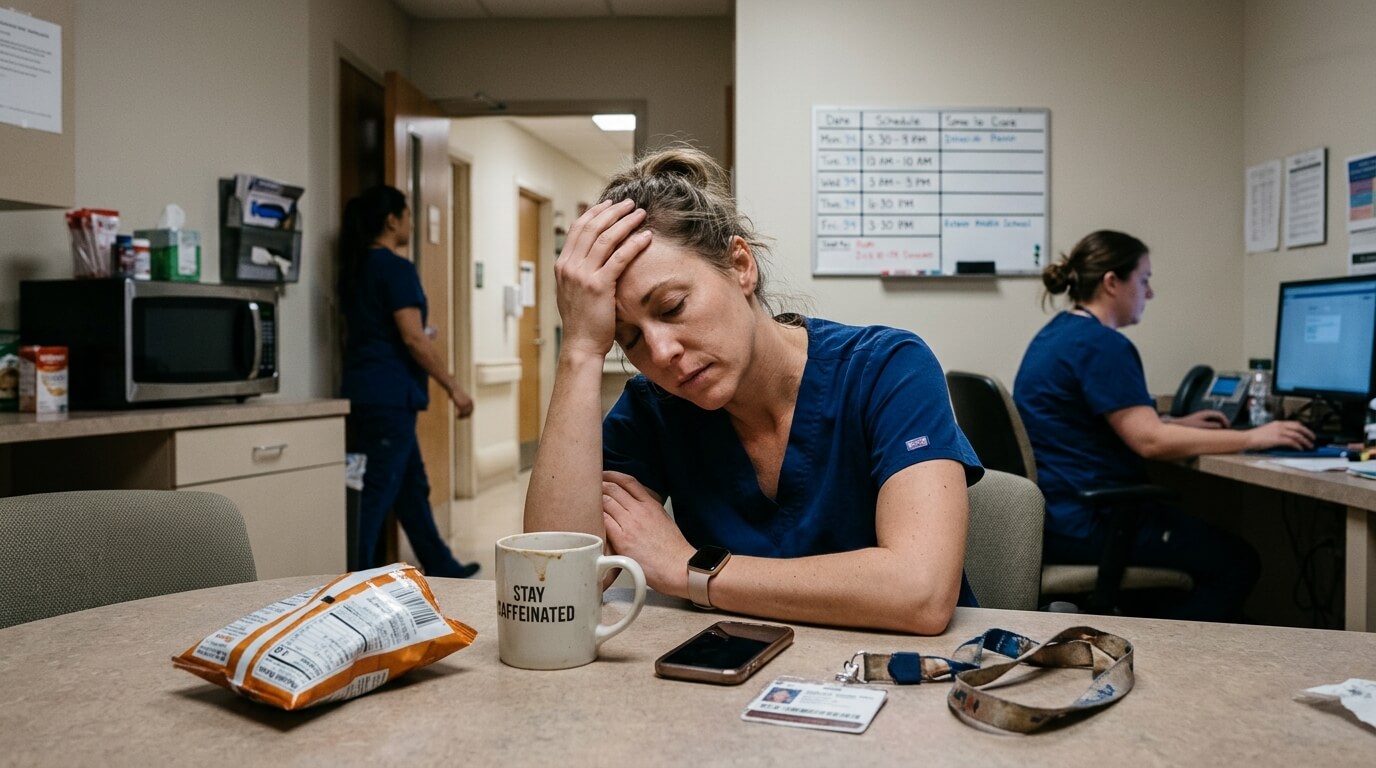
You clock in for your overnight shift feeling decent. You ate dinner, grabbed a cup of coffee on the way in, and knocked out your first few tasks without a hitch. Then 3:00 a.m. rolls around, and it feels like someone pulled the plug on your battery.
Your eyelids feel heavy. You keep glancing at the clock, watching the minutes crawl. A routine task that usually takes five minutes suddenly stretches into twenty, and you catch yourself reading the exact same line on your screen three times because the words just aren’t sticking.
Anyone who has worked overnights knows that 3:00 a.m. wall.
Night shift fatigue happens to almost everyone who works while the rest of the world is asleep, even if you love your job and try your best to sleep during the day. Still, dragging yourself through a shift isn’t just uncomfortable—it messes with your memory, slows down your reflexes, and can put your safety on the line. Knowing why that crash hits makes it much easier to protect your energy and recognize when it is time to ask for help.
What Is Night Shift Fatigue?
Night shift fatigue is that heavy, worn-down feeling—both in your muscles and in your head—that creeps in during an overnight shift or lingers long after you get home. You feel drained, your thinking turns sluggish, and basic tasks require way more effort than they should.
A few different things stack up to cause it. For starters, your brain is wired to shut down during the night, not solve problems or lift boxes. On top of that, daytime sleep rarely matches the quality of nighttime sleep. Add long hours, high-stress duties, or quick turnarounds between shifts, and exhaustion sets in fast.
Night shift fatigue isn’t a standalone medical diagnosis. Rather, it is a red flag that your body is running low on recovery—either from missed sleep, an out-of-sync internal clock, or an underlying health issue.
Fatigue, Sleepiness, and Sleep Deprivation: What’s the Difference?
People tend to lump these three words together, but they describe very different states. Knowing which one you are dealing with helps you fix the right problem.
Fatigue
Fatigue is a deep sense of physical or mental exhaustion. Your legs feel heavy, your brain feels foggy, and you have zero motivation—yet if you lay down right now, you might not actually fall asleep.
Sleepiness
Sleepiness is the physical urge to close your eyes and sleep. You yawn constantly, your eyelids droop, and your head starts to nod. When sleepiness hits on the job or behind the wheel, it becomes an immediate safety hazard.
Sleep Deprivation
Sleep deprivation is simply a math problem: you aren’t getting enough hours of sleep. If your body needs eight hours to feel sharp and you only manage five during the day, you are running a three-hour deficit.
Why does the distinction matter? Because someone who is sleep-deprived needs better daytime sleep habits and a darker bedroom, whereas someone who feels crushing fatigue despite sleeping eight hours a day should talk to a doctor.
Why Does Working Nights Make You So Tired?
Human beings simply aren’t built to be nocturnal. Your body runs on an internal 24-hour timer—your circadian rhythm—that dictates when you feel alert and when you feel ready for bed.
According to the National Institute for Occupational Safety and Health (NIOSH), your body’s natural drive to stay awake hits rock bottom between 2:00 a.m. and 6:00 a.m. That biological dip is the exact reason you feel fine at 11:00 p.m. and completely wiped out by 4:00 a.m.
Your Body Clock Is Working Against Your Shift
Say your shift runs from 10:00 p.m. to 6:00 a.m. During the first half of your night, you coast on momentum. Once midnight passes, your brain starts pumping out sleep hormones and dropping your core body temperature to prepare for rest. You have to fight your own biology just to stay upright. While workers on permanent night shifts sometimes adapt a little better, rotating between days and nights every few days keeps your internal clock permanently confused.
Daytime Sleep Is Often Interrupted
Clocking out at 7:00 a.m. doesn’t guarantee eight hours of solid rest. You get home, eat breakfast, and finally crawl into bed at 8:00 a.m. Two hours later, a delivery driver rings the doorbell, a neighbor fires up a leaf blower, or bright sunlight leaks past your blinds. By noon, you are wide awake. Spending eight hours lying in bed only counts if you are actually asleep.
Lost Sleep Can Build Up Over Several Days
Missing a couple of hours of sleep after one shift is manageable, but those missing hours pile up fast. If you need eight hours of rest and only get five, you are three hours behind after day one. By the end of a four-shift stretch, you are carrying 12 hours of sleep debt. Your reaction times slow down, your patience wears thin, and one long nap on your day off won’t instantly erase a whole week of bad sleep.
Night Shift Fatigue Warning Signs You Shouldn’t Ignore
Exhaustion rarely hits you out of nowhere. Usually, your brain drops plenty of subtle hints before you ever start nodding off—you forget a step you have done a thousand times, stare blankly at a monitor, or overlook a detail you would normally catch in a heartbeat.
| Warning Sign | Possible Safety Problem | Appropriate Response |
| Heavy eyelids and repeated yawning | You are close to falling asleep unintentionally. | Take an approved break and arrange a safe place to rest. |
| Reading the same instructions repeatedly | Critical steps or numbers can easily be missed. | Pause, double-check your work, and flag fatigue if safety is at risk. |
| Slower reactions | You may react too late to a spill, alert, or moving vehicle. | Step back from safety-sensitive tasks and let your supervisor know. |
| Forgetting recent actions | You might skip a step or accidentally do the same task twice. | Ask a coworker for a second pair of eyes and take a short break. |
| Head nodding or brief lapses in awareness | You are experiencing dangerous microsleeps. | Stop hazardous work immediately and get safe rest. |
| Irritability or poor judgment | Tired brains take shortcuts and make risky calls. | Step away for a few minutes and lean on your team for backup. |
| Struggling to stay awake while driving | High risk of drifting lanes or causing a serious crash. | Pull over right away. Arrange a ride or sleep before driving. |
Don’t wait until you are falling out of your chair to take these signs seriously. If you work around heavy machinery, care for patients, or drive for a living, a three-second lapse in focus is all it takes for something to go wrong.
What Are Microsleeps, and Why Are They Dangerous?
A microsleep is a brief, involuntary blackout where your brain literally falls asleep for anywhere from a fraction of a second to ten full seconds. Your eyes might even stay open while your brain checks out completely.
Ever stared at your computer screen and suddenly realized you have no memory of the last ten seconds? That is what a microsleep feels like.
Once your sleep pressure climbs high enough, willpower won’t stop microsleeps from happening. Behind the wheel of a car at 60 miles per hour, a four-second microsleep means traveling the length of a football field completely blind. If your head starts nodding, stop what you are doing immediately.
How Night Shift Fatigue Affects Different Jobs
Fatigue shows up differently depending on what you do for a living, though the risks are real across the board.
Warehouse Workers
Spending eight to twelve hours lifting boxes, scanning inventory, or driving forklifts takes steady focus. When exhaustion sets in, depth perception slips and reaction times drag. If you are struggling to keep your eyes open around moving pallets or heavy equipment, step off the floor until you can work safely.
Healthcare Staff
Nurses, doctors, and techs work grueling overnight hours where tiny mistakes carry huge consequences. Tired brains struggle with math and short-term memory—making it easy to misread a dosage chart or forget whether you already logged a vital sign. Lean on double-check protocols with coworkers and take your scheduled breaks.
Drivers
Long-haul truckers, delivery drivers, and overnight commuters face their highest crash risk during those early morning circadian dips. Missing an exit or drifting onto the rumble strips are classic red flags. Blasting cold air, turning up the radio, or chugging coffee will not save a drowsy driver—only pulling over to sleep will.
Office Workers
Sitting at a desk in IT support, customer service, or data entry doesn’t wear out your muscles, so it is easy to underestimate how tired you actually are. Mental fatigue leads to sending sensitive emails to the wrong person, missing critical system alerts, or staring at a simple ticket without understanding what the customer wants.
How Much Sleep Do Night-Shift Workers Need?
Working at night doesn’t magically shrink your body’s need for rest. Most adults still require seven to nine hours of sleep in every 24-hour window to stay healthy and sharp.
The real trick is carving out that time while everyone else is up and moving. Treat your daytime sleep block like an unbreakable appointment. Hang thick blackout curtains to block the morning sun (or wear a comfortable sleep mask), pop in soft foam earplugs, or run a box fan to drown out street traffic. Make sure family members and roommates know your sleep hours are strictly off-limits. (For layout ideas, read our Night Shift Sleep Schedule guide.)
Can Scheduled Breaks Help With Night Shift Fatigue?
Powering through an entire night without stepping away from your station is a fast track to burnout. When your workplace allows scheduled breaks, actually take them. Step outside into the cool air, drink a glass of water, stretch your legs, or grab a light snack.
A 15-minute breather resets your focus and gives your eyes a rest from harsh fluorescent lights or computer screens. Just remember that a break is a temporary reset button, not a substitute for real sleep.
What If You Don’t Get Enough Time Between Shifts?
Sometimes no amount of blackout curtains can fix the problem because the schedule itself is broken. If you work a 12-hour shift, spend an hour commuting each way, and have to be back on the clock ten hours later, there literally aren’t enough hours left in the day to sleep, eat, and shower.
When quick turnarounds become a regular habit, bring it up with your manager or scheduling team. Pushing for predictable rotations and adequate recovery time between shifts isn’t complaining—it is basic workplace safety.
Should You Report Fatigue at Work?
Yes—especially when being tired puts you, your coworkers, or the public in danger. Many workers keep quiet because they don’t want to look weak or incapable of handling the overnight shift.
In reality, anyone can hit a wall after a string of tough nights. Speaking up to a supervisor or following your company’s fatigue-reporting policy lets your team rotate duties, cover a safety-sensitive station, or get you a proper break before an accident happens.
Can Naps Help You Feel Less Tired?
A strategic nap can take the sharpest edge off overnight exhaustion. Taking a 60- to 90-minute nap in the late afternoon or evening before an 11:00 p.m. shift banks extra rest before you even clock in. If your employer allows short power naps during meal breaks, a 20-minute snooze can boost your alertness for the second half of the night.
Watch out for sleep inertia—that heavy, groggy fog you feel right after waking up from a deep nap. Give yourself 15 to 20 minutes to wake up fully before driving or operating machinery. (Read our Napping Strategies guide for more information.)
Does Coffee Help With Night Shift Fatigue?
Coffee is great for getting through a slow patch at midnight because caffeine blocks adenosine, the brain chemical that makes you feel drowsy.
However, caffeine only masks tiredness—it never replaces actual sleep. Worse, drinking coffee or energy drinks too late in your shift will wreck your sleep once you get home. Because caffeine stays active in your system for five hours or more, a 5:00 a.m. cup of coffee can easily keep you staring at the ceiling at 8:00 a.m. Switch to water or decaf during the second half of your shift. (See our Caffeine Timing guide for more details.)
What About Food, Water, Light, and Movement?
Small habits throughout the night keep your energy steadier so you don’t crash quite so hard at 3:00 a.m.:
- Eat Without Overloading Your Stomach: Your digestive system slows down overnight. Eating a heavy, greasy meal at 2:00 a.m. will make you feel sluggish and bloated. Eat a balanced meal before your shift starts, and stick to light, protein-rich snacks like nuts, yogurt, or fruit during the night.
- Drink Water Regularly: Mild dehydration feels almost identical to fatigue. Keep a water bottle right next to you so you remember to sip throughout the night.
- Use Light Carefully: Working in a brightly lit room during the first half of your shift helps suppress sleep hormones and keep you alert. On the flip side, wearing dark sunglasses on your morning drive home stops the sunrise from waking your brain up right before bed.
- Move During Breaks: If you sit at a desk or monitor screens all night, get up every couple of hours to walk down the hall and stretch your back and shoulders to get your blood flowing.
Why Driving Home After a Night Shift Can Be Dangerous
You clock out, walk to your car, and think, “It’s only a 15-minute drive—I know this route with my eyes closed.”
That familiarity is exactly what makes the morning commute so risky. Your brain goes on autopilot right when your circadian rhythm is screaming for sleep. You react slower to brake lights, miss traffic signals, or drift across the center line during a two-second microsleep.
Never trust open windows, loud music, or cold air to keep you awake behind the wheel. If you feel yourself fighting to keep your eyes open in the parking lot, recline your seat for a 20-minute nap before turning the key, or call a friend, family member, or rideshare. If drowsiness hits mid-drive, pull into a well-lit rest stop or gas station immediately.
When Should You See a Doctor About Night Shift Fatigue?
Feeling worn out after a hectic overnight shift is normal. Feeling like a zombie every single day—even on your days off—is not.
Schedule a visit with a doctor if you regularly lie awake for hours after work, nod off without meaning to, or feel exhausted despite spending plenty of time in bed. Mention it right away if you snore loudly or wake up gasping for air, as conditions like sleep apnea, anemia, or thyroid imbalances often hide behind shift-work exhaustion.
Some overnight workers also develop shift work disorder, a clinical sleep condition where your internal body clock simply refuses to adapt to working nights. (Read our Shift Work Disorder guide to learn about its symptoms and diagnosis.)
Frequently Asked Questions About Night Shift Fatigue
Is Night Shift Fatigue Normal?
Feeling tired during overnight hours is very common, especially between 2:00 a.m. and 6:00 a.m. However, severe drowsiness that makes it unsafe to work or drive isn’t something you should just push through.
Why Am I Tired Even After Sleeping During the Day?
Daytime sleep is often lighter and more fragmented than nighttime sleep. Even if you stay in bed for eight hours, morning sunlight, household noise, caffeine, or an out-of-sync body clock can keep you from getting deep, restorative rest.
What Time Is Night Shift Fatigue Usually Worst?
For most people, alertness hits its lowest point between 2:00 a.m. and 6:00 a.m., when your body’s internal clock naturally expects you to be in your deepest stage of sleep.
Can Coffee Fix Night Shift Fatigue?
No. Caffeine temporarily blocks drowsiness signals, which helps you stay alert for a few hours, but it cannot cure sleep deprivation—and drinking it late in your shift will ruin your morning sleep.
Are Naps Helpful for Night Workers?
Yes. A 60- to 90-minute nap before your shift or a 20-minute power nap on a break can sharpen your focus. Just give yourself 15 to 20 minutes after waking to shake off grogginess before doing safety-sensitive tasks.
What Is a Microsleep?
A microsleep is an involuntary, two- to ten-second episode of sleep where your brain briefly shuts down without warning. They are especially dangerous while driving or operating machinery.
Should I Drive Home if I’m Extremely Tired?
No. If your eyelids are drooping or you can’t remember the last mile you drove, pull over somewhere safe to nap or arrange another ride home.
How Many Hours Should I Sleep After a Night Shift?
Most adults need seven to nine hours of total sleep every 24 hours. If you can’t get it all in one morning stretch, add a planned afternoon nap before your next shift.
When Should I See a Doctor?
See a healthcare professional if exhaustion lasts for weeks, doesn’t improve on your days off, causes you to fall asleep unintentionally, or comes with loud snoring or gasping during sleep.
Final Thoughts
Night shift fatigue can turn an ordinary workday into an uphill battle, dulling your focus, slowing your reflexes, and draining your patience at home.
Protecting your daytime sleep hours is the best place to start. Keep your bedroom dark and cool, cut off caffeine early in your shift, take your breaks, and use strategic naps when you need a boost. Most importantly, respect your body’s warning signs—if you are nodding off at your station or behind the wheel, stop and get rest before someone gets hurt. And if you are doing everything right and still waking up exhausted, let a doctor help you figure out what is standing in the way of a good night’s—or day’s—sleep.
Sources
- Centers for Disease Control and Prevention, NIOSH — Training for Nurses on Shift Work and Long Work Hours: https://www.cdc.gov/niosh/work-hour-training-for-nurses/
- National Heart, Lung, and Blood Institute — Sleep Deprivation and Deficiency: https://www.nhlbi.nih.gov/health/sleep-deprivation
- National Heart, Lung, and Blood Institute — Circadian Rhythm Disorders: https://www.nhlbi.nih.gov/health/circadian-rhythm-disorders
- American Academy of Sleep Medicine and Sleep Research Society — Recommended Amount of Sleep for a Healthy Adult: https://pubmed.ncbi.nlm.nih.gov/25979105/

Daniel Carter is the founder of NightShiftWell. He spent over a decade working night and rotating shifts in logistics and warehouse operations before starting this site to share what actually works — and what doesn’t — for staying healthy on an inverted schedule.
2 thoughts on “Night Shift Fatigue: Causes, Warning Signs and What Helps”