
Last updated: November 10, 2026
Medically reviewed by: Dr. Emily Carter, MD , Board-Certified Family Medicine Physician
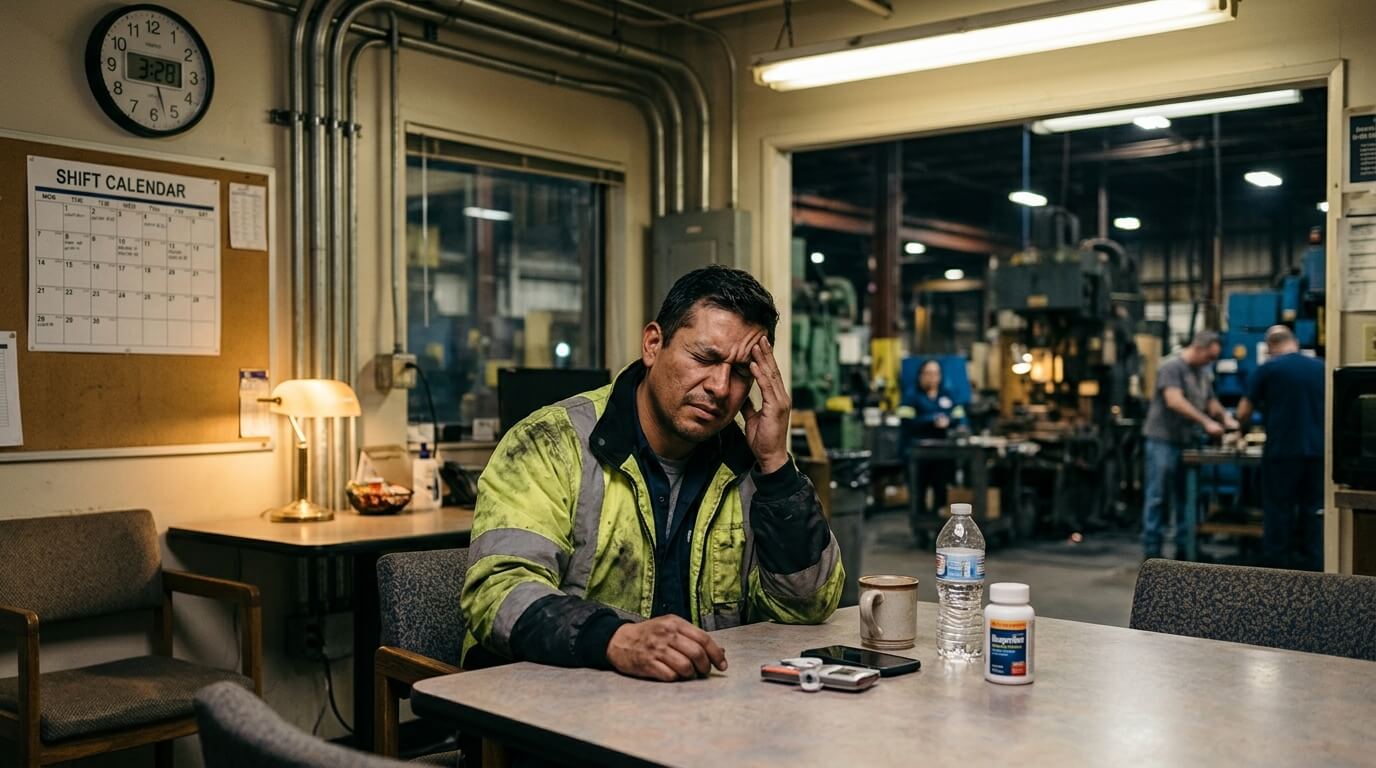
You’ve been on your feet for hours, and it’s nearly 4 in the morning. Now you’ve got a headache, and there’s still plenty of work left before your shift ends. Maybe it’s a dull ache across your forehead, or maybe the pain is sitting right behind your eyes. You drink some water, rub your temples, and check the clock. There are still three hours left before you can go home.
For some people, this happens once in a while. For others, headaches seem to come with almost every night shift.
Night shift headaches may be linked to poor sleep, missed meals, dehydration, caffeine, or stress. Sometimes, several things happen together. You might sleep badly during the day, rush to work without eating, and spend the next eight hours drinking coffee to stay awake.
But not every headache comes from working nights. Migraines, sleep disorders, and other health problems can also cause head pain.
Knowing what may be behind your headaches can help you make changes at work and at home. It also helps to know which symptoms need a doctor’s attention.
Why Do Night Shift Workers Get Headaches?
Working nights changes more than your bedtime. Your meals may happen at odd hours, your sleep gets interrupted, and you might depend on coffee to get through the early morning.
Your body is used to sleeping when it’s dark outside. When you stay awake all night and try to sleep after sunrise, you may find it harder to get the rest you need.
Poor sleep is a common headache trigger, particularly for people who have migraines. Hunger, stress, and changes in caffeine intake can add to the problem.
How Night Shifts Affect Your Body Clock
Say you finish work at 7 a.m. You get home, take a shower, and crawl into bed around 8:30. You’re tired enough to fall asleep right away.
Then, at noon, the neighbor starts mowing the lawn. Your phone rings. Someone in the house is making lunch.
You wake up and can’t get back to sleep.
Now you’ve had less than four hours of rest, and another shift starts that evening.
Your body’s internal clock makes daytime sleep harder for many night workers. The CDC notes that working overnight can disturb normal sleep patterns and leave people short on sleep.
Can Working Overnight Cause Frequent Headaches?
Yes, night work can contribute to frequent headaches, although it may not be the only reason.
Someone who sleeps poorly after every shift may begin getting headaches more often. A person who already has migraines might notice more attacks after moving from day shifts to nights.
Headaches that keep coming back shouldn’t be dismissed as part of the job. If you’re dealing with them several times a week, talk to your doctor.
Common Triggers of Night Shift Headaches
A headache doesn’t always have one clear cause. You may have slept badly, forgotten to eat, or had more coffee than usual. Pay attention to what happens before your headaches start. Your sleep schedule and everyday routine may give you some clues.
Lack of Sleep and Poor Daytime Sleep
Sleeping during the day isn’t always easy. Cars are passing outside, family members are going about their day, and sunlight keeps finding its way into your room.
You might lie in bed for eight hours but spend only five of them actually sleeping.
After a few days, you may already feel worn out before leaving for work. Your head may hurt, and concentrating on work may become harder.
For people who get migraines, missing sleep or changing sleep hours can bring on an attack.
Try to keep your sleeping hours fairly regular. Close the curtains, put your phone on silent, and ask people at home to leave you undisturbed while you’re resting.
Dehydration During Long Shifts
It’s easy to forget about water when you’ve got a lot to do.
Maybe you’re working in a hospital and can’t leave your station. Or you’re on your feet all night in a warehouse, sweating while you move heavy boxes.
Hours pass, and you’ve barely had anything to drink.
Dehydration can cause headaches. You may also notice a dry mouth, thirst, dizziness, or tiredness.
Keep a water bottle close if your workplace permits it. Drink during your breaks, especially if you’re doing physical work.
Don’t wait until you’re extremely thirsty to think about water. If your doctor has advised you to limit fluids, follow that advice.
Too Much Caffeine or Caffeine Withdrawal
A cup of coffee before work may help you feel awake. Another one around midnight might seem like a good idea, especially when you’re struggling to keep your eyes open.
But caffeine can stay in your body for hours.
If you drink coffee near the end of your shift, you may have trouble sleeping once you get home. That can leave you tired the next night, and the same pattern starts again.
There’s another problem. If you’re used to drinking coffee every day, suddenly skipping it can cause a withdrawal headache.
You don’t necessarily have to stop drinking coffee. Pay attention to how much you drink and avoid caffeine too close to bedtime. If you want to cut back, try reducing it slowly.
Skipping Meals and Irregular Eating Times
You’ve packed dinner, but work gets busy. You tell yourself you’ll eat in a few minutes.
Then someone needs help, another task comes up, and suddenly it’s 2 a.m.
Your food is still sitting in your bag.
Missing meals can trigger headaches in some people. You may feel hungry, weak, or shaky, especially after working for several hours.
Eat before leaving home if you can. Bring food that’s easy to eat during a break, such as a sandwich, fruit, yogurt, or leftovers.
A big meal in the middle of the night isn’t necessary. Just try not to go through the whole shift on coffee alone.
Stress, Neck Tension, and Long Working Hours
Think about how your shoulders feel after sitting at a computer for six hours. Or how your neck feels after looking down at paperwork all night.
You may not notice the tightness until your head starts hurting.
Stress and muscle tension can contribute to tension-type headaches. The pain often feels like a dull ache or pressure around your forehead and the sides of your head.
If your job allows it, get up and walk for a few minutes. Roll your shoulders gently or change how you’re sitting.
You don’t need to do anything strenuous. Give your muscles a chance to relax.
Bright Lights, Screen Glare, and Workplace Noise
Some people notice that bright lights or loud sounds make their headaches worse.
A security guard may spend hours watching several screens. Someone working in a hospital might be under bright ceiling lights all night.
If you already have a migraine, those lights and sounds may become difficult to tolerate.
Try lowering your screen brightness or adjusting the monitor to reduce glare. Look away from the screen during breaks.
If light or noise regularly makes your headaches worse, mention it when you see your doctor.
What Types of Headaches Can Happen During Night Shifts?
The pain you feel can tell you something about the kind of headache you’re having, although symptoms alone aren’t always enough to identify it.
Tension Headaches
A tension-type headache usually feels like pressure around your head. Some people describe it as wearing a tight band across their forehead.
The pain may affect both sides of the head. You may also notice pain or stiffness in your neck and shoulders. Long working hours, stress, and tight muscles can sometimes add to the discomfort.
Migraines During or After Night Shifts
Working through a migraine isn’t easy. Your head may throb on one side, your stomach may feel upset, and even the lights at work can start bothering you.
For some people, flashing lights or blurry vision come with the headache.
A night of poor sleep, a missed meal, or a sudden change in your sleep schedule may be enough to trigger a migraine if you’re already prone to getting them.
If your migraines have become more frequent since you started working nights, tell your doctor.
Cluster Headaches and Other Sleep-Related Headaches
Cluster headaches cause very strong pain, often around one eye. The eye may become watery or red, and the person may feel restless.
These headaches can happen at similar times each day, but that doesn’t mean they’re caused by night work.
There’s also a rare condition called a hypnic headache. It wakes people from sleep and usually begins after age 50.
If you’re having severe or unusual headaches, don’t try to diagnose them yourself.
Why Do Headaches Happen at Different Times During a Night Shift?
Some people get headaches shortly after arriving at work. Others feel the pain around 3 a.m. or after getting home.
The time may help you spot a pattern, but it doesn’t prove what’s causing the headache.
Headaches at the Beginning of a Shift
If your head starts hurting soon after work begins, think about what happened earlier in the day.
Did you get enough sleep? Did you eat before leaving home? Have you missed your usual coffee?
Any of these could be worth discussing with your doctor if the headaches keep returning.
Headaches Between 2 a.m. and 5 a.m.
The early morning hours can be difficult for night workers. Your body naturally wants to sleep, even though you’re still on the job.
You may feel tired, lose focus, or find yourself yawning more often.
If you haven’t eaten or had enough water, you may feel worse.
A headache at this time might have several possible causes. The clock alone can’t tell you why your head hurts.
Headaches After Finishing a Night Shift
Sometimes, you don’t notice the headache until your shift is over.
Maybe you’ve been busy all night and only feel the pain once you’re sitting in your car or getting ready for bed.
Lack of sleep, dehydration, hunger, or caffeine withdrawal may be involved.
If headaches often start after work, write down what time they begin and what happened during your shift.
What to Do If You Get a Headache During a Night Shift
When your head starts hurting at work, you may be tempted to ignore it and keep going.
But it’s worth checking how you feel before carrying on, especially if your job involves driving, operating equipment, or caring for other people.
Take a Break and Check for Common Triggers
If you can safely take a break, step away from your work for a few minutes.
Think about when you last ate or drank water. Have you been staring at a screen? Does your neck feel stiff?
Sit somewhere comfortable if possible.
If the headache is sudden and extremely painful, or you have other serious symptoms, get medical help instead of trying to finish your shift.
Drink Water, Eat If Needed, and Reduce Sensory Triggers
If you’ve missed dinner, eat something during your break. Have some water if you haven’t been drinking enough.
Bright lights may bother you during a headache, especially a migraine. Bright lights and noise can make a bad headache feel even worse. If you can, step away for a few minutes and sit somewhere with less light and noise. A little quiet may help, though it won’t always stop the headache.
When Over-the-Counter Pain Relief May Help
For a mild headache, you may think about taking acetaminophen or ibuprofen. These medicines can help with pain, but they’re not the right choice for everyone.
Ibuprofen may be unsafe for people with certain stomach, kidney, or bleeding problems. Too much acetaminophen, on the other hand, can hurt your liver.
Check the directions on the package before taking anything. If you have questions about which medicine to use, talk to a pharmacist or your doctor.
Using headache medicine too often can cause medication-overuse headaches. If you need painkillers during most shifts, speak with a healthcare professional.
How to Prevent Headaches While Working Night Shifts
You may not be able to change your work schedule, but there are things you can do before, during, and after work that may help.
Follow a Consistent Sleep Schedule
Try to go to bed around the same time after each shift.
Most adults need at least seven hours of sleep a day. If you work nights, you’ll need to make room for those hours when other people are awake.
Try not to fill your mornings with chores when you need to rest.
Keep Your Daytime Bedroom Dark and Quiet
If sunlight keeps waking you, blackout curtains or an eye mask may help.
Earplugs can make traffic and household noise less bothersome. A fan may also help cover some background sounds.
Put your phone on silent and let family members know when you’ll be sleeping.
Plan Your Caffeine Intake Carefully
Coffee may be useful early in your shift, but drinking it shortly before going home can make daytime sleep harder.
Think about how much caffeine you’re getting from coffee, tea, energy drinks, and some headache medicines.
Eat Regular Meals and Stay Hydrated
Try to eat before your shift and bring something from home for later. Work can get busy, and you may not get a chance to eat when you planned.
Drink water throughout your shift, especially if you’re sweating or doing physical work.
Take Screen Breaks and Relax Tight Muscles
If you work at a desk, look away from your screen every so often.
Get up and move when your duties allow it. Check whether you’re leaning forward or keeping your shoulders tight.
Taking a few minutes away from your screen may help ease tired eyes and tight muscles.
Track Headaches to Find Possible Patterns
If your headaches happen often, try keeping a record of them.
Write down when each headache began, which part of your head hurt, how long the pain stayed, and anything else you felt at the time.
Add how much you slept, what you ate, how much caffeine you drank, and any medicine you took.
After a couple of weeks, you may begin to see a pattern.
Bring those notes to your doctor. They may help explain what’s happening.
Can Night Shift Headaches Be a Sign of a Sleep Disorder?
Sometimes, poor sleep isn’t just a matter of having a noisy bedroom or a difficult work schedule.
Insomnia and Shift Work Sleep Disorder
You get home exhausted, but once you’re in bed, you can’t fall asleep.
Or you sleep for a few hours and wake up feeling as if you barely rested.
Some people who work nights develop shift work sleep disorder. It can make sleeping during the day difficult and leave you extremely sleepy during work hours.
If this happens regularly, talk to your doctor.
Sleep Apnea and Headaches After Waking Up
Sleep apnea causes breathing to stop and restart repeatedly while you’re asleep.
Someone with sleep apnea may snore loudly, wake up gasping, or feel tired even after spending hours in bed.
Headaches after waking can also happen.
If you notice these symptoms, ask your doctor whether a sleep evaluation would be helpful.
When Poor Sleep Needs Medical Evaluation
Everyone has a bad night of sleep now and then.
But if you’re struggling to sleep week after week, waking up with frequent headaches, or falling asleep when you need to stay awake, it’s time to get checked.
Coffee may help you feel awake for a while, but it won’t treat a sleep disorder.
When Should You Get Medical Help for Night Shift Headaches?
A mild headache after a tiring shift isn’t always a reason to worry. Still, some headaches need medical attention.
When to Schedule a Doctor’s Appointment
Getting a headache now and then is one thing. But if you’re dealing with head pain after almost every night shift, don’t keep putting off a doctor’s visit.
If your headaches are getting worse, disturbing your sleep, or making it difficult to work, make an appointment with your doctor. You should also get checked if the pain feels different than usual or you’re taking painkillers more often
When you visit, explain your working hours, sleeping habits, and how long you’ve been having these headaches.
Headache Warning Signs That Need Emergency Care
A sudden, severe headache isn’t something to wait out at home or at work. Don’t wait to get emergency help if you have:
- A headache that comes out of nowhere and becomes extremely painful almost at once.
- Head pain along with weakness, numbness, confusion, or trouble getting your words out.
- A headache with fever and a stiff neck.
- Severe head pain after an injury, especially with vomiting or confusion.
- A headache with fever and a stiff neck.
- Severe head pain after an injury, especially with vomiting or confusion.
- A headache with fainting or a seizure.
These symptoms could mean something serious is going on. Don’t wait to get help.
If you’re in the U.S., call 911 for emergency care. If you’re feeling very unwell, have someone help you rather than driving yourself.
How Doctors Diagnose and Treat Frequent Headaches
When you see your doctor, expect a few questions about your headaches. Do they start while you’re working or after you get home? How long does the pain last? Your doctor may also ask about your work hours, sleep habits, and daily routine.
Questions Your Doctor May Ask
Where do you feel the pain? Does it go away quickly, or does it stay for hours? Your doctor may also ask if bright lights bother you or if you feel nauseated.
They’ll probably want to hear about your sleep, meals, coffee habits, and any pain medicine you’ve been taking.
A scan isn’t always needed. Your doctor will decide what is needed based on your symptoms and examination.
Treatment Options Based on the Headache Type
The treatment depends on what kind of headache you have.
Some people may need changes to their sleep routine. Others may benefit from migraine medicine, treatment to prevent frequent headaches, or care for a sleep disorder.
There isn’t one treatment that works for every headache.
A Simple Headache Prevention Routine for Night Shift Workers
You don’t need a complicated routine to start paying attention to common headache triggers.
| Time | What you can do |
| Before work | Get enough sleep and eat a meal before leaving home. |
| Start of your shift | Drink water and plan your coffee breaks. |
| Middle of your shift | Eat during your break and rest your eyes. |
| Near the end | Avoid caffeine too close to your planned bedtime. |
| After work | Keep your room dark and quiet so you can sleep. |
This won’t prevent every headache, but it may help you avoid some problems caused by poor sleep, hunger, or dehydration.
Final Thoughts on Night Shift Headaches
A headache is the last thing you want when you’ve still got hours left on your night shift. It could be that you haven’t eaten, you’ve had too much coffee, or you didn’t sleep well the day before.
Try to notice what happens on the days your head hurts. Changing a few habits might help. If your headaches keep returning, get worse, or feel unusual, make an appointment with your doctor. You shouldn’t have to rely on painkillers just to get through every shift.
Frequently Asked Questions About Night Shift Headaches
Why do I get a headache every time I work a night shift?
Think about how much sleep you’re getting and when you last ate or drank water. Stress and coffee habits can also affect your head. If the pain returns every shift, have a doctor check what’s going on.
Can Lack of Sleep Cause Headaches During Night Shifts?
Yes. If you’ve only slept a few hours before work, you might notice your head starting to hurt. This can be a bigger problem if you get migraines. Broken daytime sleep or constantly changing your bedtime may also bring on headaches.
Why Do I Get a Headache After Finishing a Night Shift?
Think about how your night went. Did you miss dinner, forget to drink water, or work through the night with little rest? Any of these could be behind your headache. Even missing your regular cup of coffee may cause pain if your body is used to caffeine. If headaches keep starting after work, record when they happen and discuss them with your doctor.
Can too much coffee cause headaches during a night shift?
Yes. That extra cup of coffee might help you stay awake, but it could also keep you from sleeping after work. Drinking less than your usual amount can bring on a withdrawal headache, too.
How can I prevent headaches during a 12-hour night shift?
Don’t head to work already short on sleep if you can help it. Bring food and water so you’re not running on an empty stomach. Watch your coffee intake and use your breaks to rest when possible.
Can Night Shifts Make Migraines Worse?
Yes, they can. Maybe you’re getting less sleep than before, or your meals are all over the place. Both can set off migraines. If your headaches have become more frequent since you started working nights, have a doctor check them.
Can too much coffee cause headaches during a night shift?
Yes. That extra cup of coffee might help you stay awake, but it could also keep you from sleeping after work. Drinking less than your usual amount can bring on a withdrawal headache, too.
How can I prevent headaches during a 12-hour night shift?
Don’t head to work already short on sleep if you can help it. Bring food and water so you’re not running on an empty stomach. Watch your coffee intake and use your breaks to rest when possible.

Daniel Carter is the founder of NightShiftWell. He spent over a decade working night and rotating shifts in logistics and warehouse operations before starting this site to share what actually works — and what doesn’t — for staying healthy on an inverted schedule.