
Last updated: November 11, 2026
Medically reviewed by: Dr. Emily Carter, MD , Board-Certified Family Medicine Physician
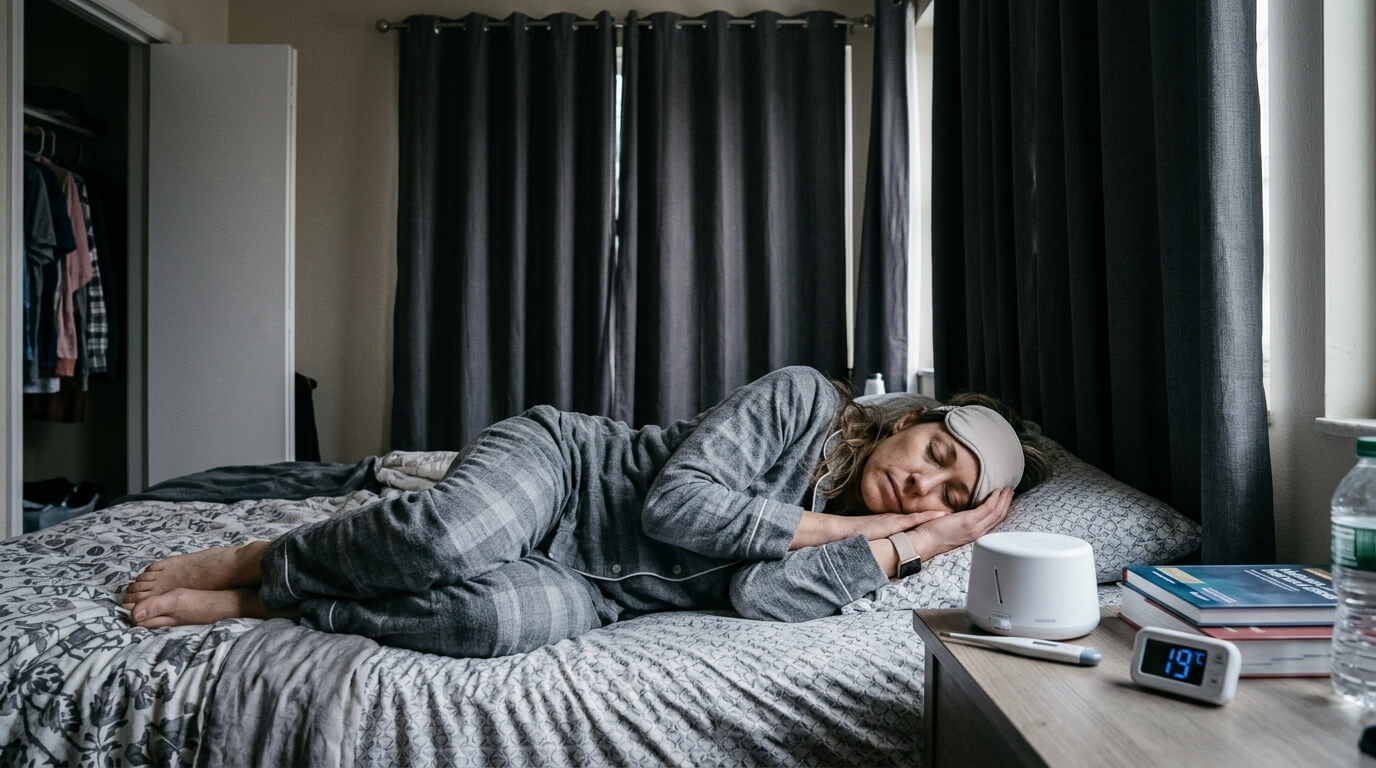
Sleeping after a night shift can feel strange. You may be exhausted after working all night, but when you get home, the sun is already up. Cars are moving outside, neighbors are awake, and your home may not be as quiet as it is at midnight.
That is why a good night shift sleep environment needs a little more planning than a typical bedroom.
Your body is trying to sleep while the outside world is sending daytime signals. Bright light can tell your brain to stay alert. Heat can make it harder to stay comfortable. Everyday sounds can wake you just as you finally start drifting off.
The good news is that you do not need to turn your bedroom into a high-tech sleep lab. A darker room, comfortable temperature, less noise, and a simple routine can make a real difference.
This guide walks through the main parts of a Night Shift Sleep Environment: Temperature, Light and Noise Checklist, including low-cost changes and bigger upgrades. It also explains what to do about phones, household noise, and the difficult trip home after a night shift.
Why Daytime Bedrooms Are Different
A bedroom at 2 a.m. is naturally different from a bedroom at 9 a.m.
At night, the sky is dark and most people in your neighborhood are sleeping. During the day, sunlight comes through the windows, traffic picks up, and people start their normal routines.
For a night-shift worker, that means your bedroom has to create some of the nighttime conditions that are missing outside.
Your internal body clock does not simply change because your work schedule changed. Light is one of the strongest signals that helps control that clock. Your body also has a natural daily rhythm in body temperature and alertness.
This is one reason daytime sleep can be shorter or easier to interrupt than nighttime sleep. You may fall asleep quickly because you are tired, yet wake after a few hours and struggle to get back to sleep.
The goal is not to make your bedroom perfect. It is to remove as many daytime distractions as you reasonably can.
Think of it this way: if your brain expects darkness, quiet, and a comfortable temperature before sleep, give it those signals even when the clock says 10 in the morning.
Darkness: Make Your Bedroom Feel Like Night
For many night-shift workers, light is the first problem to solve.
Imagine finishing a 12-hour shift at 7 a.m. You drive home as the sun gets brighter. By the time you climb into bed, your bedroom may be filled with daylight.
That is a tough setup for daytime sleep.
Block sunlight before it reaches your bed
Blackout curtains, blackout shades, or blackout liners can help keep sunlight out. Pay attention to the edges of the window, too. A curtain can look dark while narrow gaps around the sides still let bright light into the room.
If you cannot install blackout curtains right away, try temporary solutions such as better-fitting curtains or a sleep mask.
For a deeper look at choosing window coverings, your Best Blackout Curtains guide can help you compare the different options.
A sleep mask can also be useful if you rent your home, share a bedroom, or cannot completely control the windows. See the Best Sleep Masks guide for more information about what to look for.
Do not forget small sources of light
The large window is not the only problem.
A charging cable may have a bright indicator. Your alarm clock may glow across the room. A television can leave a tiny light on even when the screen is off.
These lights may seem harmless, but if you are already struggling with daytime sleep, there is little reason to keep unnecessary light in the room.
Turn off or cover lights that you do not need. Put your phone face down or farther away from the bed. If your alarm has a bright display, turn it away from you.
Think about the trip home, too
Your sleep environment begins before you enter the bedroom.
If you leave work as the sun is coming up, you are moving from a bright workplace into bright outdoor light. That exposure may make it harder for your body to settle into sleep.
You do not need to live in darkness all morning. But if you are trying to sleep soon after getting home, keeping your post-shift environment calm and dim can be helpful.
If daytime sleep remains difficult, see How to Sleep During the Day for additional strategies that go beyond the bedroom itself.
Noise: Daytime Sounds Can Be the Real Problem
Light gets most of the attention, but noise can be just as frustrating for night-shift workers.
At night, the neighborhood may be almost silent. During the day, the same street could have buses, lawn equipment, construction, barking dogs, deliveries, and people coming and going.
You might not fully wake every time a sound happens. Still, sudden sounds can interrupt sleep and make it harder to stay asleep.
Find the sounds you can control
Start with the simple things.
Close the bedroom door. If sound comes through a noticeable gap underneath it, a draft stopper may help. Move your bed away from a shared wall if possible.
Heavy curtains, rugs, and upholstered furniture can also help soften a room. They will not turn a bedroom into a recording studio, but reducing hard surfaces can make the room feel less harsh.
The bigger issue is often the people you live with.
A family member may not realize that running the vacuum at 11 a.m. is the middle of your “night.”
That is where household boundaries matter.
Use steady sound when sudden noise is the problem
A fan can provide a steady background sound that helps cover smaller changes in the environment.
Some people prefer white noise, pink noise, rainfall, or another consistent sound. The best choice is personal. The important point is to keep the volume comfortable rather than blasting sound beside your head.
If you are considering a dedicated device, the Best White Noise Machine guide can help you compare features without assuming everyone needs one.
A white noise machine is not essential. In a quiet home, you may sleep better without one. But in a busy neighborhood, predictable background sound can be useful.
Temperature: Keep the Room Comfortable, Not Extreme
Temperature can make or break your daytime sleep. If your room feels stuffy or you’re waking up cold, getting comfortable can be much harder. A cool, comfortable bedroom can help you settle down after a long night shift.
Many sleep recommendations put a typical bedroom temperature around 60–67°F (15–19°C), but there is no magic number that works for every person.
Your bedding, clothing, climate, age, and personal comfort all matter.
Daylight can make a room warmer
This is especially important for daytime sleepers.
A bedroom that feels comfortable at 7 a.m. may become much warmer by noon because sunlight has been heating the windows and walls.
Blackout curtains can help with light, and they may also reduce some of the heat entering through windows. Closing blinds during the brightest part of the day can help too.
A fan can improve air movement. Air conditioning may be useful during hot weather, especially if your bedroom becomes uncomfortable even with lighter bedding.
Choose bedding for your schedule
Heavy comforters may feel wonderful during a cold winter night, but they can be uncomfortable when you are trying to sleep through a warm afternoon.
Breathable sheets and lighter layers give you more control. Instead of choosing one very heavy blanket, use layers that can be removed easily.
The goal is simple: you should be comfortable enough that temperature does not keep pulling your attention away from sleep.
Phone and Notifications: Do Not Let Your Bedroom Become an Office
Your phone can cause two separate problems after a night shift.
First, it produces light. Second, it can bring work, messages, news, social media, and other distractions directly into your bed.
After working all night, it can be tempting to scroll through your phone while lying down. Twenty minutes can easily become an hour.
Use your phone’s Do Not Disturb, Sleep, or Focus settings to silence notifications during your protected sleep period. Allow emergency contacts through if needed.
Keep the phone away from your pillow if possible. If you use it as an alarm, place it somewhere you can hear it without having the screen inches from your face.
You do not have to throw your phone out of the bedroom. The goal is to stop it from constantly demanding your attention.
Household Boundaries: Protect Your “Night”
This may be one of the most important changes for people who live with others.
Your sleep period should be treated as protected time.
If you work nights and sleep from 9 a.m. to 4 p.m., your family or roommates may need to understand that those hours are your nighttime.
Talk about the things that repeatedly wake you. Maybe it is the television. Maybe someone opens the bedroom door. Maybe the dog scratches at the door. Maybe the doorbell rings several times during the afternoon.
Small agreements can solve problems that expensive sleep products cannot.
Ask household members to keep voices low near your bedroom. Put your phone on silent. If possible, schedule noisy chores for another time.
A simple note on your bedroom door can help visitors understand that you are sleeping.
If you have children, perfect silence may not be realistic. The goal is not to eliminate every sound. It is to reduce unnecessary interruptions and create a predictable sleep period.
Pre-Sleep Routine: Give Your Brain Time to Slow Down
A good bedroom cannot do everything by itself.
If you walk through the front door after a stressful shift and immediately jump into bed, your body may still feel like it is at work.
A short wind-down period can help create a clear boundary between work and sleep.
Keep the routine simple. You might shower, change into comfortable clothes, dim the lights, prepare your bedroom, and spend a few quiet minutes reading.
Try to keep the routine similar from one workday to the next.
Consistency is often more useful than a complicated bedtime ritual.
If you use caffeine during your shift, remember that caffeine can stay in the body for hours. If you are having trouble sleeping after work, look at when you are drinking it rather than simply adding more sleep products.
Alcohol is not a reliable solution for daytime sleep either. It may make you feel sleepy at first but can interfere with normal sleep later in the night—or, in this case, during the day.
A Low-Cost Night Shift Bedroom Setup
You do not need to spend hundreds of dollars to improve your bedroom.
Start with what you already have.
Make the room as dark as you reasonably can. Turn off unnecessary lights. Use curtains or temporary window coverings. Move your phone away from the bed and silence notifications.
Then look at noise. Close the door, seal obvious gaps, and use a fan if its steady sound helps.
Finally, check the temperature. Remove bedding that makes you too warm and improve air circulation.
The best first changes are usually the ones that solve your biggest problem.
If sunlight wakes you every morning, fix the windows first. If construction wakes you, focus on noise. If heat leaves you sweaty and uncomfortable, work on temperature.
There is no prize for buying the most expensive bedroom setup.
A Premium Night Shift Sleep Setup
If basic changes are not enough, you can gradually add equipment.
A more complete setup might include properly fitted blackout curtains, a comfortable sleep mask, temperature control, a quiet fan or air conditioner, and a dedicated sound machine.
You could also consider an adjustable thermostat that changes the temperature automatically around your planned sleep period.
But remember that more equipment does not automatically mean better sleep.
A $20 improvement that solves your biggest problem may be more useful than a $500 product that does something you never needed.
Start with the problem, then choose the solution.
Your Night Shift Sleep Environment Checklist
Before you go to bed after your next shift, run through this quick check.
Darkness and Noise
Before heading to bed, make the room as dark as you can. Close the curtains, cover bright LEDs, and turn clocks or screens away from the bed. Keep your phone on Do Not Disturb. Close the bedroom door, and let people at home know that you’re sleeping. If traffic, barking dogs, or other daytime sounds bother you, a fan or steady background noise may help.
Temperature and Comfort
Your room should feel comfortable when you lie down, not too warm and not freezing. Change your bedding with the season, and use a fan or air conditioning when the room gets stuffy. Keep direct sunlight out, especially if your bedroom heats up during the late morning or afternoon. If you regularly wake because you’re sweating or shivering, the room temperature or bedding may need adjusting.
Routine Before Bed
Give yourself a few quiet minutes after work instead of jumping straight into bed. Keep bright lights low, finish anything you need to do, and put your phone aside. Watch your caffeine intake near the end of your shift, and try to keep your sleep hours fairly steady.
What Should You Fix First?
- If your bedroom has every problem at once, don’t try to change everything tonight.
- Start with the problem that is actually waking you.
- If you open your eyes because sunlight hits your face, darken the room.
- If a neighbor’s dog or morning traffic keeps waking you, work on noise.
- If you wake sweaty or keep throwing the covers off, work on temperature.
- If your phone keeps buzzing, fix your notification settings.
- Then give the changes some time.
- Sleep is not always predictable from one night to the next. A single good or bad night does not tell you whether a change worked. Look for patterns over several days.
When Your Sleep Problem May Be Bigger Than Your Bedroom
A better bedroom can help, but it cannot solve every sleep problem.
If you regularly have trouble falling asleep, wake repeatedly, or remain extremely sleepy even after getting enough time in bed, talk with a healthcare professional.
Night-shift workers can have problems related to their work schedule, including shift work sleep disorder. Persistent sleepiness can also become a safety issue, especially when driving home after work.
Do not ignore severe sleepiness just because you work nights.
If you are struggling despite making reasonable changes to your sleep environment, it is worth discussing the problem with a doctor or qualified sleep professional.
Conclusion: Make Daytime Sleep Feel More Like Night
Night-shift work asks your body to do something that does not always come naturally: sleep while the rest of the world is awake.
Your bedroom cannot change your work schedule, but it can remove many of the obstacles between you and better rest.
Start with the three basics: darkness, comfortable temperature, and controlled noise. Then silence your phone, protect your sleep hours, and create a short routine that tells your brain the workday is finished.
You do not need an expensive bedroom makeover. A darker window, quieter room, lighter bedding, and a little cooperation from the people around you may be enough to make the space work much better.
The best Night Shift Sleep Environment: Temperature, Light and Noise Checklist is ultimately the one you can follow consistently. Build your bedroom around the problems that actually disturb your sleep, make changes one at a time, and give your body a fair chance to adjust.
Frequently Asked Questions
What is the best temperature for a night-shift bedroom?
A commonly recommended bedroom range is around 60–67°F (15–19°C), but comfort matters. Some people sleep better slightly warmer or cooler. The key is to avoid a room that feels excessively hot or cold.
How dark should my bedroom be after a night shift?
As dark as you can comfortably make it. Blackout curtains can block much of the daylight coming through windows, while a sleep mask can help with smaller sources of light. Also check alarm clocks, chargers, televisions, and other glowing devices.
Do blackout curtains help night-shift workers?
They can be especially useful because night-shift workers often sleep during the brightest part of the day. They can reduce sunlight entering through windows and may also help keep a room cooler.
Should I use a sleep mask during daytime sleep?
Yes, especially if sunlight still slips into your room. A sleep mask can block those last bits of brightness and make daytime sleep easier. It is also handy when curtains cannot fully darken your bedroom. For night-shift workers, a mask is a simple fix when blackout curtains are not enough. Choose one that feels comfortable, stays in place, and does not press tightly around your eyes. If you wake feeling uncomfortable, try a different style or fit.
Is white noise good for night-shift workers?
It can be useful when unpredictable daytime sounds are disturbing your sleep. A fan, white noise machine, or another steady sound may help mask smaller changes in background noise. Keep the volume comfortable.
How can I sleep when my family is awake?
Talk with your household about protected sleep hours. Ask people to keep noise low near your bedroom and schedule loud chores for another time when possible. Earplugs, a closed door, and steady background sound may also help.
Should I use my phone after a night shift?
If you need your phone after work, keep the brightness low and avoid checking messages or social media once you’re in bed. Put it on Do Not Disturb before sleeping so a buzz or notification doesn’t pull you back into wake-up mode.
What if I still cannot sleep during the day?
Sometimes the bedroom isn’t the whole problem. Morning sunlight, late caffeine, stress, or changing shifts can make daytime sleep harder. If you’re regularly unable to sleep or feel dangerously tired during the day, talk with your doctor about what may be going on.

Daniel Carter is the founder of NightShiftWell. He spent over a decade working night and rotating shifts in logistics and warehouse operations before starting this site to share what actually works — and what doesn’t — for staying healthy on an inverted schedule.