
Last updated: November 10, 2026
Medically reviewed by: Dr. Emily Carter, MD , Board-Certified Family Medicine Physician
NightShift may receive a small commission when you purchase something through links on this page. It won’t cost you anything extra or change how we review products.
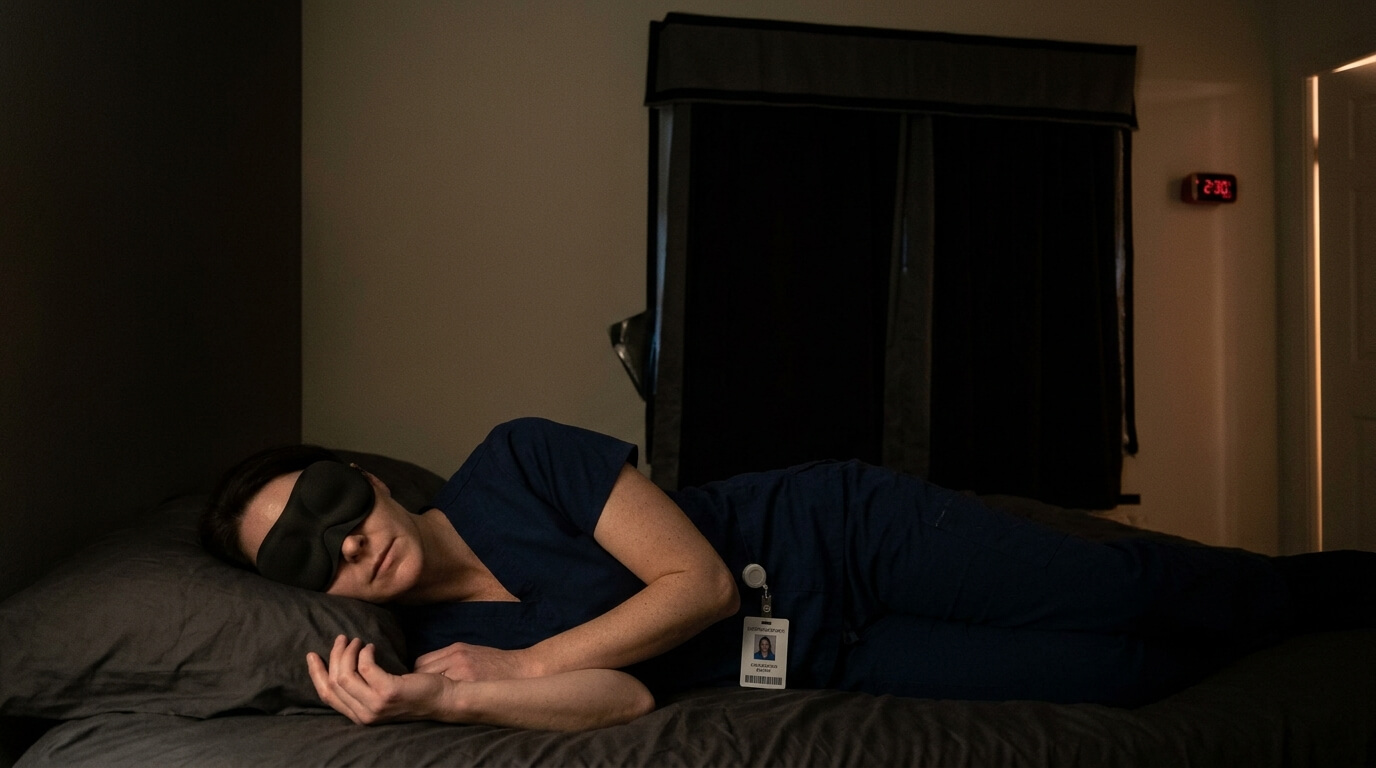
It’s 7:30 in the morning, and you’ve just finished a long night at work. You’re finally home and ready to get some sleep. You’re tired, your feet hurt, and all you want is a few hours of sleep. But once you close the curtains, sunlight still comes through the sides. A neighbor starts mowing the lawn, and the bedroom feels warmer by the minute. You’re tired, your feet hurt, and all you want is a few hours of sleep. But once you close the curtains, sunlight still comes through the sides. A neighbor starts mowing the lawn, and the bedroom feels warmer by the minute.
Sound familiar?
The best blackout sleep setup for night shift workers starts with blocking daylight, but it shouldn’t stop there. A comfortable sleep mask, fewer light gaps, and a way to manage daytime noise can help make your bedroom a better place to rest.
You don’t need expensive electric blinds or a complete bedroom makeover. The right setup depends on your windows, your budget, and what keeps waking you up.
Why Blackout Matters for Night Shift Workers
Your body has an internal clock that helps decide when you feel awake and when you feel sleepy. This clock responds strongly to light. For most people, daylight is a signal to get up and start the day.
That becomes a problem when your workday ends just as the sun comes up.
Light entering your bedroom can make it harder to sleep during the day. Even with your eyes closed, some light can pass through your eyelids. That’s one reason the CDC’s National Institute for Occupational Safety and Health (NIOSH) recommends a very dark bedroom for night shift workers.
Why Ordinary Curtains May Not Be Enough
Regular curtains often soften sunlight rather than block it. You may close them and still see a bright window behind the fabric.
Blackout curtains use tightly woven material, a special lining, or a light-blocking backing. But the fabric is only part of the problem. Sunlight can still enter above the curtain rod, along the sides, and near the floor.
A well-fitted curtain may work better than an expensive blackout shade with large gaps around it.
Darkness Is Only One Part of Better Sleep
Think about the last time a delivery truck, barking dog, or family conversation woke you up.
Even a dark bedroom can be difficult to sleep in if it’s noisy or too hot. The goal is to make your sleeping space dark, quiet, and comfortable enough for several hours of uninterrupted rest.
Measure Your Room Light Before Buying Anything
Before spending money on blackout products, check how much daylight enters your bedroom.
You can do this with your current curtains closed. Try the test at the time you normally sleep, especially when the sun shines directly toward your window.
How to Check Light Levels at Home
A phone light meter app can give you a rough reading in lux, a unit used to measure light. However, phone sensors and apps vary, so don’t treat the reading as a precise medical measurement.
Check near the pillow, then around the window. Compare the readings before and after making changes.
There is no single lux reading that guarantees good sleep for every night worker. The practical goal is to reduce unwanted light at your sleeping position as much as possible.
Find the Brightest Light Leaks
Look around the curtain edges, the top of the window, and the bedroom door.
Don’t forget small lights from a television, charger, alarm clock, or power strip. A tiny LED may be easy to ignore when you’re awake but annoying when you’re trying to sleep.
You can also sit on your bed for a few minutes after closing the curtains. Once your eyes adjust, the remaining bright spots are often easier to see.
Start With the Best Blackout Curtains or Shades for Daytime Sleep
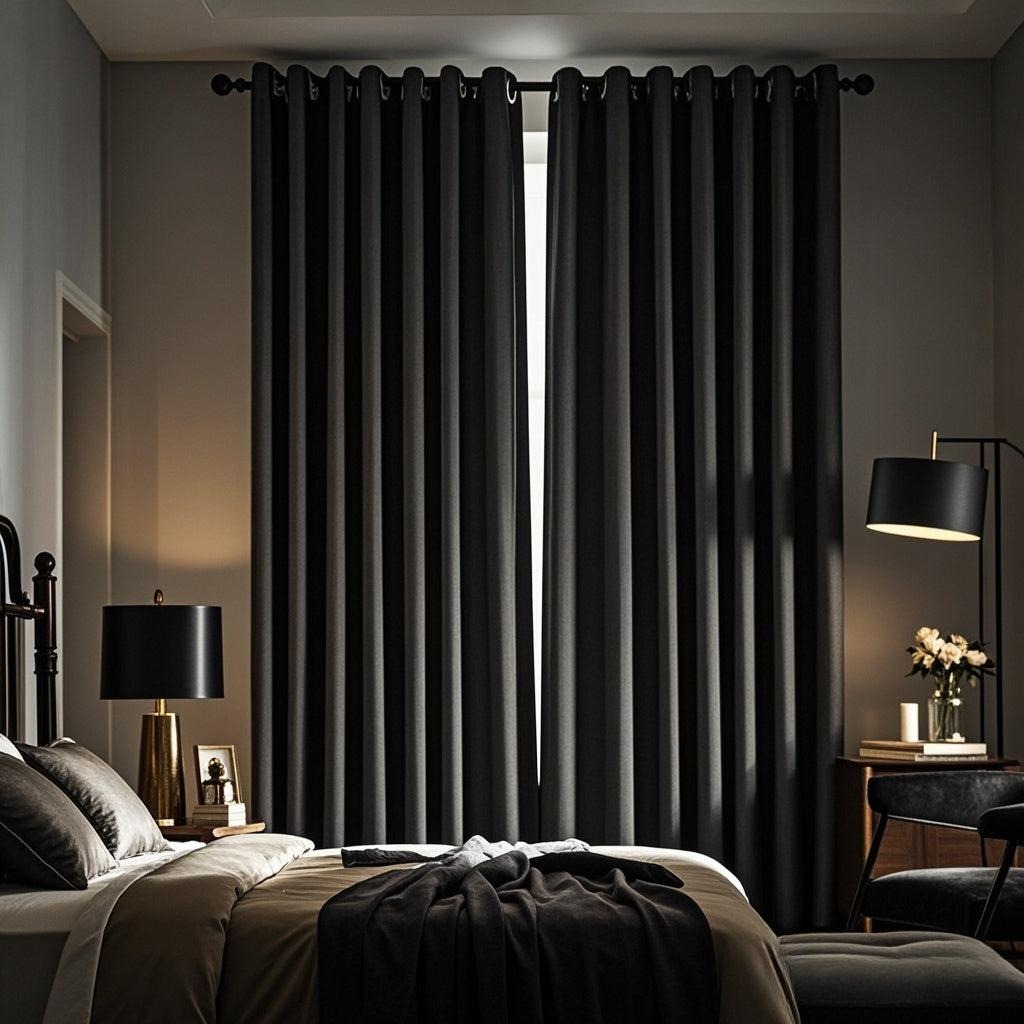
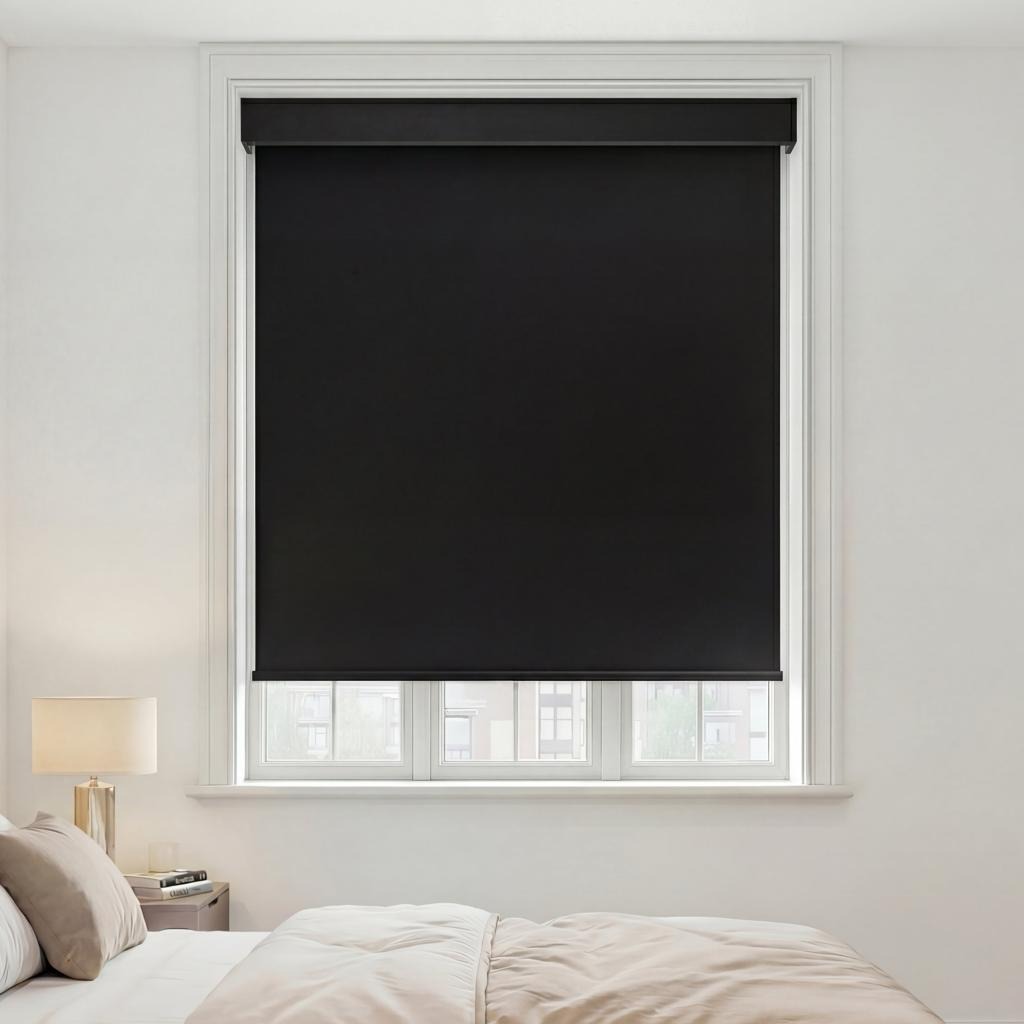
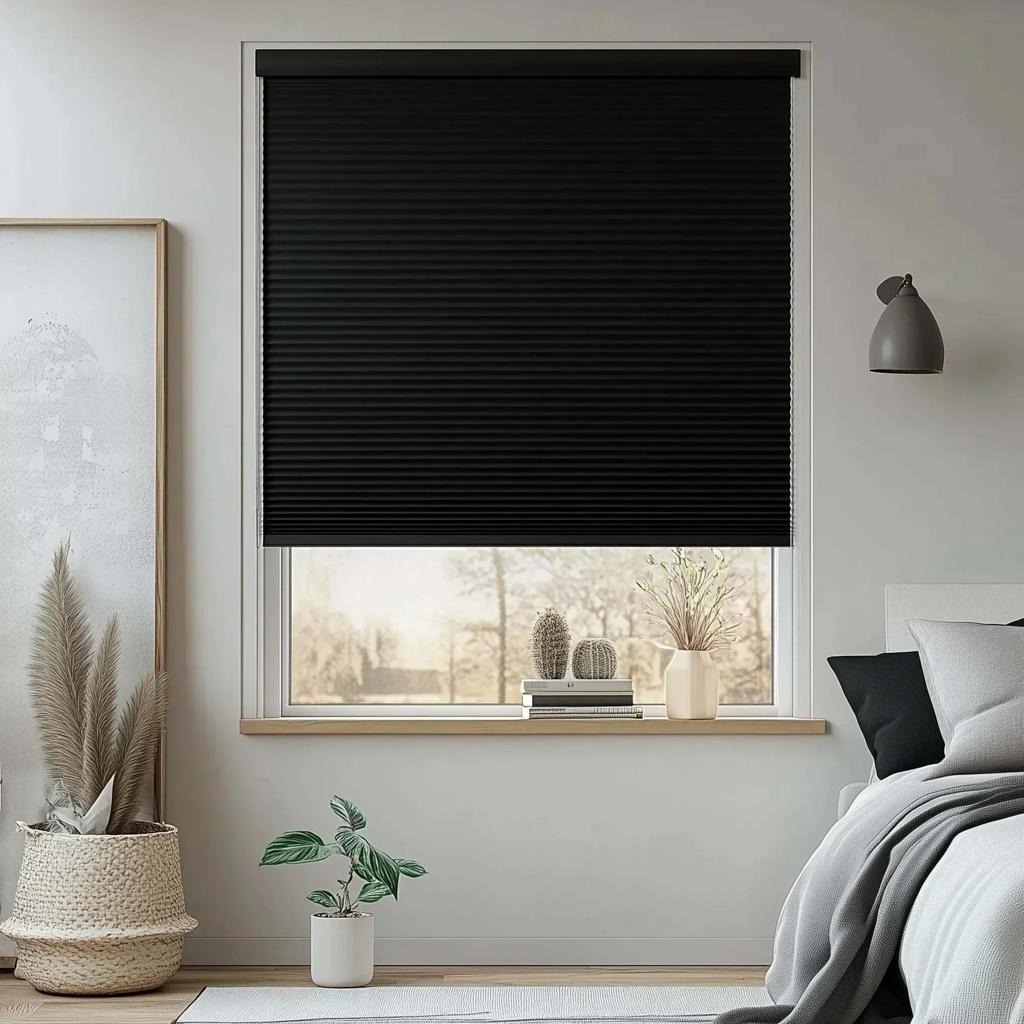
For most people, window coverings should be the first purchase. They stop sunlight before it spreads through the bedroom.
But not every blackout curtain or shade works the same way.
Blackout Curtains: A Practical Starting Choice
Blackout curtains are a good option if you want something simple to install and easy to open after waking up.
Look for curtains with a proper blackout lining or material rated to block light. Don’t judge by fabric color alone. Some light-colored curtains have excellent blackout backing, while dark-colored decorative curtains may still let sunlight through.
Measure the full area you need to cover, not just the glass. Curtains should extend beyond the window edges so they overlap the wall.
A wraparound curtain rod can help reduce light entering at the sides. Hanging curtains close to the wall can also make a difference.
Blackout Roller Shades: Best for a Neat Window Fit
Roller shades sit close to the window and roll up when they’re not needed. They can be useful in small bedrooms where large curtains take up too much space.
The drawback is light leakage around the sides, especially with inside-mounted shades.
If you choose roller shades, ask about side channels or other ways to cover the gaps.
Blackout Cellular Shades: Useful for Hot Bedrooms
Cellular shades have a honeycomb-shaped structure that holds air within the material.
Some blackout shades can also stop your bedroom from getting too hot when the morning sun hits the windows.
They usually cost more than regular curtains, though. And if they don’t fit snugly, you’ll still have sunlight coming in around the edges.
Blackout Curtains vs. Shades: Which Should You Choose?
| Situation / Need | Better Starting Option |
| Small budget | Blackout curtains |
| Wide bedroom windows | Wide blackout curtains or paired panels |
| Small room with limited space | Blackout roller shades |
| Hot, sunny bedroom | Insulating blackout cellular shades |
| Light coming around window edges | Curtains with extra overlap or shades with side channels |
| Need stronger coverage | Combine shades and curtains |
Best Blackout Curtains and Shades: What to Compare Before Buying
A product’s name is not enough to tell you whether it will work in your bedroom. Compare its actual measurements, mounting options, fabric, and return policy.
For a low-cost curtain, check whether it has a full blackout backing rather than a room-darkening description. For a roller shade, check how much side clearance the mounting system requires. For cellular shades, look at the insulating design and whether a light-blocking track is available.
Three product types deserve particular attention:
Budget blackout curtain panels suit renters and people who want a quick improvement without replacing existing blinds. Their main weakness is light around the edges if the panels are too narrow.
Custom blackout roller shades suit people who prefer a clean look and have windows that can be measured accurately. Their main drawback is that custom sizing doesn’t automatically eliminate side gaps.
Blackout cellular shades with light-blocking tracks suit bedrooms where both light leakage and window heat are problems. They can offer more complete coverage, but cost and installation are important trade-offs.
Specific brand recommendations, current prices, and stock availability should be verified before publication. These are category recommendations, not claims that particular products have been independently tested.
Add a Sleep Mask for Light That Still Gets Through
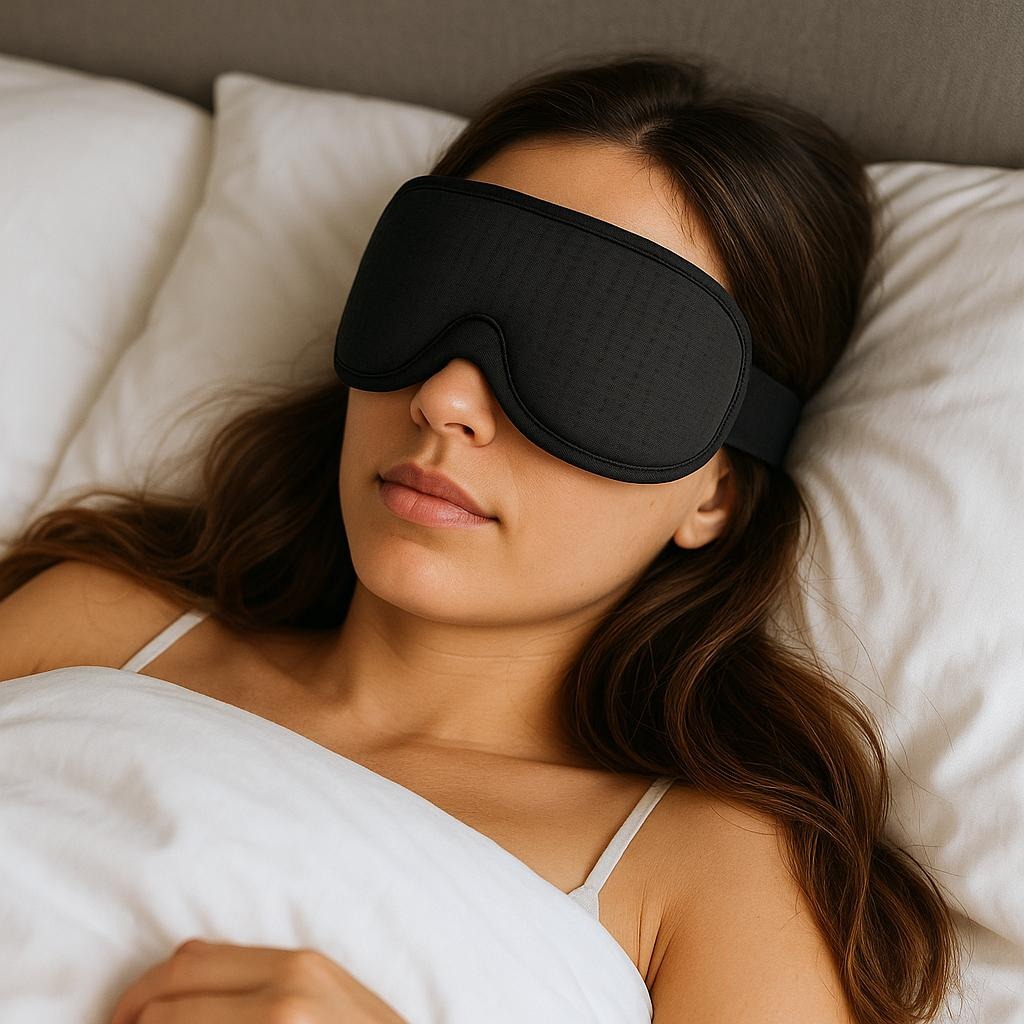
Even with good blackout curtains, you might still see a thin strip of daylight near the window.
A sleep mask can help cover that remaining light without requiring another expensive window treatment.
Flat vs. Contoured Sleep Masks
Flat sleep masks sit directly against the area around your eyes. They are usually simple, lightweight, and easy to pack.
Contoured masks have raised eye cups that leave more space around the eyelids. Some people find them more comfortable because the material doesn’t press directly against their eyes.
Neither style is best for everyone. Fit matters more than the label.
What to Look for in a Sleep Mask
Choose a mask that covers the area around your nose without leaving a bright gap. Adjustable straps help, but they shouldn’t pull too tightly against your head.
If you sleep on your side, pay attention to bulky straps, plastic clips, and thick edges. These can press against your pillow.
Breathable material and easy cleaning are also important if you wear the mask for several hours every day.
Is a Sleep Mask Better Than Blackout Curtains?
A sleep mask is cheaper and portable, making it useful for travel, shared bedrooms, and temporary living spaces.
Curtains darken the whole room and don’t depend on staying in place while you move in bed.
For many night workers, curtains and a comfortable sleep mask work better together than either one alone.
Temporary Blackout Solutions for Renters
You may not be allowed to drill holes, change blinds, or install permanent window hardware in a rental home.
Fortunately, there are other options.
Removable Blackout Window Covers
Temporary blackout fabric panels can attach to suitable window frames using removable fasteners. Some window covers attach with suction cups or reusable fasteners.
Before buying, make sure you can take them down without leaving marks. Sticky strips may peel off paint, while some window covers can trap heat against the glass.
Avoid placing unsuitable materials directly against windows that become extremely hot.
Tension Rods and No-Drill Curtains
A tension rod may work for a small window if the surrounding frame is strong enough to support it.
For wider or heavier curtains, make sure the rod is rated for the load. A falling curtain rod isn’t worth the convenience.
A Sleep Mask for Shared or Temporary Rooms
If you can’t change the window coverings, a sleep mask may be the easiest first step.
It’s also useful when staying with family or sleeping somewhere else between shifts.
How to Block Light Coming Through Bedroom Door Gaps
Window light gets most of the attention, but bedroom doors can let in plenty of light too.
A hallway lamp or bright living room may leave a glowing strip under the door while you’re trying to sleep.
Use a Door Draft Stopper
A removable draft stopper or rolled towel can reduce light coming through the bottom gap.
Make sure it doesn’t prevent the door from opening or interfere with needed airflow.
Reduce Light Around the Door Frame
If light enters along the sides, suitable weatherstripping may help. Check that the door still closes properly.
You can also ask household members to keep hallway lights off during your sleeping hours.
Don’t Make the Room Unsafe
Keep the route to the bathroom clear. If you need to get up during your sleep period, use a dim light that allows you to move safely.
Never cover smoke alarms, block emergency exits, or seal required ventilation openings.
Combine Blackout Methods for Better Results
One product rarely solves every bedroom problem.
A curtain may block most sunlight, but leave a gap at the top. A sleep mask may cover your eyes, but it won’t reduce noise from the street.
That’s why a combined setup often makes sense.
Layer Curtains and Shades
If you already have blinds, try adding blackout curtains before replacing them.
The blinds reduce direct light, while the curtains cover some of the gaps around the frame.
Add a Mask Only Where Needed
Don’t buy a sleep mask automatically if your room is already dark and you dislike wearing one.
But if light still reaches your pillow, a comfortable mask may be cheaper than replacing the whole window setup.
Combine Light Blocking With Noise Control
Earplugs can reduce some sounds. A fan or white-noise machine may help make sudden noises less noticeable.
Neither option makes a room soundproof.
If you must hear children, alarms, or emergency alerts, check that your chosen noise-control method won’t prevent you from hearing important sounds.
Control Noise and Keep the Bedroom Comfortable
Noise control is particularly important when the rest of the neighborhood is awake.
Earplugs for Daytime Sleep
Soft foam earplugs can reduce many outside sounds when inserted correctly. Reusable silicone options may suit people who dislike disposable plugs.
If you sleep on your side, choose earplugs that won’t hurt your ears. Check the package for directions on how to wear, clean, and replace them.
Fans and White-Noise Machines
A fan makes a soft, steady sound and keeps air moving around your room. A white-noise machine can create a similar consistent sound without airflow.
Keep the volume moderate and place the device away from your ears.
If the noise is coming through an open window, closing the window where it is safe may help more than buying another sound machine.
Keep the Bedroom Cool
A hot room can make daytime sleep uncomfortable. Close the curtains before direct sunlight heats the bedroom, and use a fan or air conditioning if needed.
Choose bedding that feels comfortable for the season.
NIOSH recommends a dark, quiet, cool, comfortable sleeping environment, rather than focusing on darkness alone.
Build the Best Blackout Sleep Setup for Your Budget
You don’t have to buy everything at once. Start with the biggest problem in your bedroom and add other items only if you need them.
Budget Blackout Sleep Setup
You don’t need to spend a lot to keep sunlight out of your bedroom. If you’re renting or working with a small budget, start with a pair of blackout curtains that cover the whole window.
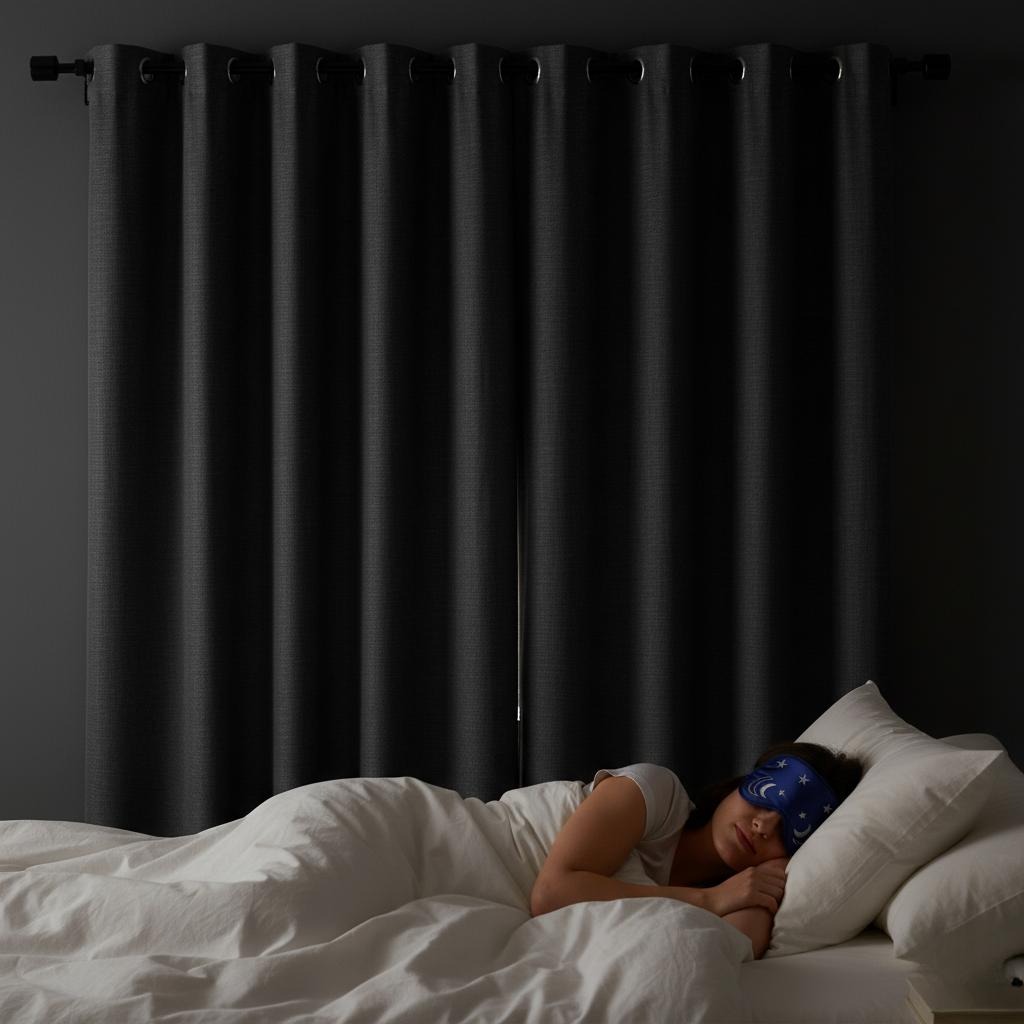
Still seeing light around the edges? Try a sleep mask or a removable window cover. You can also place a rolled towel under the bedroom door to block hallway light. If outside noise bothers you, running a fan may help.
The downside: Cheaper curtains may leave gaps, so you might need to adjust how they hang.
Mid-Range Blackout Sleep Setup
If sunlight keeps sneaking into your room even after you’ve closed the curtains, it may be time to change how they’re fitted.
Try wider blackout curtains with a curved curtain rod that brings the fabric closer to the wall. A soft sleep mask can help with any light that still gets through. If traffic or people talking outside wake you up, try earplugs or a white-noise machine.
You don’t have to replace everything. Sometimes, fixing the gaps around your existing curtains is all you need.
Best for: People who work several night shifts each week and sleep in the same bedroom regularly.
Main drawback: Better products still need careful installation. Spending more won’t fix poorly fitted curtains.
Premium Blackout Sleep Setup
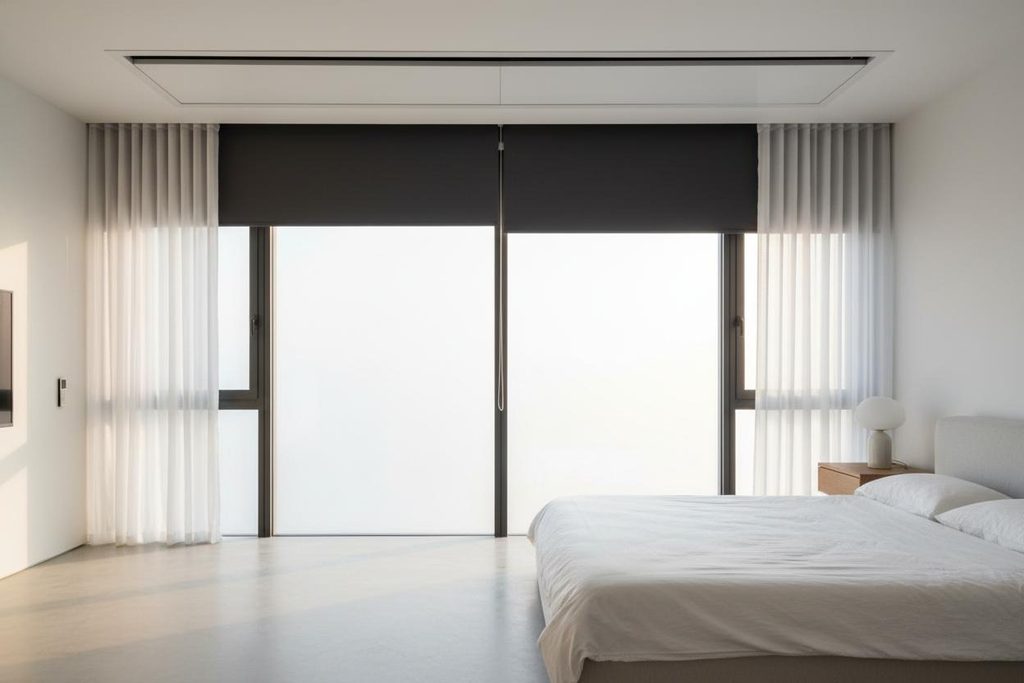
If you own your home or expect to work nights for years, custom blackout shades may be worth considering.
A premium setup might include cellular shades with side tracks, blackout drapery, motorized controls, and suitable noise-control products.
Best for: Homeowners with large windows, difficult window shapes, or persistent light leakage.
Main drawback: These setups cost more, take longer to install, and may need repairs over time.
| Setup | Main purchases | Best for |
| Budget | Curtains, masks, simple gap fixes | Renters and first-time buyers |
| Mid-range | Better-fitted curtains, mask, noise control | Regular night workers |
| Premium | Custom shades, side tracks, layered curtains | Long-term home setups |
Prices depend on the window size, brand, and store. Check prices from a few sellers before deciding how much to spend.t.
What Not to Buy for a Blackout Bedroom
Some products sound useful but may not solve the problem you’re having.
Thin Curtains Sold as Room Darkening
Room-darkening curtains may reduce sunlight without creating the darkness you want. Check the product’s actual light-blocking description before buying.
Curtains That Barely Cover the Window
Even excellent blackout fabric won’t help much if sunlight enters around all four sides.
Measure first, then choose enough fabric to overlap the window.
Expensive Smart Blinds Without Light-Gap Control
Motorized blinds are convenient, but automation doesn’t make them better at blocking light.
If the main problem is a bright strip along the window frame, focus on the fit before paying for a motor.
Sleep Masks That Press Against Your Eyes
A mask that feels uncomfortable after 15 minutes may be difficult to wear for several hours. Choose a comfortable fit rather than buying based on appearance.
Products That Promise Complete Soundproofing
Regular curtains, fans, and white-noise machines may help with noise, but you’ll still hear some sounds from outside.
Don’t spend extra money on products that claim to block all noise. Check what they can actually do before buying.
How to Install and Arrange Everything for Better Results
Buying the right products is one thing. Getting the Setup Right
Start by measuring your windows. Note the width and height, then look at the space around the frame to see how far your curtains can extend.If you’re using curtains, allow enough overlap to cover the edges.
Install the window coverings and close them during the brightest part of the day. Look for remaining gaps from your usual sleeping position.
Fix the biggest gaps first. You might need to move the curtain rod, hang an extra curtain panel, or cover the remaining gaps with a removable light blocker.
Then, look for light coming through the bedroom door or from electronic devices. Turn off unnecessary displays and reduce hallway light.
If daytime noise is a problem, try one suitable noise-control option before buying several devices.
Finally, test the room for a few sleep periods. Change one thing at a time so you can tell what actually helps.
A good setup is one that solves your own bedroom problems, not one that contains the most products.
My Recommended Blackout Sleep Setup for Someone Starting From Zero
For most night shift workers, I’d start with well-fitted blackout curtains, a comfortable sleep mask if needed, and a simple way to manage noise.
Curtains should come first because they reduce the daylight entering the entire bedroom. Make sure they’re wide enough to cover the window edges.
If you still notice light near your pillow, try a sleep mask before replacing the curtains.
For noise, choose between earplugs, a fan, or a white-noise machine based on what you can hear from your bedroom. There’s no reason to buy all three unless you have a specific need.
After that, focus on room temperature and small light leaks.
I’d leave custom motorized blinds until last. They’re useful for convenience, but they aren’t necessary for most people.
Frequently Asked Questions
What is the best blackout sleep setup for night shift workers?
Get curtains that cover your windows without leaving gaps for sunlight. A sleep mask can help if your room still feels bright. If traffic or people talking outside keep waking you up, try earplugs or a fan.
Is a sleep mask or blackout curtain better for blocking daylight?
Blackout curtains darken the room, while a sleep mask blocks light reaching your eyes when worn properly. Curtains are usually the better first choice for a bedroom, but a mask can help with remaining light.
How can I measure light in my bedroom?
You can use a phone light-meter app to compare approximate light levels before and after installing curtains. You can also look for visible light leaks while sitting on your bed during daylight.
What is the cheapest way to blackout a bedroom?
Start with affordable blackout curtains or a suitable removable window cover. Fix small gaps using safe, low-cost methods. A basic sleep mask may also help without changing your windows.
Can Renters Install Blackout Curtains Without Drilling?
Yes. You don’t have to drill holes to keep the sunlight out. A tension rod can hold lightweight blackout curtains, while removable window covers are another option. Just check that whatever you use will stay in place without damaging the walls.
Should I Combine Blackout Curtains With Blinds?
If your blinds still let sunlight in, adding blackout curtains is a good idea. Keep the blinds down and pull the curtains across the window. Make sure the curtains are wide enough to cover the sides, where daylight often sneaks through.
What If I Still Cannot Sleep After Making My Bedroom Dark?
Think about what else might be keeping you up. Is your room too warm? Can you hear people talking outside? Did you have coffee near the end of your shift? Try sorting out these problems first. If you’re still lying awake most days, it’s worth talking to your doctor.
Final Thoughts
You don’t need a costly bedroom makeover to sleep during the day. Start with the windows, check for light gaps, and make small changes where they’re needed.
For many night shift workers, good blackout curtains and a comfortable sleep mask are enough to make a noticeable difference in bedroom darkness. Add noise control and cooling where necessary, and save the bigger purchases for problems that simple fixes cannot solve.

Daniel Carter is the founder of NightShiftWell. He spent over a decade working night and rotating shifts in logistics and warehouse operations before starting this site to share what actually works — and what doesn’t — for staying healthy on an inverted schedule.