
Last updated: November 10, 2026
Medically reviewed by: Dr. Emily Carter, MD , Board-Certified Family Medicine Physician
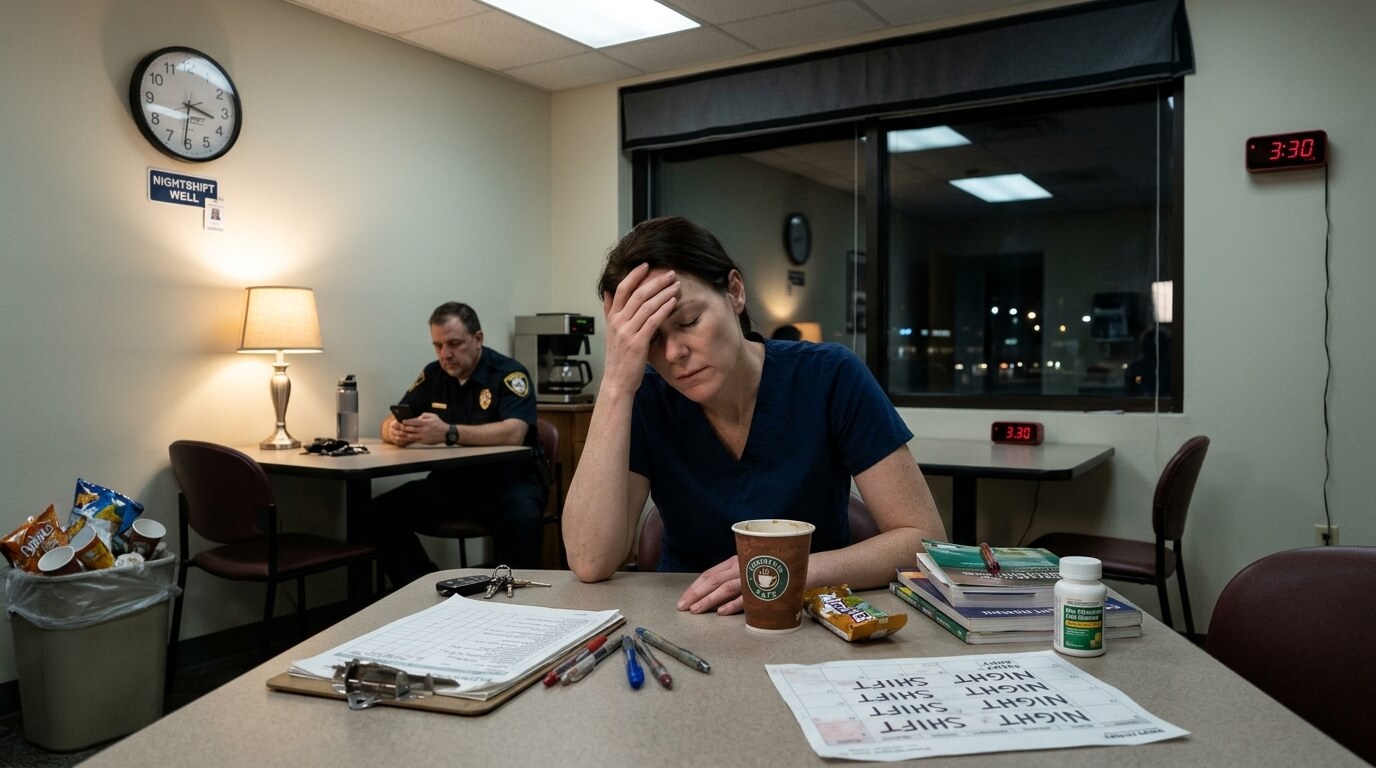
The heater in the car is blasting, but the chill still creeps through the floorboards. It’s barely 6:30 on a Tuesday, and the sun is just a faint, cold streak on the horizon, casting a harsh glare right across the windshield. Traffic is already crawling. Looking over at the lane beside me, almost everyone is doing the exact same thing—clutching a paper coffee cup, staring ahead, listening to whatever talk radio is rambling on about, and bracing themselves for another long day at the office. Meanwhile, you are pulling dark sunglasses over your eyes, fighting off a headache, and heading home after a grueling twelve-hour night shift.
Your feet feel like cinder blocks. Your eyes are dry and stinging. But the worst part is not even the physical tiredness—it is the sinking feeling in your chest when you realize you have to get up and do the exact same thing again tonight. You drag yourself into the house, pull the blinds shut, slip under the blankets, and lie there wide awake while your mind races about everything you did not get done.
If this scenario feels like your everyday reality, you are dealing with something far deeper than just missing a few hours of sleep. You are experiencing night shift burnout.
Working when the rest of the world is sleeping puts a massive strain on your mind, your body, and your personal life. When you do it week after week without the right recovery habits, your body eventually hits a wall. But burnout does not have to be the end of your career or your health. By understanding what is happening behind the scenes, catching the warning signs before they destroy your momentum, and putting practical recovery steps into action, you can protect your sanity and get your life back.
What Night Shift Burnout Really Means
Before you can tackle burnout, you need to understand what it actually is—and what it is not.
Occupational burnout is not a personal failure, and it is not a sign that you are weak or incapable. The World Health Organization officially defines burnout as an occupational phenomenon caused by chronic, unmanaged stress in the workplace. It is an environment and schedule problem, not a character flaw.
It is also important to separate occupational burnout from medical diagnoses like clinical depression or anxiety disorders. While clinical depression affects every single corner of your life regardless of where you are or what you are doing, burnout is directly tied to your job and your work schedule. Depression often requires medical treatment or therapy, whereas burnout usually stems from an imbalance between what your job demands from you and the time or resources you have to recover.
When you work non-traditional hours, that balance breaks down much faster. Burnout means your physical, mental, and emotional gas tank is completely empty, and the routine you currently have is not giving you enough fuel to fill it back up.
How to Tell If You Are Burning Out
Burnout doesn’t show up out of nowhere. You don’t just wake up one Tuesday morning completely broken. It creeps in slowly over weeks or months. At first, you’re just a little tired. Then, basic tasks you used to do on autopilot start feeling like climbing a mountain. Catching it early is the only way to fix it before your body forces you to stop.
Physical Signs
Your body usually gives out before your brain admits anything is wrong.
- Exhaustion that sleep won’t fix: You can stay in bed for eight or nine hours and still wake up feeling like you haven’t slept in days.
- Random aches and frequent sick days: You get hit with constant tension headaches, stomach knots, or muscle tightness. Your immune system takes a hit too, meaning you catch every bug floating around the breakroom.
- Feeling “wired and tired”: You drag yourself through a twelve-hour shift, but the minute your head hits the pillow at 9:00 AM, your heart starts racing and your mind won’t shut down.
Emotional and Mental Signs
Burnout changes how you react to people and how you handle your shift.
- Cynicism and numbness: You find yourself getting easily annoyed with your coworkers, patients, or customers. Over time, you might stop caring altogether just to protect yourself from stress.
- Feeling like your work doesn’t matter: No matter how hard you push or how much overtime you take, it feels like you’re throwing effort into a black hole.
- Brain fog and a short fuse: Small problems make you snap. Making simple choices at work feels like trying to think through thick fog.
Why the Night Shift Makes Burnout So Much Worse
Working nights adds extra pressure that day-shift workers never see. Feeling this way isn’t a sign that you’re weak or bad at your job—it’s just how human bodies react to working against the sun.
1. Fighting Your Natural Internal Clock Your brain is hardwired to respond to natural light. Daylight signals your body to wake up, move around, and digest food. Bright fluorescent lights at night trick your system, and sleeping during the day throws your hormones out of balance. Over time, living out of sync with daylight creates constant physical stress.
2. Missing Out on Normal Life Living on an inverted schedule separates you from the people you care about. When you wake up, your family is wrapping up their day or heading to bed. On your days off, your friends are busy working. Missing family meals, weekend get-togethers, or kids’ games leads to a quiet kind of isolation that makes tough shifts even harder to handle.
3. Doing the Same Work with Half the Support Night shifts in hospitals, warehouses, and emergency services usually run on skeleton crews. You’re often expected to handle the same workload as the day shift, but without extra hands, open cafeterias, or managers around to help when things go wrong. Carrying that extra weight night after night speeds up mental exhaustion.
Sleep and Recovery Habits That Actually Work
You cannot recover from night-shift burnout without fixing your sleep foundation. Because daytime sleep is naturally lighter and more prone to interruptions than nighttime sleep, you have to treat your bedroom like a non-negotiable sleep sanctuary.
Block Out Every Speck of Light
Sunlight hitting your skin or eyes triggers an immediate release of cortisol, telling your brain that the day has started.
- Install thick blackout curtains over your bedroom windows, and use painter’s tape or tension rods to close off any gaps around the edges.
- Put dark window film on the glass to block intense morning glare.
- Use a comfortable, contoured sleep mask that covers your eyes completely without pressing on your eyelids.
Control Sound and Temperature
Daytime brings traffic, construction, doorbells, and noisy neighbors.
- Run a heavy box fan or a dedicated white noise machine to drown out sudden outdoor sounds.
- Wear soft silicone earplugs if high-pitched noises still get through.
- Keep your bedroom cool—ideally between 65 and 68 degrees Fahrenheit. Your core body temperature needs to drop for you to enter deep sleep, and a warm room keeps your body in a state of light, restless slumber.
Protect an Unbroken Sleep Window
Avoid splitting your daytime sleep into small two-hour chunks throughout the day. Sleeping for four hours in the morning and three hours before your shift leaves you in a constant state of sleep inertia. Aim for one long, uninterrupted sleep block right after you finish your post-shift routine.
Setting Boundaries and Managing Overtime
When your workplace is short-staffed, management often relies heavily on night workers to pick up extra shifts. The extra overtime pay on your paycheck can be tempting, but working continuous overtime when your body is already exhausted is the fastest route to total burnout.
Learn the Art of Saying No
You do not owe your workplace your physical or mental collapse. Saying no to extra shifts when your gas tank is empty is an act of self-preservation. You do not need to make up elaborate excuses; a clear, polite statement like, “I am not available to cover that shift,” is completely sufficient.
Draw a Line Between Work and Home
When your shift ends, your work brain needs to turn off completely.
- Do not check work emails, group chats, or scheduling apps while you are at home trying to rest.
- Take off your work uniform or work clothes the second you get home to signal to your brain that your duties are done.
- Avoid discussing work stress the moment you wake up; give yourself time to ease into your day first.
Making the Most of Shift Breaks
How you spend your breaks during a twelve-hour night shift plays a massive role in how exhausted you feel by 5:00 AM. Many people spend their thirty-minute meal break staring at their phone, checking the news, or scrolling through stressful social media feeds.
Practice True Micro-Recovery
- Step away from screens: Give your eyes and your brain a break from blue light and constant stimulation.
- Eat light, nutrient-dense foods: Heavy, greasy meals eaten at 2:00 AM are hard for your sluggish digestive system to process, leading to bloating and stomach pain. Choose light snacks like nuts, fruit, yogurt, or lean protein.
- Take a quick 20-minute power nap: If there’s a quiet break room, an empty call room, or even just a private spot at work, set a timer for 20 minutes and rest your eyes. A short nap like this recharges your brain without giving you that post-sleep grogginess.
The Power of Genuine Social Support
Cutting yourself off from people only makes burnout worse. Having genuine human connections—whether that’s friends, family, or work buddies—gives you something to lean on when stress hits. Even if your schedule is completely packed, making a little time for the people in your life keeps you tethered to reality beyond your job.
Schedule Social Time Intentionally
Do not wait for social events to happen naturally, because when you work nights, they rarely will.
- Put social connections on your calendar just like you would a doctor’s appointment.
- Plan a quick breakfast with your partner or a friend right after your shift ends before they head to work.
- Set up a weekly phone call during your commute to catch up with family.
- Connect with coworkers who understand the exact pressures of the night shift. Having someone to talk to who truly “gets it” provides instant emotional relief.
How to Handle Your Days Off Strategically
A massive trap that night-shift workers fall into is trying to completely flip their sleep schedule back to a normal day schedule on every single day off. You finish your shift on Friday morning, stay awake all day Friday to spend time with family, sleep Friday night, and then try to flip back on Sunday.
This constant shifting creates severe, self-induced jet lag every single week. Your body never gets a chance to stabilize its internal clock, leaving you chronically exhausted.
The “Anchor Sleep” Method
Instead of forcing a full daytime flip, consider using an anchor sleep routine on your days off.
- When you get home on your first day off, sleep for a shorter four-hour block (for example, from 8:00 AM to 12:00 PM).
- Get up and enjoy the afternoon and evening with your family or friends.
- Go to bed later that night (around 2:00 AM) and wake up around 10:00 AM.
This approach lets you enjoy daylight hours and spend time with loved ones without completely destroying your sleep foundation before your next work cycle begins.
Talking to Your Manager or Occupational Health
If your workload, staffing levels, or shift rotation are driving you toward a physical breakdown, it is time to have a professional conversation with your employer. Burnout is a workplace safety hazard—an exhausted worker is far more likely to make costly or dangerous mistakes.
How to Frame the Conversation
When you speak with your supervisor, manager, or occupational health representative, keep the focus on safety, performance, and solutions.
- Connect the dots between your hours and your work quality: Tell your manager plain and simple that running on empty puts safety and work accuracy at risk. Frame it around doing a good, safe job. When you talk about job safety and avoiding mistakes, you give your boss a clear, practical reason to take your request seriously.
- Come to the table with real solutions: Don’t just walk in, say you’re exhausted, and hope they figure it out. Bring a couple of simple ideas with you. Ask if you can pause voluntary overtime for thirty days, move off a messy rotating shift, or adjust your start time by an hour to get a better sleep window.
- Take advantage of your company’s EAP: Check if your employer offers an Employee Assistance Program. Most EAPs give you a handful of free, completely confidential counseling sessions, and they can connect you directly with therapists who understand shift work and burnout. When It Is More Than Burnout
When Symptoms Are More Than Burnout
Burnout usually lifts once you step away from work and get proper rest. But when chronic stress goes on for too long, it can cross the line into clinical anxiety or depression. Knowing when self-care isn’t cutting it anymore can save your health.
Red Flags That Require Medical Attention
- The heavy mood will not lift: You feel down, empty, or numb for weeks at a time, and taking time off work does not fix it.
- You stop caring about things you used to love. Hobbies, hanging out with friends, or watching your favorite shows just leave you feeling completely blank.
- Your body goes into panic mode. You get sudden chest tightness, a pounding heart, or trouble breathing for no clear reason.
- You feel like things will never get better. You catch yourself thinking that the future is empty or having scary thoughts about hurting yourself.
If you recognize any of these warning signs, reach out to a primary care doctor, a mental health professional, or a crisis hotline immediately. Seeking professional medical care is not a failure; it is the smartest step you can take to protect your life and health.
Taking Your Next Step Today
Overcoming night-shift burnout does not mean you have to completely overhaul your entire life by tomorrow morning. Trying to fix everything at once usually just adds to your stress.
Instead, choose one small, manageable habit to start with today. Order a comfortable blackout eye mask, set your bedroom thermostat a few degrees cooler, say no to one extra overtime shift this week, or schedule a thirty-minute breakfast with a friend after work tomorrow. Small, deliberate actions accumulate quickly over time, helping you rebuild your energy, protect your health, and conquer the night shift on your own terms.
Frequently Asked Questions
Can you fully recover from night shift burnout without quitting your job?
Yes, many shift workers successfully recover from burnout while staying on the night shift. Doing so requires making major, non-negotiable changes to your sleep environment, setting strict boundaries around extra overtime, eating light meals during your shift, and getting clear support from your management and family.
How long does it usually take to recover from burnout?
It really depends on how deep in the hole you are. If you catch it early and immediately start protecting your rest and saying no to extra shifts, you can start feeling like yourself again in about three to four weeks. But if you have been pushing through severe burnout for months or years, don’t expect a quick fix. Rebuilding your energy and nervous system after long-term physical and mental exhaustion usually takes several months of steady rest, real boundary setting, and often help from a doctor or counselor.
What is the ideal room temperature for daytime sleep?
Aim for 65 to 68 degrees Fahrenheit (18 to 20 degrees Celsius). Your body’s internal temperature naturally drops when you sleep at night. When you try to sleep during the hot daylight hours, your body struggles to make that drop on its own. Keeping your bedroom cranked down cool tricks your system into thinking it is nighttime, making it much easier to drift off and stay asleep through the noise and glare of the day.
Should I use caffeine to get through a burnt-out night shift?
Caffeine can help you stay alert during the first half of your shift, but overusing it to fight off deep burnout often backfires. Stop consuming coffee, energy drinks, or soda at least four to five hours before your shift ends so the caffeine does not interfere with your ability to fall asleep when you get home.

Daniel Carter is the founder of NightShiftWell. He spent over a decade working night and rotating shifts in logistics and warehouse operations before starting this site to share what actually works — and what doesn’t — for staying healthy on an inverted schedule.