
Last updated: November 11, 2026
Medically reviewed by: Dr. Emily Carter, MD , Board-Certified Family Medicine Physician
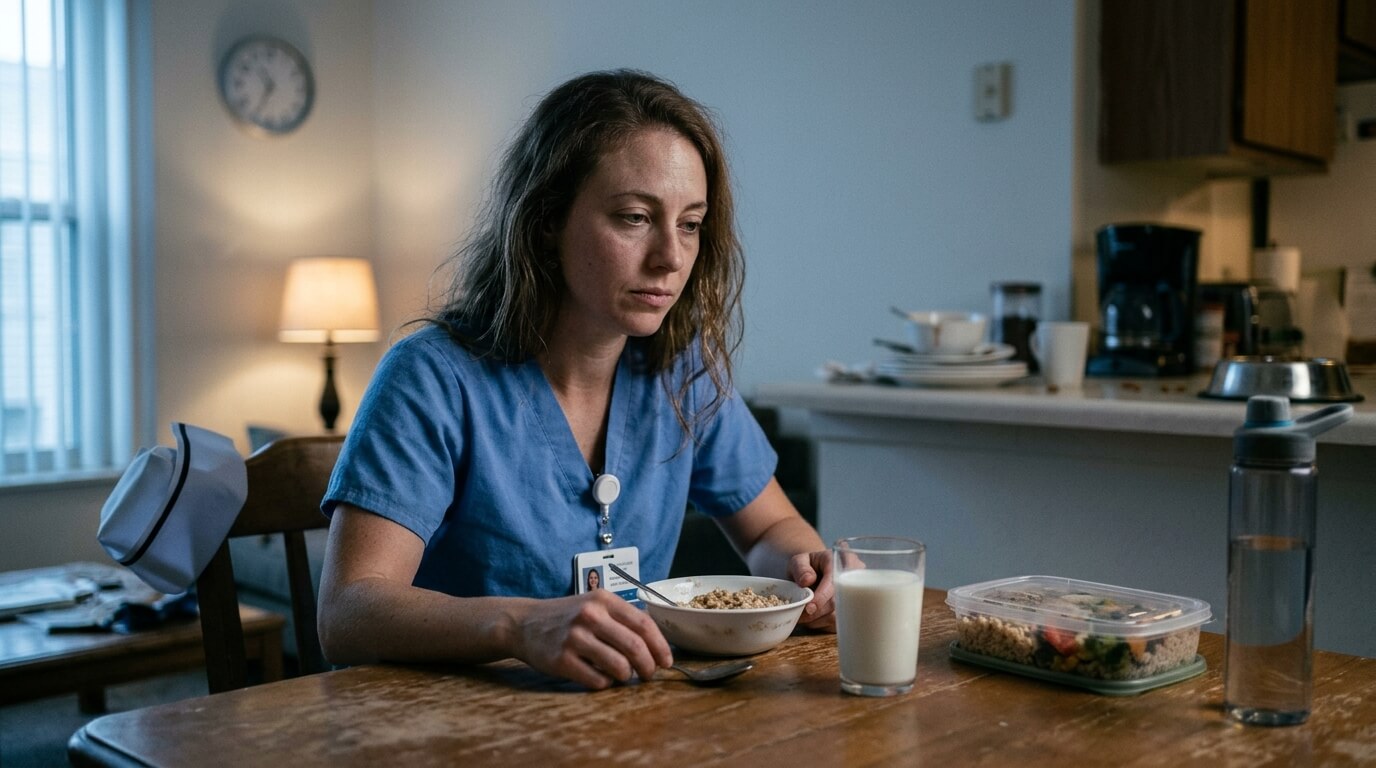
You kick off your shoes at seven in the morning, completely drained after working all night. The sun is poking through the blinds, your legs feel heavy, and your stomach gives a loud, embarrassing growl. You stand there in your dark hallway, caught in a classic morning standoff. Half of you wants to crawl straight under the covers and crash for the next eight hours. The other half wants to open the fridge and eat whatever you can find.
Deciding what to do about food when you get home is one of the hardest parts of working nights. If you go to sleep on an empty stomach, sharp hunger pangs will probably yank you awake by ten in the morning. But if you sit down and eat a massive breakfast, you might spend the whole day tossing and turning with a burning chest and a heavy, stuffed belly. Finding that sweet spot comes down to knowing how your stomach handles food at dawn and picking small bites that settle your gut so you can actually get some rest.
Why This Question Matters for Night Workers
Every single person who works overnight deals with this exact problem at the end of their shift. The main question—Eating After a Night Shift: Should You Eat Before Bed?—is not just about stopping a rumbling stomach. It comes down to protecting your energy, keeping your digestive system healthy, and getting enough sleep so you can function like a normal human being.
Working nights turns your natural biology upside down. During the daytime, your digestive tract stays busy, churning out active enzymes to break down meals and turn them into usable energy. When the sun goes down, your internal clock tells your stomach and intestines to slow way down so your body can rest and repair.
When you walk into your house at dawn, your stomach is running in low-power mode. Stuffing a giant plate of greasy food into a sleepy stomach forces your organs to work overtime right when your brain is trying to turn off. Once you understand how late-night food affects your rest, you can make simple choices that keep your stomach calm and let you sleep deeply.
Large Meals Versus Small Snacks Before Sleep
When you finish a grueling 12-hour shift, your appetite plays mind games with you. Being dead tired often feels just like being starving, making a big plate of bacon, eggs, and hash browns look like heaven. But eating a huge meal right before you lie flat is a fast track to a terrible day of rest.
When your stomach goes to work breaking down a heavy pile of food, your core body temperature goes up. Your body actually needs its internal temperature to drop a degree or two to slide into deep, restorative sleep. A heavy meal turns up your internal furnace, which stops you from getting into those deep sleep stages. You might pass out from pure exhaustion, but you will wake up sweaty, groggy, and just as tired as when you laid down.
A light snack is a much safer bet. Keeping your post-shift food between 150 and 250 calories gives your stomach just enough to do without overloading your system. A small bite keeps your blood sugar from crashing while letting your core temperature cool off naturally so you stay asleep.
The Tricky Relationship Between Hunger and Sleep
Trying to fall asleep while your stomach is growling is pure torture. Going to bed on a completely empty stomach creates its own set of annoying problems for shift workers.
When you go hours without a bite, your blood sugar takes a dive. If it drops too low while you are sleeping, your brain panics and shoots out stress hormones like cortisol and adrenaline. These hormones act like a cold bucket of water thrown on your face, waking you up around ten or eleven in the morning with a racing heart. Once those stress hormones take over, getting back to sleep is almost impossible.
Pay attention to what your body is telling you before you hit the mattress:
- If you feel full from an overnight meal at work: Skip the kitchen completely, drink a few sips of water, and head straight to bed.
- If you feel just a little hollow: Grab a quick 100-calorie bite to keep your blood sugar steady through the morning.
- If your stomach is growling loudly: Make a light, soft mini-meal so hunger does not wake you up two hours later.
Matching what you eat to how hungry you actually feel saves you from both mid-morning wake-up calls and nasty acid reflux.
Managing Reflux and Indigestion When Lying Down
Acid reflux is the absolute worst enemy of anyone working night shifts. When you stand or sit upright during the day, gravity holds your stomach acid down where it belongs. The minute you lie flat on your back or side, that gravity trick stops working.
If your stomach is full of heavy, greasy food, that burning acid can slide back up into your throat. It leaves a sour taste in your mouth, causes a burning feeling in your chest, and triggers a dry cough that keeps you staring at the ceiling.
You can protect your chest and throat with a few simple habits:
- Give yourself a buffer: Stay upright for at least 30 to 45 minutes after eating before you lay down flat.
- Prop yourself up: Use an extra pillow or raise the top of your mattress a bit so gravity can keep your stomach acid down.
- Ditch tight clothes: Slip into loose, soft sweatpants right away so tight waistbands do not squeeze your belly while you digest.
Taking these quick steps lets your stomach start breaking down your food comfortably while you do your normal wind-down routine.
Foods That Are Easier on a Sleepy Stomach
Choosing the right pre-bed snack comes down to picking foods that digest smoothly and help your muscles relax. You want to combine a little bit of lean protein with slow-burning complex carbohydrates.
Protein has an amino acid called tryptophan, which your brain uses to make melatonin—the natural chemical that tells your body it is time to sleep. Complex carbs help deliver that tryptophan right to your brain, making this combination a great natural sleep aid.
Here are a few gentle snacks that sit easily on a tired stomach:
- A small bowl of warm oatmeal with almond butter: The oats give you soothing complex carbs, while the nut butter adds healthy fat and protein.
- Scrambled eggs with a piece of whole-grain toast: Eggs take two minutes to cook, are super soft on the stomach, and pack plenty of tryptophan.
- Plain Greek yogurt with pumpkin seeds: Smooth yogurt gives you easy-to-digest protein, while pumpkin seeds add a good hit of natural magnesium to relax your muscles.
- A ripe banana with a handful of walnuts: Bananas are full of potassium and magnesium, which help calm jumpy legs after a long shift on your feet.
These simple pairs give your body good nutrition without forcing your stomach to churn all morning long.
Foods and Drinks That Destroy Daytime Sleep
Knowing what to leave on the counter is just as important as knowing what to eat. Certain foods will completely ruin your sleep if you eat them before bed.
Greasy, high-fat foods are the absolute worst offender after a night shift. Drive-thru breakfast sandwiches, bacon, sausage, and deep-fried hash browns take forever to digest. They sit in your gut like lead, generating heat and causing heartburn the second your head hits the pillow.
Spicy foods with hot sauce or heavy peppers are another bad idea. The spicy stuff raises your body temperature and irritates your stomach lining, making it really hard to settle down.
Sugary cereals, donuts, and sweet pastries cause a fast spike in your blood sugar, followed by a sharp drop an hour or two later. That drop triggers a stress response that wakes you right up.
Finally, watch out for late-shift caffeine. Grabbing a cup of coffee at six in the morning so you can make the drive home safely means that caffeine will still be buzzing in your head at noon, fighting your sleep the whole time.
Managing Hydration Before You Sleep
Dehydration happens all the time on night shifts, especially if you work in dry, air-conditioned places like hospitals, warehouses, or offices. Going to bed dried out leads to painful calf cramps, a scratchy throat, and a dull headache that wakes you up early.
However, chugging two big glasses of cold water right before you jump into bed is a big mistake. Your bladder will fill up fast, forcing you to get up for the bathroom just when you are getting into a good, deep sleep.
Try this simple way to handle your water:
- Drink water early: Get most of your water in during your last hour at work or on the drive home.
- Slow down at home: Take just a few tiny sips of water while getting ready for bed to wet your mouth without filling your bladder.
- Sip warm tea: A small cup of warm chamomile tea helps relax your nerves while keeping your liquid intake low.
This gives your body the moisture it needs without waking you up to run to the bathroom two hours later.
What to Do If You Train or Exercise After Your Shift
Some people like to go to the gym or run right after work to blow off steam before heading home to sleep. While exercising is great for you, working out at dawn changes what your body needs before bed.
Exercise burns through your energy stores and breaks down muscle tissue. If you go straight to bed after a workout without eating anything, your muscles will struggle to repair themselves, and you will wake up feeling sore, weak, and completely run down.
If you hit the gym after your shift, your pre-sleep snack needs to be a little bigger and focused on recovery. A quick smoothie made with milk, half a banana, and a scoop of protein powder works great. It gives your muscles fast protein and complex carbs to restock your energy, all in a liquid form that digests easily while you rest.
Practical Examples of Post-Shift Snack Options
To make your morning dead simple, here are five easy post-shift ideas you can make in under five minutes when you are running on empty:
- Option 1 (The Warm Bowl): A small bowl of warm oatmeal mixed with a drizzle of honey and a few chia seeds.
- Option 2 (The Simple Toast): One slice of whole-wheat toast with mashed avocado and a hard-boiled egg.
- Option 3 (The Cold Cup): Half a cup of cottage cheese or Greek yogurt topped with sliced peaches or berries.
- Option 4 (The Quick Grab): A ripe banana smeared with a tablespoon of peanut butter.
- Option 5 (The Soothing Drink): A small cup of warm milk or almond milk paired with a few whole-grain crackers.
Keeping these simple items in your kitchen takes all the guesswork out of mornings when you walk through the door exhausted.
When Digestive Symptoms Need Medical Advice
While an occasional sour stomach or heartburn happens to almost everyone on nights, ongoing stomach trouble is not something you should ignore. Working irregular hours puts real strain on your gut, making shift workers more prone to long-term digestive problems.
If you deal with bad, burning chest pain that wakes you up all the time, frequent throwing up, unexplained weight loss, or sharp stomach pain that does not go away when you change your diet, go talk to a doctor. A medical professional can check for things like acid reflux disease or ulcers and help you build a safe daily routine that protects your gut.
Frequently Asked Questions
Is it bad to go to sleep on an empty stomach after a night shift?
Going to sleep totally empty is usually a bad idea if you have not eaten in more than four hours. Low blood sugar makes your body drop stress hormones like cortisol into your system, which wakes you up early with a jumpy feeling and makes it really hard to drift back to sleep.
How long should I wait to sleep after eating a light post-shift snack?
Try to wait about 30 to 45 minutes after eating before you lie down flat. That short wait gives your stomach time to start breaking down the food and moving it down, which cuts way down on acid reflux and heartburn.
What if I am craving a heavy breakfast like bacon and pancakes after my shift?
Craving heavy greasy food is totally normal when you are exhausted because your brain wants quick fuel. But eating heavy fat and sugar right before bed drives up your body temperature and messes with your stomach. Eat a small, healthy bite now, and save that big breakfast plate for when you wake up later in the day.
Will drinking water right before bed wake me up to use the bathroom?
Drinking a big glass of water right before lying down will almost definitely wake you up for a bathroom trip. Drink most of your water during your last hour at work and on the way home, then switch to small, tiny sips right before bed.

Daniel Carter is the founder of NightShiftWell. He spent over a decade working night and rotating shifts in logistics and warehouse operations before starting this site to share what actually works — and what doesn’t — for staying healthy on an inverted schedule.