Last updated: November 10, 2026
Medically reviewed by: Dr. Emily Carter, MD , Board-Certified Family Medicine Physician
You are standing in the kitchen at 4:00 AM, staring at a glass of water. You feel thirsty, your throat is dry, and your head hurts just a little bit from staring at computer screens or machinery for the last eight hours. But then a heavy thought stops you in your tracks. If you drink that full glass of water right now, you know exactly what will happen. Two hours from now, when you finally crawl into bed and try to sleep while the sun is coming up, your bladder will wake you up. You will stumble down the hall, completely ruining your precious daytime rest.
Working overnight forces you into a strange tug-of-war with your own biology. Your body still runs on an ancient internal clock that expects you to sleep when it is dark and drink water when the sun is up. When you flip that schedule upside down, your normal thirst signals get confused. Many night workers make the mistake of avoiding fluids entirely just to protect their sleep. That leaves them exhausted, dizzy, and running on empty. You do not have to choose between constant dehydration and a broken sleep cycle. Finding a middle ground comes down to timing your fluids smartly and understanding how your body handles water in the dark.
Why Hydration Gets Overlooked on the Night Shift
When the sun goes down, your brain’s master clock tells your kidneys to slow down urine production so you can sleep through the night. But if you are wide awake at midnight operating a forklift, typing code, or walking a hospital floor, your kidneys are still following that sleepy nighttime script. At the same time, your natural sense of thirst gets muted. Night workers often forget to drink water because the body’s internal thirst trigger simply does not shout as loudly during the overnight hours.
On top of that biological confusion, your work environment plays tricks on you. Many night jobs happen inside climate-controlled buildings with aggressive air conditioning or industrial heating systems. That indoor air is shockingly dry. It pulls moisture right out of your skin and breath without you ever breaking a sweat. Dry indoor air acts as a silent moisture thief, making you lose fluids rapidly while you sit entirely still. Because you are busy, tired, and cold, you do not feel parched. By the time you actually notice your mouth is dry, mild dehydration has already set in, dragging your energy levels down with it.
Signs to Pay Attention to Before Fatigue Takes Over
Dehydration rarely announces itself with a flashing neon sign. Instead, it sneaks up on you wearing the mask of sheer exhaustion. When you feel that heavy afternoon slump hitting you at 3:00 AM, it might not just be your circadian rhythm talking—it could be low fluid levels.
You might notice a dull, nagging headache creeping in behind your eyes. Your lips feel dry, your mouth feels sticky, and you find yourself snapping at coworkers over minor issues. Little mood changes and brain fog are often the very first warning signs that your brain cells are shrinking from a lack of water. Muscle cramps in your calves or feet while walking the floor are another glaring hint. If you wait until you feel desperately thirsty, you are already behind. Learning to spot these quiet warnings helps you fix your fluid levels before your shift turns miserable.
Managing Your Fluid Intake During the Shift
You do not need to chug a massive liter of water all at once to stay hydrated. In fact, doing that at work is a guaranteed ticket to an urgent bathroom break ten minutes later. The secret to comfortable night-shift hydration is steady sipping rather than occasional flooding.
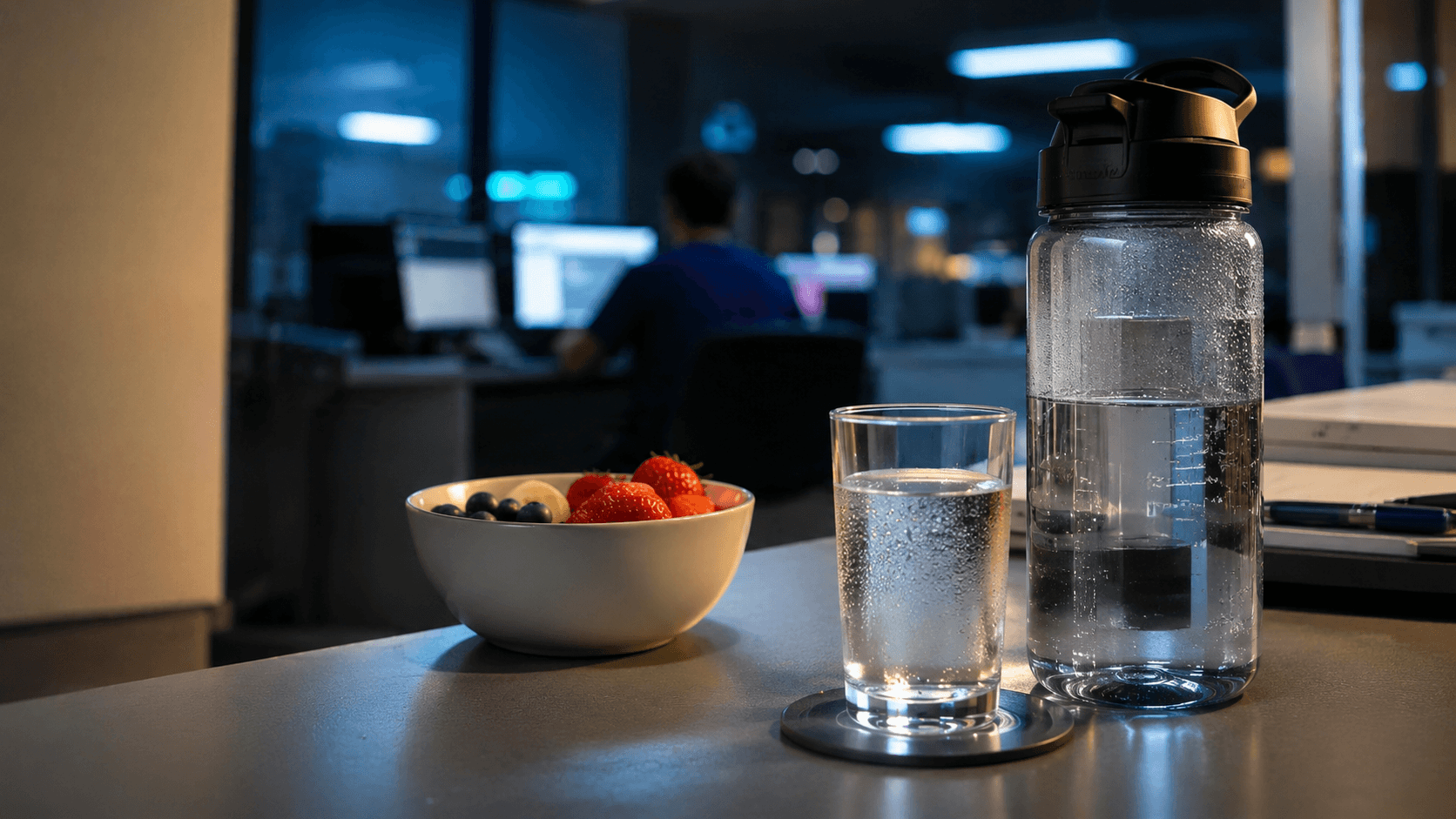
Keep a reusable water bottle right beside your workspace where you can see it. Instead of ignoring it for hours and then panicking, take small, regular sips every ten or fifteen minutes. Small, consistent sips allow your body to absorb the moisture gradually without overwhelming your stomach or your bladder. If you work a physically demanding job where you sweat heavily, your body loses essential salts along with water. In that case, mixing in a pinch of salt, a squeeze of lemon, or a light electrolyte packet helps your cells hold onto that water instead of just running straight through you.
Water Versus Caffeinated Drinks
Let’s be honest about what keeps the night shift moving: coffee, energy drinks, and strong black tea. It is almost impossible to imagine surviving an overnight schedule without a warm cup of joe or a caffeinated soda. Caffeine is a mild diuretic, meaning it tricks your kidneys into pushing out extra fluid.
If you rely entirely on energy drinks and sweet coffee to stay awake, you are actually digging a deeper dehydration hole for yourself. Every cup of coffee pulls a bit of moisture out of your system. You do not have to give up your shift coffee, but you must treat it as a bonus, not a replacement for plain water. A great rule of thumb is to match every caffeinated beverage with a separate glass of water. When you use water to balance out your caffeine, you get the mental boost you need without waking up with a pounding dehydration headache at the end of your shift.
Meals, Salty Foods, and Your Thirst Trigger
What you eat during the night directly changes how much water your body demands. Shift workers often grab heavy, salty convenience foods from vending machines or fast-food drive-thrus because cooking at home feels impossible. Salty chips, processed meats, and heavy takeout meals cause your body to hold onto sodium, which instantly triggers intense thirst.
When you eat a heavy, salty meal at 2:00 AM, your body screams for water to balance out that salt load. If you give in and chug a massive amount of fluid right after eating a salty snack, your bladder will fill up rapidly just as you are trying to wind down for sleep. Pairing your work meals with moderate, steady sips of water rather than a sudden flood keeps your digestion comfortable. Choosing fresh fruit, vegetables, and simple proteins gives your body natural moisture alongside your food, reducing those sudden, desperate spikes in thirst.
Tapering Fluids Before Sleep
This is where most night shift hydration plans either succeed or crash and burn. If you drink a massive bottle of water during your final hour on the job, your sleep will be interrupted. The golden rule of night shift sleep protection is to establish a strict fluid cutoff window.
About two hours before your shift ends, stop drinking large amounts of fluid. Tapering your water intake down to tiny, mindful sips during your final two hours allows your kidneys to process what is already in your system. By the time you clock out, drive home, and pull your bedroom curtains closed, your bladder will be mostly empty. You will not have to choose between waking up parched and waking up to sprint to the bathroom every single hour.
Special Challenges for Hot and Physical Jobs
Not all night shifts happen in quiet, climate-controlled offices. Millions of workers spend their nights on hot factory floors, inside busy commercial kitchens, around heavy machinery, or out on outdoor logistics yards. Physical labor combined with warm ambient temperatures changes your hydration math completely.
If you are sweating through your clothes while lifting heavy boxes or monitoring hot industrial equipment, your body is losing vital electrolytes at a rapid rate. Plain water alone is not always enough when you are engaged in heavy physical exertion through the night. In these environments, you need to lean on cool, refreshing fluids paired with proper sodium and potassium replenishment. Listen closely to your body. If your skin feels hot, your mouth is dry, and your muscles feel tight, step away for a moment, take deliberate sips of water, and give your body a fighting chance to cool down.
A Simple Bottle Routine That Actually Works
Complicated hydration apps and strict medical guidelines rarely survive a chaotic night shift. You need a dead-simple routine that runs on autopilot. Fill one large, reliable water bottle right before you leave your house.
Divide your shift mentally into two halves. Aim to finish about two-thirds of that bottle during the first half of your shift when your body is more active. Sip it steadily between tasks. During the second half of the night, slow your drinking down significantly. By the time dawn approaches, your bottle should be completely empty, and you should be taking your last few tiny sips. This simple visual container trick removes all guesswork, ensuring you get what your body needs without keeping you awake all day.
Frequently Asked Questions
How much water should I drink during a night shift?
There is no magic universal number that fits every single person. Your ideal amount depends entirely on your body size, how much you sweat, and whether your workplace is hot or dry. Instead of forcing yourself to drink a rigid amount, let steady sipping guide you so your urine stays a pale, light yellow without making you constantly uncomfortable.
Will drinking water right before sleep ruin my rest?
Yes, if you chug a large volume of liquid right before you lie down, your sleep will almost certainly be interrupted by urgent bathroom trips. Tapering your fluid intake down during the final two hours of your shift prevents this issue, letting you rest peacefully without waking up parched or overfilled.
Can I count coffee and tea toward my daily fluid total?
Sure, your morning brew or midnight mug of tea adds some liquid to your system, but caffeine acts like a gentle nudge to your kidneys to flush water out faster. Think of coffee as your shift fuel rather than your actual hydration source. As long as you match your coffee cups with a glass of plain water, you stay balanced without drying out.
What are the best ways to stay hydrated without running to the bathroom constantly?
Ditch the habit of chugging half a water bottle all at once when you suddenly remember you are thirsty. Instead, keep your bottle close by and take tiny, quiet sips every few minutes while you work. That slow, steady drip gives your cells time to actually soak up the moisture instead of flooding your bladder all at once.

Daniel Carter is the founder of NightShiftWell. He spent over a decade working night and rotating shifts in logistics and warehouse operations before starting this site to share what actually works — and what doesn’t — for staying healthy on an inverted schedule.