
Last updated: November 11, 2026
Medically reviewed by: Dr. Emily Carter, MD , Board-Certified Family Medicine Physician
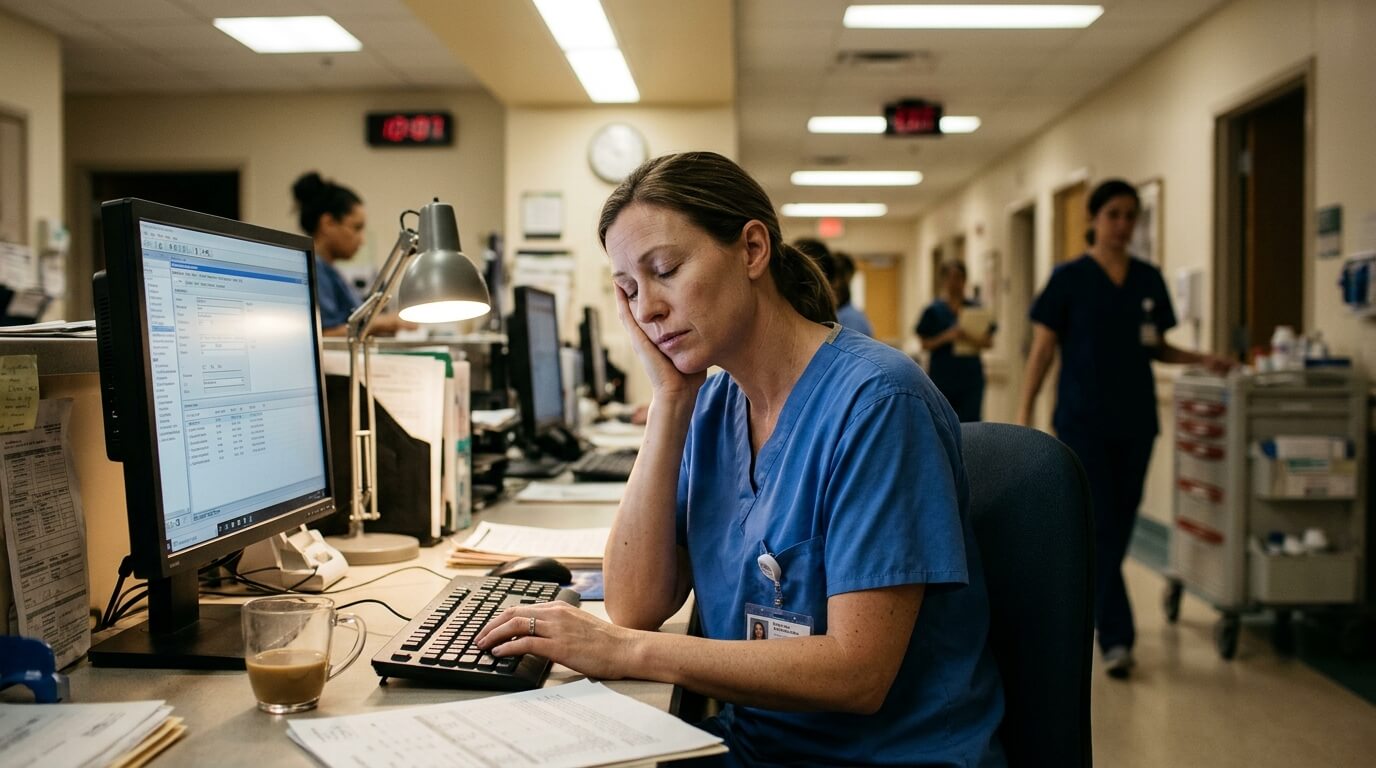
It is 3:15 in the morning. The building is quiet, the same task has been in front of you for the last hour, and your eyes are starting to feel heavy. You tell yourself you only need to make it through a few more hours.
Then you blink.
For a moment, you cannot remember what you were just doing.
Maybe you were reading a report. Maybe you were watching a machine. Maybe you were driving home after work and suddenly realized you had no memory of the last stretch of road.
That can be more than ordinary tiredness. It may be a microsleep.
Microsleeps are very short periods when a person briefly falls asleep or loses awareness. They can happen when someone is extremely sleepy, and they can be especially dangerous during a night shift. A few seconds may not sound like much, but a few seconds without full attention can be enough to miss a warning, make a wrong move, or cause a serious crash.
Understanding microsleeps on night shift is not about frightening tired workers. It is about knowing when sleepiness has crossed the line from uncomfortable to unsafe.
What Is a Microsleep?
A microsleep is a brief, unintended episode of sleep or reduced awareness. It can happen when the brain is struggling to stay awake.
You might close your eyes for a moment. Your head might drop and come back up. You might keep your eyes open but fail to take in what is happening around you. Sometimes the person does not realize anything happened until afterward.
Imagine reading a page at work and reaching the bottom without knowing what you just read. You go back to the beginning and try again. That does not automatically mean you had a microsleep, but if this keeps happening along with heavy eyelids and strong sleepiness, it is a warning that your brain is having trouble staying alert.
A more concerning example is losing a small piece of time. You are watching the road, a computer screen, or a piece of equipment, and then suddenly you realize you have missed several seconds.
A microsleep is not something you can reliably control through willpower.
That is what makes it different from simply deciding to take a mental break.
Why Night Workers Are More Vulnerable
Night work asks your body to do something it naturally resists: stay awake when it expects you to sleep.
Your circadian rhythm, or internal body clock, helps control when you feel awake and when you feel sleepy. During the middle of the night and early morning, the drive to sleep can become strong. That is one reason a person who felt perfectly fine at the start of an overnight shift may struggle badly a few hours later.
The problem can be worse if the worker did not get enough sleep before the shift.
Daytime sleep is not always easy, either. A night worker may get home at 7 a.m. hoping to sleep, only to deal with sunlight coming through the window, traffic outside, a barking dog, children getting ready for school, or a phone that keeps buzzing.
The result is often a shorter sleep period than the worker intended.
Rotating schedules can add another layer. Someone might work days for a few days, switch to evenings, and then move to overnight work. The body does not instantly reset each time the schedule changes.
Night-shift fatigue is not simply a matter of being “tough enough” to stay awake. Your body clock, sleep amount, work schedule, and surroundings all play a part.
Warning Signs of Microsleep
Microsleep does not always announce itself clearly. Often, the first signs are small things that workers may ignore.
You might notice that you are yawning repeatedly. Your eyes may burn or feel unusually heavy. You may blink more often than normal or catch yourself rubbing your eyes.
Then concentration starts to slip.
You read the same sentence several times. You forget why you walked into another room. You lose track of a conversation. A task you normally do without thinking suddenly takes much longer.
Other warning signs include:
- Your head starts nodding.
- You struggle to keep your eyes open.
- Your reactions feel slower.
- You miss part of a conversation.
- You forget what you were doing a few moments ago.
- You make small mistakes you would normally catch.
- You stare at a screen without taking in the information.
- You miss a road sign or turn while driving.
- You suddenly realize you cannot remember the last few seconds.
That last one deserves special attention.
A sudden gap in your awareness is a reason to stop and take your sleepiness seriously.
Do not wait for a dramatic accident or obvious mistake before acting.
What Does a Microsleep Feel Like?
People do not always describe microsleep in the same way.
One worker may say, “I blinked and suddenly it was a few seconds later.” Another may say, “I was looking at the screen, but nothing was going into my head.” Someone else may simply notice that they cannot remember what happened for a brief period.
The experience can be surprisingly ordinary.
That is part of the danger.
A tired person may think, I’m just bored, or I need another cup of coffee. They may not realize their level of sleepiness has become a safety issue.
For example, imagine a security guard watching several monitors during an overnight shift. The room is quiet and the screens rarely change. The guard notices heavy eyelids and looks away for a moment. A few seconds later, they realize they missed part of what was happening on one screen.
That is the sort of situation where recognizing the warning signs matters.
Microsleep and Driving: The Risk Does Not End When Your Shift Ends
For many night workers, the drive home deserves just as much attention as the work itself.
You may finish a long shift at 6 or 7 in the morning and feel relieved that you made it through. But your body may be ready for sleep at exactly the time you are getting behind the wheel.
The road may be dark. Traffic may be light. The heater may be running. You know the route by heart.
Those conditions can make it easy to underestimate how sleepy you really are.
If you notice yourself drifting within your lane, missing turns, struggling to keep your eyes open, or having trouble remembering the last part of the drive, do not try to force yourself to stay awake until you reach home.
Pull over somewhere safe when you can do so safely. Arrange another ride, use public transportation if available, or find another safe way to get home.
Turning up the radio or opening a window may make you feel more awake for a short time, but neither solves severe sleepiness.
Microsleeps Around Machinery and Other Hazards
A brief loss of awareness can also be dangerous at work.
Think about someone operating a forklift in a warehouse. The job requires attention to people, equipment, alarms, and changing conditions. A few seconds of lost awareness can mean missing a pedestrian, failing to notice an obstacle, or reacting too late.
The same concern applies to people working with saws, presses, vehicles, electrical systems, construction equipment, or other hazards.
Healthcare workers face a different set of risks. A very tired worker may miss an alarm, overlook an instruction, enter information incorrectly, or take longer to respond when something changes.
The more a job depends on quick reactions and constant attention, the more seriously severe sleepiness should be taken.
This does not mean every tired worker is going to have an accident. It means that a worker who is struggling to stay awake should not be expected to simply push through a safety-critical task.
What Should You Do When the Warning Signs Appear?
This is where awareness needs to turn into action.
If you are operating machinery and realize you are fighting sleep, stop the task safely. If you are working at height, using equipment, driving, or doing another safety-sensitive job, do not continue just to finish the job faster.
Tell someone that you are too tired to work safely.
That might be a supervisor, coworker, dispatcher, or another person responsible for workplace safety.
There should be no shame in doing this. Fatigue is a safety issue, just like a damaged piece of equipment or a slippery floor.
If you are driving, get off the road safely. If you are at work, move away from the hazard and take an appropriate rest break or follow your workplace’s fatigue procedure.
The important thing is not to wait until you actually fall asleep during the task.
Prevention Starts With Better Sleep
The best long-term way to reduce microsleeps is to address the reason you are so sleepy in the first place.
Most adults need around 7 to 9 hours of sleep in a 24-hour period, although individual needs vary. Night workers may need to be more deliberate about protecting that sleep because daytime conditions can make rest harder.
A dark bedroom can help. So can keeping the room quiet and cool. Blackout curtains may be useful if sunlight wakes you too early. Putting your phone on a setting that limits unnecessary alerts can also make a difference.
Try to keep your sleep and wake times reasonably consistent when your schedule allows it.
Naps can be useful before or during a night-shift schedule when workplace rules and circumstances allow. A planned nap may help with alertness. But a nap is not a guarantee that you are safe to drive or operate equipment.
If you wake from a nap and are still struggling to stay awake, take that seriously.
Caffeine Can Help, But It Has Limits
Coffee is practically part of the night-shift culture in many workplaces. Caffeine can make you feel more alert, and there is nothing wrong with using it responsibly.
The problem starts when caffeine becomes a substitute for sleep.
Caffeine does not erase the sleep you missed. It does not make severe fatigue harmless. A person who is already struggling to keep their eyes open should not assume that another energy drink makes it safe to operate a forklift or drive home.
There is another issue: caffeine can stay in the body for hours. If you drink a large amount late in your shift, you may find it harder to sleep once you get home. That can leave you short on sleep again before the next shift.
Use caffeine as a temporary alertness aid, not as a way to override your body’s need for sleep.
When Repeated Sleepiness Needs Medical Attention
Everyone gets tired sometimes. Working overnight can make that especially common.
But repeated, uncontrollable sleepiness deserves more attention.
If you regularly fall asleep without meaning to, experience frequent microsleeps, struggle to stay awake during normal activities, or remain extremely sleepy even when you give yourself enough time to sleep, talk with a healthcare professional.
There can be several reasons for excessive sleepiness. Someone may simply be getting too little sleep, but conditions such as sleep apnea, insomnia, or shift-work-related sleep problems can also play a role. Certain medicines and other health issues may contribute as well.
Do not assume that constantly fighting sleep is just part of having a night job.
If excessive sleepiness keeps happening, it is worth finding out why.
What Employers Can Do
Workers should not carry the entire responsibility for fatigue safety.
Employers can make a real difference through reasonable scheduling, adequate staffing, proper breaks, and clear procedures for reporting fatigue. Supervisors should know what severe sleepiness can look like and should be willing to act when a worker is clearly struggling.
A worker should not feel that admitting fatigue will automatically lead to punishment or embarrassment.
A good workplace culture makes it easier to say, “I’m too tired to safely do this right now.”
That simple conversation can prevent a much bigger problem.
Final Thoughts
Night-shift work can be demanding enough without adding the risk of trying to function while your brain is ready for sleep. The warning signs can start quietly: another yawn, another missed sentence, another moment staring at a screen without knowing what you were looking at.
Then comes the more serious sign—you realize you have lost a few seconds.
That is the point: to take action, not to tough it out.
If you are too sleepy to drive, do not drive. If you are too tired to operate equipment safely, stop and tell someone. If this keeps happening even when you are trying to get enough sleep, talk with a healthcare professional.
A night shift is part of the job. Falling asleep behind the wheel or beside dangerous equipment does not have to be.
Frequently Asked Questions
How long does a microsleep last?
Microsleeps are brief episodes, often lasting only seconds. Even a very short period of lost awareness can create a serious problem if it happens while driving or doing hazardous work.
Is it safe to drive after a night shift if I feel sleepy?
If you are struggling to stay awake, losing track of the road, or experiencing gaps in memory, it is not safe to simply push through the drive. Find a safer way to get home.
Does taking a nap prevent microsleeps?
A nap can improve alertness for some people, but it does not guarantee that you are safe for demanding or hazardous activities. If you remain very sleepy after resting, do not ignore it.
When should I see a doctor about excessive sleepiness?
Talk with a healthcare professional if you repeatedly fall asleep unintentionally, experience frequent microsleeps, or remain dangerously sleepy despite giving yourself enough opportunity to sleep.

Daniel Carter is the founder of NightShiftWell. He spent over a decade working night and rotating shifts in logistics and warehouse operations before starting this site to share what actually works — and what doesn’t — for staying healthy on an inverted schedule.