Last updated: September 29, 2026
Medically reviewed by: Dr. Emily Carter, MD , Board-Certified Family Medicine Physician
It is 3 AM. Your shift started hours ago, your eyes feel heavy, and you are standing in front of the break room vending machine trying to decide whether cheese puffs or a sugary soda will get you through the rest of the night.
You know the sugar crash is coming, but you are running on fumes and nothing else is open.
Working overnight completely turns your body clock upside down. While your internal system expects you to sleep and digests food slowly in the dark, your job demands focus. Relying on candy bars or fast food makes those final hours feel twice as long.
Figuring out what to eat before a night shift—and knowing what to pack for the hours that follow—changes how you feel on the floor.
Before Your Shift — What Actually Sustains Energy
Getting your nutrition right starts long before you punch the clock. Eating a solid meal before you leave the house sets your blood sugar up for steady performance during the first half of your shift.
Instead of waiting until you get hungry at work, use your pre-shift window to fuel up properly. Your body handles food much better when the sun is still up or just going down, because your digestive system is still closer to its daytime rhythm.
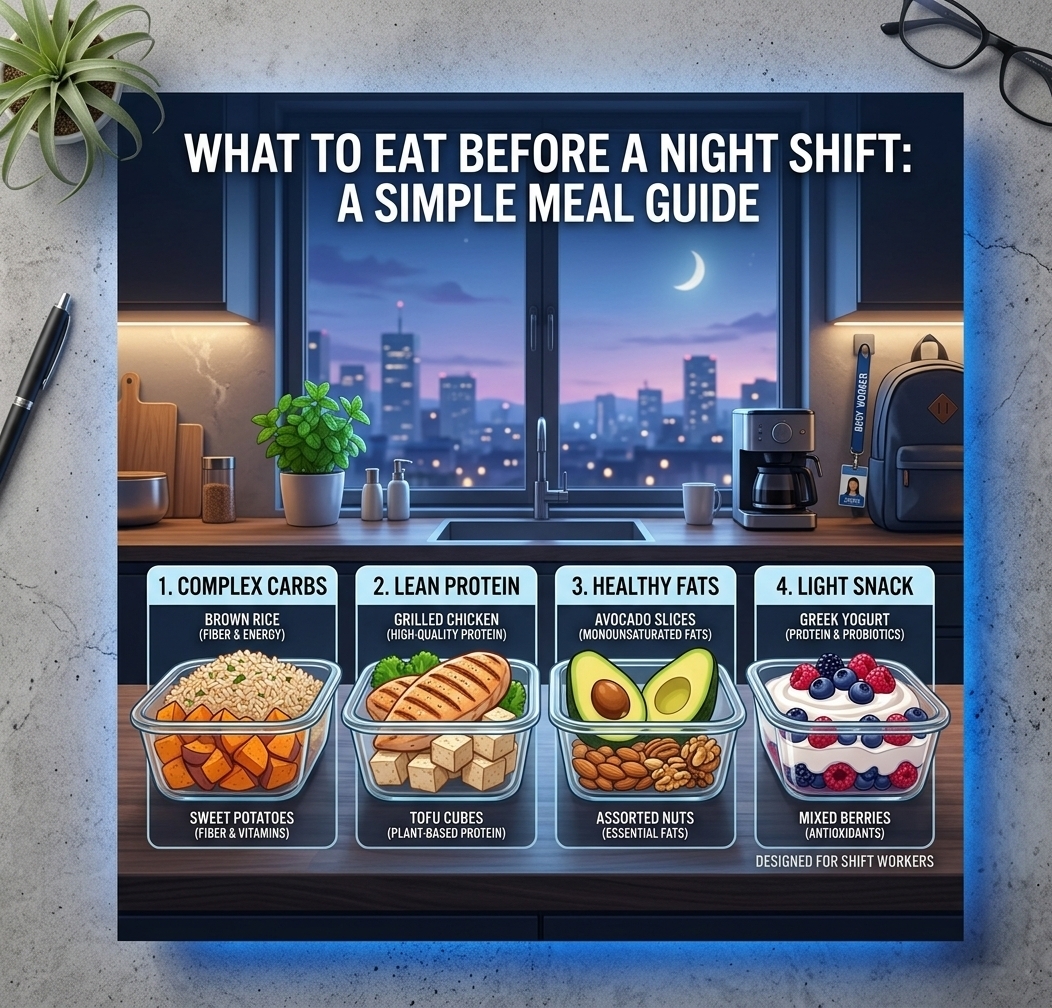
To keep your body ticking through the dark hours, think real food fundamentals that support your natural rhythm:
- Complex carbohydrates like brown rice, oats, and sweet potatoes act as your slow-burning engine, releasing steady energy gradually instead of crashing fast.
- Lean protein keeps hunger noise turned down and prevents sudden blood sugar rollercoasters. Grab chicken, eggs, beans, tofu, or fish to stay fueled.
- Fiber-rich vegetables and fruits put the brakes on fast digestion so your energy stays level and predictable through the middle of the night.
Real choices do not need to be expensive or complicated. Ground your pre-shift fuel in simple, affordable staples that require minimal effort after a long day:
- Grilled chicken breast served alongside a generous cup of brown rice and steamed broccoli or carrots, giving you a steady, slow-burning fuel source that keeps your stomach satisfied during the first half of your night without weighing you down when tasks get heavy.
- Two quick-scrambled eggs loaded onto thick slices of whole-grain toast, washed down with a crisp apple or banana for an easy energy kick that stops that sluggish feeling right when your shift starts.
- A big bowl of thick Greek yogurt stirred up with raw rolled oats and sweet frozen berries, giving you a cold, no-fuss meal that takes zero minutes to throw together when you are running late and racing the clock.
- A warm bowl of lentil or bean soup served with a crusty slice of whole-grain bread and a boiled egg, offering an affordable, budget-friendly option that delivers heavy-duty staying power for tight pockets and demanding work environments.
According to guidance from the National Institute for Occupational Safety and Health (NIOSH), aligning food intake more closely with daylight hours when possible helps reduce metabolic strain. Eating a solid, balanced meal before heading out lowers the urge to overeat greasy or sugary foods during the difficult overnight hours when your gut prefers to rest.
[How to Reset Your Circadian Rhythm for Night Shift Work]
During Your Shift—Timing Snacks to Avoid the 3 AM Crash
Once you are on the clock, your biggest enemy is the late-night slump. Around 3 AM or 4 AM, your body temperature drops and your natural circadian rhythm hits its lowest point.
If you wait until you are starving to eat, you will naturally crave heavy, sugary, or greasy foods that offer a fast spike followed by a hard crash.
Planning ahead solves this. Instead of showing up empty-handed, bring one or two small, deliberate snacks to eat halfway through your shift.
Keep your on-shift food light and protein-focused. Your gut is moving slower overnight, so a massive meal at 3 AM will often leave you feeling sluggish and uncomfortable.
Tossing a few smart items into your locker or lunch box completely changes how you survive a long shift. Try these practical, real-world options:
- Greek yogurt paired with a small handful of fresh berries gives you cool, easy-to-digest protein when your stomach feels resistant to heavy food.
- Hard-boiled eggs paired with a few whole-wheat crackers deliver quick, portable salt and protein without needing a microwave.
- A small handful of raw almonds or walnuts paired with a fresh orange or banana gives you fast natural sweetness paired with slow-burning fats.
- A turkey or hummus wrap sliced completely in half so you can easily eat one side during an early break and save the rest for later.
- A simple peanut butter sandwich on hearty whole-grain bread provides reliable comfort and steady calories when you only have five minutes to sit down.
- A small container of cottage cheese topped with cherry tomatoes or cucumber slices gives you a refreshing, protein-rich bite that does not weigh you down.
When your unit gets slammed and scheduled breaks vanish into thin air, having these quick options sitting right in your bag stops you from starving yourself for eight hours straight. The main goal is never to stuff your stomach full, but rather to keep a small, steady trickle of fuel entering your system so your focus stays sharp.
After Your Shift — Why a Heavy Meal Before Bed Can Backfire
The shift finally ends, and the sun is coming up as you walk out to your car. You are exhausted, and your stomach is rumbling because you kept your on-shift snacks light.
It is tempting to pull into a drive-thru for a heavy breakfast combo, or to cook a massive steak dinner at 7:30 AM before crawling into bed.
For many shift workers, eating a very heavy meal right before sleep leads to restless tossing and turning. When your stomach is working hard to digest a massive amount of food, your core temperature stays elevated, making it much harder to drop into deep, restorative daytime sleep.
At the same time, going to bed completely starving can wake you up two hours later with hunger pangs.
The practical middle ground is a small, easy-to-digest snack or light mini-meal right before sleep. Think of it as a signal to your body that the shift is over and it is time to wind down.
Good post-shift options include:
- A warm bowl of old-fashioned oatmeal splashed with a little milk, giving your stomach something gentle and comforting to process right before you pull the bedroom curtains closed.
- A single slice of whole-grain toast spread with a thin layer of natural peanut or almond butter, offering just enough slow-burning fuel to keep midnight hunger from waking you up two hours into your daytime sleep.
- A quick, light blender smoothie made with plain yogurt, a handful of fresh spinach, and half a banana, making it super easy to sip and digest when you are too tired to chew anything heavy.
- One soft scrambled egg served right on top of a single piece of toast, delivering a tiny touch of savory protein to settle your digestion without keeping your body temperature elevated while you try to rest.
[How to Sleep During the Day After a Night Shift]
A Sample Night-Shift Meal Timeline
It helps to see how all of this looks in actual practice rather than just as a theory. If you are clocking in for a standard 11 PM to 7 AM shift, trying to wing your meals usually ends in disaster by 3 AM. Instead, use a loose timeline that moves the heaviest calories to the start of your day and keeps things light when your body naturally wants to shut down.
- 7:30 PM (Before Work): Sit down and eat your anchor meal before you leave the house. Think of a real dinner: baked chicken breast with a cup of brown rice and some steamed broccoli. This is your main fuel source, eaten while your metabolism can still handle a proper plate of food without bloating your stomach.
- 1:00 AM (Mid-Shift): You are a few hours into the grind, and your energy is starting to wobble. Pull out your first planned snack—a small container of plain Greek yogurt topped with a handful of berries or a bit of granola. It gives you a clean lift without weighing you down.
- 4:00 AM (The Tough Stretch): This is the danger zone. Your body temperature bottoms out, and the exhaustion hits hardest. Fight the urge to raid the vending machine by having a protein-focused bite. A pre-peeled hard-boiled egg and a crisp apple, or a small handful of almonds, will bridge the gap.
- 7:15 AM (Post-Shift): You survived the night, the sun is up, and your brain is screaming for sleep. Resist the temptation to cook a greasy, heavy breakfast that will cause heartburn and ruin your daytime rest. Grab something comforting and light instead, like a small bowl of warm oatmeal or a slice of whole-grain toast with a scrape of peanut butter.
- 8:00 AM – 3:30 PM: Sleep.
This structure keeps your digestive system happy when you are upright and moving, and it lets your gut rest by the time your head hits the pillow.
Writer’s Take — The One Habit That Makes the Biggest Difference
If you change only one thing about your routine, make it this: pack your main anchor meal and a planned snack before you leave your house.
When you rely on work vending machines, gas stations, or fast-food delivery apps at 3 AM, your options are almost entirely refined carbohydrates, sugar, and heavy fats. Your tired brain will almost always choose the quickest, highest-calorie option available.
Taking twenty minutes before your shift to pack a real meal and a piece of fruit removes the guesswork. It saves you money, keeps your energy level steady through the hardest hours of the night, and protects your sleep when you finally get home.
Frequently Asked Questions
1. Should I eat a big meal before a night shift?
Yes. Your largest, most balanced meal should happen 1 to 2 hours before you start working. Your metabolism is still running closer to its normal daytime pace, meaning your body processes complex carbohydrates, protein, and fiber much more efficiently than it will at 3 AM.
2. What snacks keep you awake at night?
Skip the candy bars and look for food that pairs protein with slow-burning carbs. Things like a hard-boiled egg with a few whole-wheat crackers, a small cup of cottage cheese, or a handful of almonds with an apple give you steady fuel instead of a quick spike and a hard crash.
3. Is it bad to eat right before sleeping during the day?
If you shovel down a heavy, greasy meal right before climbing into bed, your stomach is going to rebel. Digestion slows down when the sun comes up, which means heavy food just sits there and leads to heartburn and restless tossing. But don’t starve yourself either, because hunger will jerk you awake two hours later. Keep it small—a piece of toast with peanut butter or a little bowl of oatmeal hits the sweet spot.
4. Does caffeine at the start of a shift ruin daytime sleep later?
Using caffeine during the first half of your shift can help you stay alert, but consuming it during the second half or too close to your shift end will interfere with your ability to fall asleep during the day. Most sleep experts recommend cutting off caffeine at least 6 hours before you plan to go to sleep.
[Shift Work Insomnia: Symptoms and Non-Medication Strategies]
Sources
- NIOSH Training for Nurses on Shift Work and Long Hours – Module 3: Nutrition, National Institute for Occupational Safety and Health (NIOSH), Centers for Disease Control and Prevention (CDC). Link: https://www.cdc.gov/niosh/work-hour-training-for-nurses/smarthours/mod3/
- Timing of meals and 24-hour glucose rhythms during night shift work, PubMed Central (PMC), National Institutes of Health (NIH). Link: https://www.ncbi.nlm.nih.gov/pmc/articles/PMC6483562/

Daniel Carter is the founder of NightShiftWell. He spent over a decade working night and rotating shifts in logistics and warehouse operations before starting this site to share what actually works — and what doesn’t — for staying healthy on an inverted schedule.