Last updated: September 29, 2026
Medically reviewed by: Dr. Emily Carter, MD , Board-Certified Family Medicine Physician
It is 9:15 in the morning. You just locked your car door, walked up the steps, and let yourself into a quiet house after a grueling twelve-hour night shift. Your work boots feel like concrete blocks. Your eyes sting from staring under harsh fluorescent hospital or warehouse lights for half the night. Your brain is totally fried, buzzing with a weird mix of sheer exhaustion and lingering adrenaline.
You peel off your uniform, crawl between the sheets, and pull the heavy blankets over your shoulders. You close your eyes. You wait for sleep to take over.
Instead, your heart rate speeds up. Your mind grabs onto a random work task or an awkward conversation from three hours ago. Outside your window, a delivery truck rumbles down the asphalt, and a sharp beam of morning sunlight leaks right past the edge of your cheap window blinds, hitting you square in the eyes. You stare up at the ceiling fan while the rest of the neighborhood starts a brand new day. You are exhausted, wired, and completely trapped.
If this morning routine feels painfully familiar, you already know the heavy toll of trying to sleep against your body’s natural programming. Standard sleep advice telling you to “just go to bed early” or “drink some chamomile tea” completely fails when you work nights. Shift work disrupts your internal clock in ways that require a completely different strategy.
Why Your Body Battles You on Daytime Sleep
Your body runs on an internal twenty-four-hour master clock called the circadian rhythm. This biological clock takes its primary cues from the sun. When natural daylight hits the receptors in your eyes in the morning, your brain immediately triggers the release of hormones like cortisol. Cortisol is your body’s natural wake-up call, designed to keep you alert, focused, and ready to move.
When you finish a night shift right as the sun comes up, you are fighting millions of years of human evolution. Your brain sees that morning light and decides it is time to hunt, work, or gather. It flat-out refuses to accept that it is actually bedtime just because your shift card says your day is done.
According to diagnostic guidelines published by the American Academy of Sleep Medicine, this biological mismatch makes daytime sleep shorter, lighter, and much more easily interrupted than nighttime rest. You might find yourself waking up every forty-five minutes or feeling like you never quite sink into deep, restorative slow-wave sleep. For a night-shift worker, this lack of quality rest builds up fast. It drains your physical energy, ruins your mood, and leaves you feeling completely foggy before your next shift even begins.
How to Set Up a Bedroom That Actually Works for Daytime Sleep
You cannot rely on pure willpower to force daytime sleep when your biology is screaming at you to stay awake. Your physical environment has to do the heavy lifting. When sunlight and daytime noises bombard your room, your brain stays on high alert.
You need to turn your bedroom into a pitch-black, silent cave. But what matters most when you are on a tight budget or living in a busy apartment complex? If you cannot afford a complete bedroom remodel right now, you must prioritize light control above all else.
The Power of Total Darkness
Sunlight is the ultimate enemy of daytime sleep. Standard cotton curtains let in enough ambient light to trick your brain into staying awake.
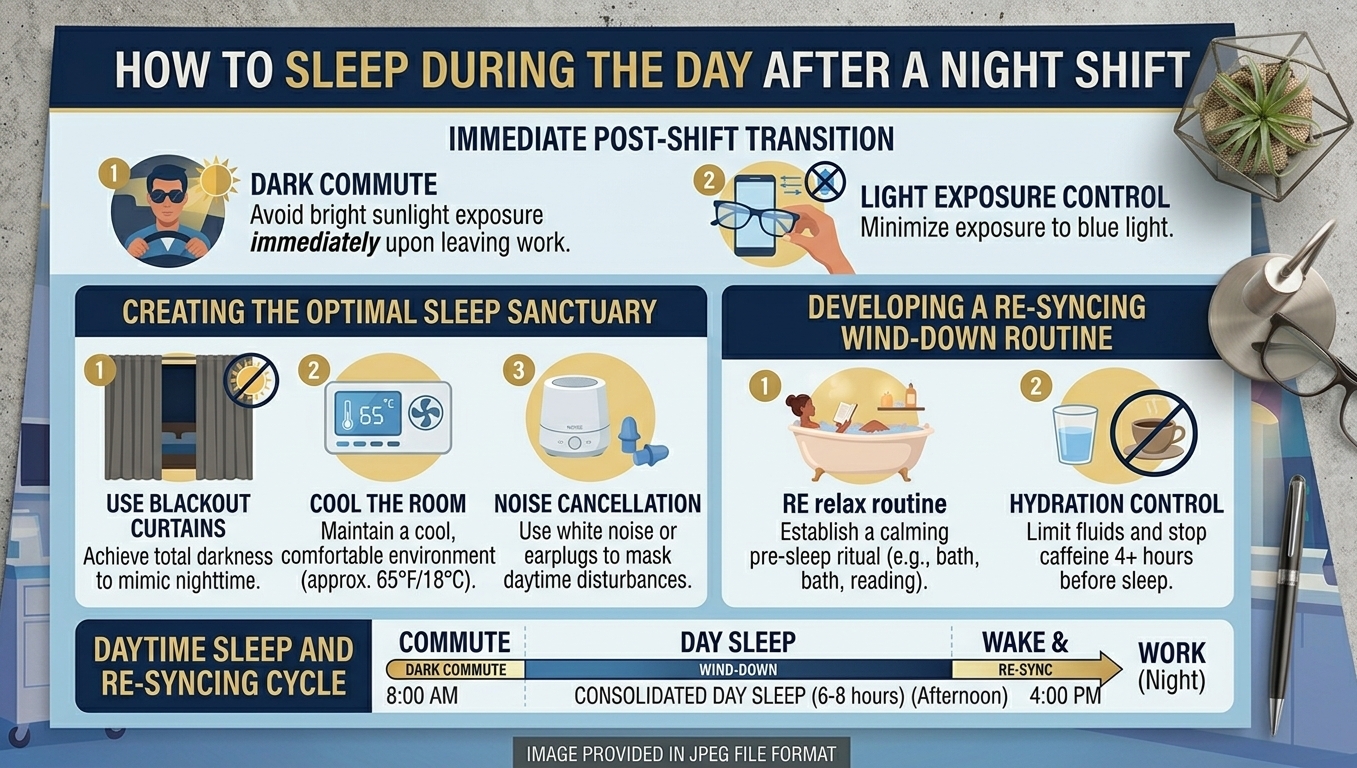
- Hang heavy blackout curtains over your windows, and use painter’s tape to seal the vertical edges if light leaks through the sides of the frame.
- Consider installing temporary blackout window film directly onto the glass to block the glare completely without damaging the rental property.
- If curtains are simply not enough because your windows face direct morning sun, invest in a contoured or weighted sleep mask that blocks light without pressing uncomfortably against your eyelids.
Sound and Temperature Control
Once light is handled, you have to tackle noise and heat. Daytime brings traffic, lawnmowers, barking dogs, and delivery trucks right to your window.
- Run a loud white noise machine or turn on a heavy box fan on high speed to mask sudden outside noises and smooth out the soundscape.
- Wear soft silicone or foam earplugs if neighborhood sounds still pierce through the walls.
- Keep your bedroom cool. Research published by the National Library of Medicine notes that the ideal sleep environment hovers around sixty-five degrees Fahrenheit. Your body naturally drops its core temperature at night, and a cool room helps trigger that biological sleep switch. Open a window slightly if it is quiet outside, or crank up the air conditioning.
Create a Wind-Down Routine That Replaces Normal Bedtime Cues
When you work a traditional day job, your evening commute, dinner with family, and the setting sun act as natural signals that your day is ending. After a night shift, you lose those environmental cues entirely. Driving home in bright morning sunlight tells your brain to wake up, not wind down.
You must create artificial boundaries that tell your body your workday is officially over.
- Wear sunglasses on the drive home: Put on dark sunglasses or blue-light-blocking glasses before you walk out of your workplace doors. This simple step prevents morning sunlight from hitting your eyes and resetting your circadian rhythm too early in the morning.
- Keep your post-shift routine boring: You must avoid checking your phone and scrolling social media. Also avoid paying bills as soon as you get your rest spot. These activities flood your brain with dopamine and stress hormones. Leave your phone in the kitchen or put it on airplane mode.
- Eat a light, smart meal: Heavy, greasy foods cause severe indigestion when you lie down right after eating. Opt for a small, protein-rich snack or a light breakfast instead of a heavy, fatty meal that will keep your digestive system working overtime while you try to sleep.
- Wind down with purpose: Take a warm shower to lower your core body temperature, read a physical book for ten minutes, or do slow, steady breathing exercises on your living room couch before entering the bedroom.
These steps bridge the gap between high-alert work mode and deep sleep mode, making it much easier to transition when your head finally hits the pillow. For more tips on managing your energy levels during these hours, see [How to Stay Alert on a Night Shift].
What to Do on Your First Day Off
The biggest mistake night-shift workers make is trying to flip their schedule back to normal immediately on their first day off. You finish a brutal stretch of night shifts, sleep for four hours, force yourself to stay awake all day so you can sleep at normal nighttime hours, and completely wreck your system in the process.
This rapid flipping causes severe social jetlag. Your body experiences a biological shock similar to flying across multiple time zones every single week.
Instead, protect your rest using a strategic approach:
- On your first day off, take a shorter anchor sleep of about four hours right after you get home, rather than trying to sleep the entire day away.
- Allow yourself a short afternoon nap later in the day if exhaustion takes over, rather than forcing a grueling sixteen-hour waking window that leaves you irritable and exhausted.
- Keep your sleep schedule relatively consistent, even on weekends, to prevent severe exhaustion before your next work cycle begins.
Managing your nutrition and energy drinks during these transition days also matters. Check out [Managing Caffeine During Night Shifts] for more details on keeping your energy stable without ruining your rest.
The Writer’s Real Take—If You Only Do One Thing
If you take away only one piece of advice from this entire guide, make it this: make your sleeping space genuinely dark.
You can tweak your diet, buy fancy pillows, and try every relaxation app on the market, but if morning sunlight is streaming across your face, your brain will refuse to rest deeply. Light is the master controller of your internal clock. When you block out every single ray of sunlight with heavy blackout materials or a high-quality eye mask, you trick your biology into believing it is nighttime.
Everything else is secondary. Lock out the light first, and the rest of your sleep hygiene routine will finally start to work.
Frequently Asked Questions
Is it bad to sleep during the day long-term?
Sleeping during the day goes against human biology, and long-term shift work can strain your metabolic and cardiovascular health. Though, many people manage this schedule successfully by prioritizing strict sleep hygiene, protecting their rest hours, and maintaining a consistent schedule on days off.
How many hours of daytime sleep is enough?
Most of the adults need between seven and nine hours of sleep every twenty-four hours to function properly. Because daytime sleep tends to be lighter and more fragmented, night-shift workers often need to aim for the higher end of that range or use a split-sleep schedule to hit their daily rest goals.
Why do I wake up after 4 hours of daytime sleep?
Your body’s circadian rhythm naturally pushes for wakefulness as the morning progresses into afternoon, regardless of how tired you are. Once your internal biological clock hits its morning activation phase, cortisol rises and body temperature increases, making it very difficult to stay asleep past the four-hour mark without total darkness and sound control.
Does an eye mask actually help you sleep during the day?
An eye mask can significantly improve daytime sleep quality by blocking out ambient light that slips past imperfect window coverings. Look for a contoured or weighted mask that blocks light completely without putting uncomfortable pressure directly on your eyelids.
Closing
Before your next night shift ends, prepare your bedroom ahead of time. Close your blackout curtains, set out your eye mask, and place your phone in another room so notifications cannot wake you up. When you get home tomorrow morning, bypass distractions, slip into your cool, dark sanctuary, and give your body the protected rest it needs.
Sources
- American Academy of Sleep Medicine (AASM): International Classification of Sleep Disorders
- National Center for Biotechnology Information (NCBI) / PubMed: Insomnia in Shift Work Disorder Relates to Occupational and Neurophysiological Impairment
- Joint Consensus Statement of the American Academy of Sleep Medicine and Sleep Research Society: Recommended Amount of Sleep for a Healthy Adult
- Oxford Academic / Occupational Medicine: Preventive and compensatory measures for shift workers

Daniel Carter is the founder of NightShiftWell. He spent over a decade working night and rotating shifts in logistics and warehouse operations before starting this site to share what actually works — and what doesn’t — for staying healthy on an inverted schedule.