Last updated: September 29, 2026
Medically reviewed by: Dr. Emily Carter, MD , Board-Certified Family Medicine Physician
Best Sleep Masks and Earplugs for Daytime Sleep (Buying Guide)
NightShiftWell may earn a commission if you buy through links in this article. This does not affect how we evaluate products or the price you pay.
You walk through your front door at 7:30 AM, dragging your feet after a brutal twelve-hour night shift. You pull your bedroom door shut, slide the drapes across the window, and collapse onto the mattress. But before you even drift off, a sharp needle of morning sunlight cuts straight across your pillow, hitting your closed eyelids like a laser pointer. Worse yet, the cheap fabric strap on your sleep mask has already slid up your crown, leaving your face exposed.
If you work nights, you already know the drill. The world outside is wide awake, loud, and blindingly bright. Finding the best sleep mask for shift workers—paired with a reliable set of earplugs—isn’t a luxury item. It’s a survival tool for your circadian rhythm.
What to Look for in a Sleep Mask for Daytime Use
Sleeping when the sun is blazing requires gear that goes way beyond a flimsy hotel-room freebie. When daytime light hits your room, standard flat cloth masks fail instantly. Photons bleed right through cheap weaves and squeeze past the gap at your nose bridge.
Total Optical Isolation
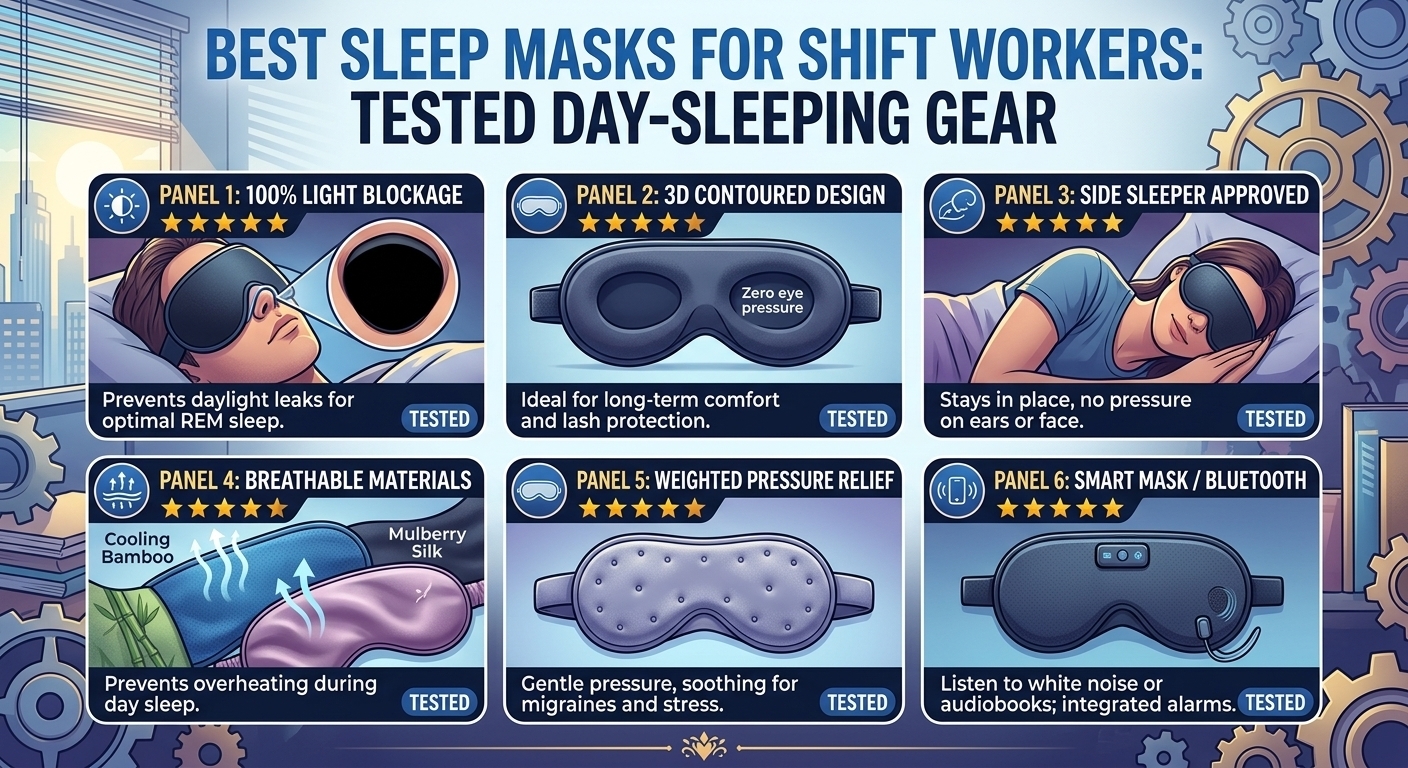
The primary job of a daytime sleep mask is killing light. If a single ray leaks in, your brain’s suprachiasmatic nucleus registers it. That tiny flash tells your body to halt melatonin production, dragging you out of deep rest and pushing you into a restless, fragmented snooze. Look for dense fabrics or molded designs that create a complete blackout seal against your skin.
Eyelid Clearance and the REM Factor
Flat masks press hard against your eyes. When you are sleeping for eight hours after a shift, that steady pressure causes real discomfort and triggers micro-awakenings every time your eyes move during REM sleep. Contoured masks change the game by building hollowed-out eye pockets. Your eyelids get room to flutter freely without fabric rubbing against your eyelashes.
Strap Mechanics
A bad strap ruins a good mask. Single thin elastic bands stretch out in weeks and slip right off your head the second you roll onto your side. Look for wide bands with adjustable buckles or sturdy Velcro that locks onto the back of your head without pulling your hair out or digging into your ears.
Thermal Comfort
Afternoon temperatures in a bedroom always run higher than nighttime lows. Thick foam models can easily turn your face into a sweatbox if they lack proper breathability. Balancing total darkness with airflow is the secret to staying asleep until mid-afternoon.
Top Sleep Mask Picks
We dug into several popular options to see which ones genuinely survive a full daytime sleep cycle without sliding off or causing headaches.
1. Manta Sleep Mask
- Best for: Total customizable blackout and zero eye pressure.
- Why it stands out: Manta uses modular, adjustable foam eye cups that attach to a snag-free strap using micro-hook fasteners. You can slide the individual eye cups closer together or pull them apart to match your exact facial bone structure. The deep, circular eye cavities guarantee your eyelashes never touch the fabric.
- Pros: Total darkness with zero light leakage, no annoying pressure pushing down on your eyelids, easy-to-slide cups you can space out however you like, and a tough strap that won’t snag or pull your hair out.
- Cons: The foam cups add bulk, which can feel awkward for strict stomach sleepers, and the price sits higher than standard retail options.
- Who should buy it: Shift workers fighting severe light leaks who need a completely customized, pressure-free fit.
- Who should skip it: Stomach sleepers or anyone who prefers a thin, minimalist piece of fabric.
2. Lunya Washable Silk Sleep Mask
- Best for: Keeping sensitive facial skin happy and staying cool when your room gets warm.
- Why it stands out: Made completely from washable mulberry silk, this mask breathes naturally so your face doesn’t trap heat the way it does under thick synthetic foam. It also has a wide, silk-wrapped strap that spreads tension flat across the back of your head instead of digging into one spot.
- Pros: Incredibly gentle on skin, lets air circulate naturally, wide band stays put, and feels practically weightless.
- Cons: Because it sits flat against the face, a bit of light can sneak in around your nose bridge, and silk means washing by hand instead of tossing it in the heavy-duty laundry cycle.
- Who should buy it: Side sleepers who hate bulky gear and want a gentle, skin-friendly mask for daytime rest.
- Who should skip it: Workers sleeping in rooms with blazing, unshaded windows who need rigid 3D contours to block every photon.
3. Alaska Bear Natural Silk Sleep Mask
- Best for: Saving cash without buying junk.
- Why it stands out: Everyone from weekend flyers to broke night nurses keeps one of these simple silk masks in their bag. It doesn’t have fancy molded foam cups or plastic adjusters. Instead, you get a straightforward mulberry silk pouch stuffed with a thin layer of cotton padding, held on by a basic elastic strap with a slider.
- Pros: Very affordable, extremely lightweight, easy to pack in a work bag, and gentle on the face.
- Cons: The thin profile lets light filter through lighter-colored fabrics, and the simple elastic strap stretches out after several months of daily washing.
- Who should buy it: New night-shift workers testing out whether they can actually sleep with something strapped to their face.
- Who should skip it: Anyone who needs heavy-duty blackout power in a brightly lit bedroom.
4. Nidra Deep Rest Eye Mask
- Best for: Contour performance on a sensible budget.
- Why it stands out: You get molded eye sockets that feel like a high-end mask without paying a crazy price. It is built from a single piece of lightweight sculpted foam held on by an adjustable strap.
- Pros: Keeps fabric off your eyelashes, weighs next to nothing, and shuts out daylight completely.
- Cons: The molded edges can leave faint indentations on your skin if you pull the strap too tight, and foam durability drops over long-term use.
- Who should buy it: Side sleepers on a budget who want deep eye cups instead of a flat fabric blindfold.
- Who should skip it: People with sensitive skin who prefer natural silk over synthetic molded foam.
What to Look for in Earplugs
Blocking light is only half the battle when you try to sleep at noon. Daytime brings delivery trucks, neighborhood dogs, lawnmowers, and family members walking around the house—noises your brain flags as threats because it knows the sun is up.
When shopping for earplugs, check the Noise Reduction Rating, usually abbreviated as NRR and measured in decibels. But here’s a trap: a higher NRR number doesn’t automatically mean a better experience for sleeping. The plugs with the highest ratings are often thick, industrial foam cylinders that jam into your ear canal and cause dull aches over an eight-hour stretch.
Side-sleeper comfort is critical. If an earplug sticks out even a fraction of an inch, pressing your ear against a firm pillow drives the plug inward, creating sharp pain that wakes you instantly.
Decide between reusable silicone flanges and disposable foam plugs. Reusable options clean easily and last for months, while soft foam plugs often achieve a tighter acoustic seal if rolled down correctly. Always pick a snug, comfortable fit over maximum decibel reduction. If your earplugs hurt, you’ll yank them out in your sleep without realizing it.
Top Earplug Picks
1. Loop Quiet Earplugs
- Best for: Comfortable, reusable noise reduction for side sleepers.
- Why it stands out: Molded from soft, flexible silicone, Loop Quiet plugs sit entirely flush inside the bowl of your ear without sticking out. Because there’s no hard stem poking outward, you can rest your ear directly on a firm pillow without feeling pressure.
- Pros: Outstanding side-sleeper comfort, reusable and washable, and ships with multiple silicone tip sizes for a custom fit.
- Cons: They don’t block out 100% of sharp, sudden impacts like loud yelling or close construction work.
- Who should buy it: Shift workers who sleep on their sides and need a comfortable, reusable earplug for daily daytime use.
- Who should skip it: People working in deafening industrial zones who need maximum decibel crushing.
2. Mack’s Ultra Soft Foam Earplugs
- Best for: Maximum noise reduction on a budget.
- Why it stands out: Mack’s uses a soft, squishy foam that rolls down skinny and expands slowly once it’s tucked inside your ear, creating a tight plug that keeps the daytime racket out. This creates a tight, reliable acoustic seal that cuts down harsh daytime street noise significantly.
- Pros: High NRR rating, very inexpensive per pair, and molds easily to different ear canal widths.
- Cons: They are disposable and get gross if reused too many days in a row; some users find foam warm during summer months.
- Who should buy it: Workers living on loud, busy urban streets who need the highest possible sound dampening.
- Who should skip it: Anyone with narrow ear canals who finds standard foam plugs irritating or hard to roll down.
3. Mack’s Pillow Soft Silicone Earplugs
- Best for: Anyone who hates jamming plugs inside their ear canal.
- Why it stands out: Rather than stuffing a cylinder deep down into your ear, these are soft silicone putty blobs that you flatten right over the outer bowl of your ear. They stay entirely on the outside while forming a tight, molded seal.
- Pros: Zero pressure inside the ear canal, highly customizable shape for odd ear shapes, and very comfortable for side sleepers who hate hard plugs.
- Cons: They pick up pocket lint and dust easily, meaning you have to swap them out sooner, and they can feel a bit tacky if your hands aren’t clean when putting them in.
- Who should buy it: Shift workers with inner-ear sensitivity or frequent ear canal irritation.
- Who should skip it: Heavy restless sleepers who toss and turn, as putty plugs can occasionally dislodge against a pillow.
[How to Sleep During the Day After a Night Shift]
Comparison Table
| Product | Best for | Key strength | Main drawback |
| Manta Sleep Mask | Total blackout & zero eye pressure | Customizable modular eye cups | Bulky for stomach sleepers |
| Lunya Silk Mask | Skin comfort & breathability | 100% washable mulberry silk | Minimal nose bridge profile |
| Loop Quiet | Side-sleeper earplug comfort | Flush-fitting soft silicone | Lower noise reduction than foam |
| Mack’s Ultra Soft | Maximum noise reduction | High-density foam acoustic seal | Disposable and single-use focused |
My Pick for Someone Starting From Zero
If you are a new night-shift worker starting with zero gear and need a reliable setup right away, pair the Manta Sleep Mask with the Loop Quiet Earplugs.
This combination tackles both sensory hurdles without compromise. The Manta mask lets you slide and adjust the eye cups to match your exact face shape, guaranteeing zero light leaks and no annoying eye pressure during long daytime sleep blocks. Meanwhile, the Loop Quiet earplugs soften daytime traffic and household sounds while sitting completely flat in your ears, ensuring you won’t wake up with sore ear cartilage from sleeping on your side.
[Best Blackout Curtains for Day Sleeping]
Frequently Asked Questions
Are contoured sleep masks better than flat ones?
Yes, especially if you need to sleep through broad daylight. Contoured masks have built-in eye cups so the fabric never actually touches your eyelids or eyelashes. That extra space lets your eyes flutter naturally during deep REM sleep without rubbing against cloth, which keeps you from waking up every time you shift positions.
Can earplugs be used every day safely?
For most people, yes. The main thing is keeping them clean so you don’t trap bacteria or push earwax deep into your ear canal. Wash silicone plugs with warm water and soap every few days, toss cheap foam ones out when they get dirty, and never jam them in too deep. If your ears start itching or feeling sore, give them a break for a night or two.
Do noise-cancelling headphones work better than earplugs?
Noise-cancelling headphones excel at neutralizing low-frequency humming sounds like air conditioners or distant traffic, but they are generally impractical for sleep. Their rigid headbands and bulky earcups create severe pressure points when you lie on your side, and battery limits prevent them from running through an entire eight-hour daytime sleep window. Soft silicone or foam earplugs remain the more comfortable, reliable choice for actual bed rest.
Sources
- Sleep Foundation — Light Exposure and Sleep: sleepfoundation.org/sated/light-exposure-and-sleep
- Centers for Disease Control and Prevention (CDC) — Noise and Hearing Loss Prevention: cdc.gov/nceh/hearing_loss/
- National Institute for Occupational Safety and Health (NIOSH) — Noise and Hearing Loss Prevention: cdc.gov/niosh/topics/noise/

Daniel Carter is the founder of NightShiftWell. He spent over a decade working night and rotating shifts in logistics and warehouse operations before starting this site to share what actually works — and what doesn’t — for staying healthy on an inverted schedule.