Last updated: September 29, 2026
Medically reviewed by: Dr. Emily Carter, MD , Board-Certified Family Medicine Physician
Sunlight hits as your shift ends, and quiet texts remind you of what you missed. Protect your mood, connect with friends, and know when to seek help.
You lock up your station at six in the morning while the rest of the world is still asleep. Walking out to your car, you check your phone and see messages about a family dinner, a birthday gathering, or a casual weekend get-together that happened while you were at work. You couldn’t attend because you were on the clock. Moments like that make you feel like your entire life is happening in a completely different time zone from everyone else.
Why Shift Work Can Be Linked to Mood Changes
Working overnights forces you to fight your biology every single day. Trying to sleep while the sun is up forces you to fight your own biology. Your body clock expects rest in the dark and alertness in the light, meaning daytime sleep always goes against the grain.
Working irregular hours wears you down. Science shows that swapping day for night messes with your mood, drains your energy, and chips away at your emotional stamina, which is indeed bad for health. When you’re constantly running on fumes and broken sleep, it takes a heavy toll.
Occupational health data reveals that night workers report much higher rates of fatigue, irritability, and depressive symptoms than people on standard daytime schedules.
Even so, experts are quick to point out that working overnights doesn’t automatically mean a person will develop clinical depression. Instead, a heavy combination of daily pressures stacks the deck:
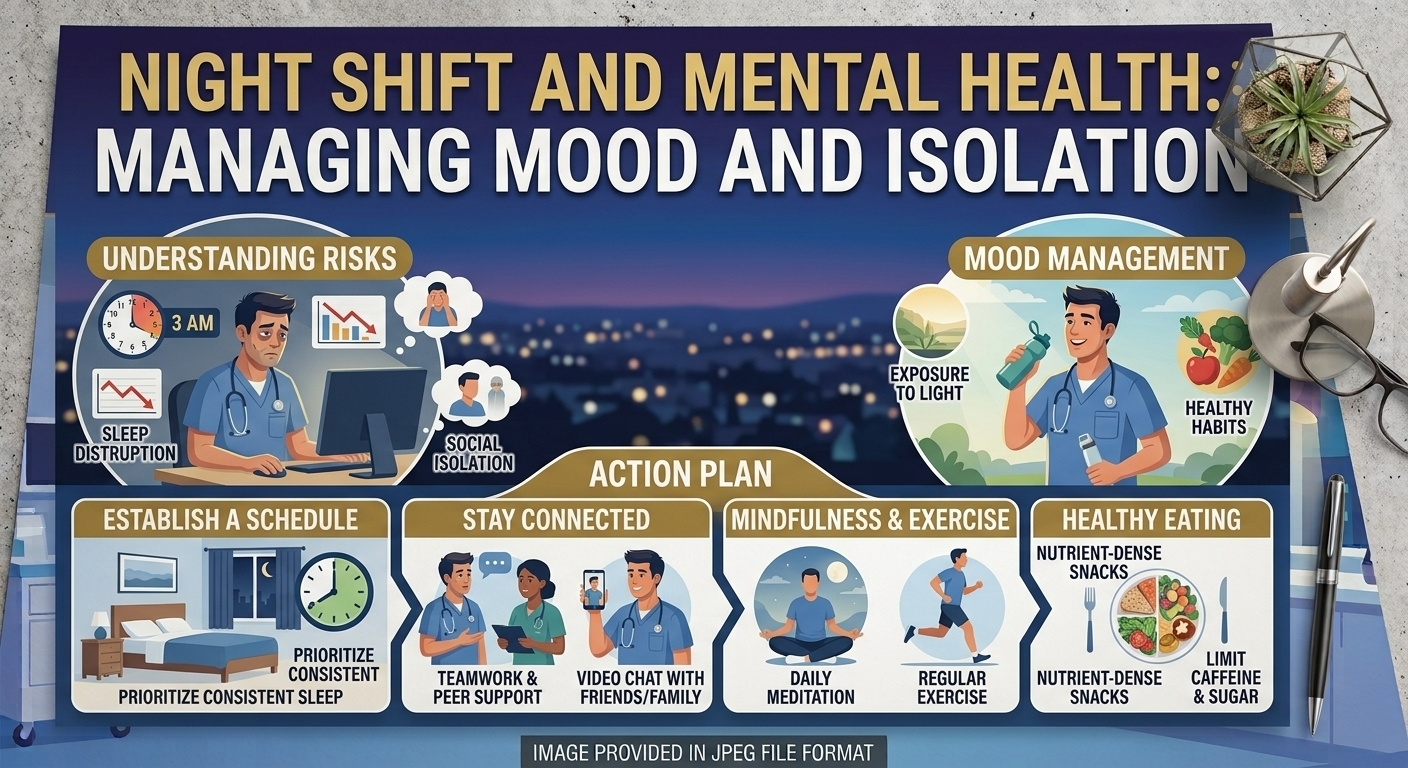
- Disrupted sleep: When you’re constantly exhausted, your brain simply can’t process daily stress or keep your emotions on an even keel.
- Social isolation: Because your free hours happen when everyone else is working or sleeping, you miss out on the casual hangouts that keep you tethered to friends and family.
- Routine challenges: Grabbing food at normal hours, or hitting the gym, feels like pushing a boulder uphill.
- Constant fatigue: Going to work on an empty stomach shift after shift drains your emotional tank day by day until you’re completely wiped out internally.
It’s completely normal to feel lonely or worn down after a brutal stretch of shifts. Temporary stress isn’t a mental health diagnosis. But when those heavy, draining feelings refuse to lift after weeks, they deserve your attention.
Practical Ways to Protect Your Mental Health on a Night Schedule
Running your life backward means you can’t leave your well-being to chance. Protecting your mental health on a night schedule takes deliberate, daily planning.
Forget trying to squeeze your life into a standard 9-to-5 calendar. It only burns you out.
Instead of that, try these practical ways to stay close to:
- Protect your daytime sleep: Set a strict, non-negotiable schedule for your rest. Your brain needs those solid hours of quiet to process heavy emotions and keep you sharp on the floor.
- Catch some daylight: Step outside for a quick walk or sit near a bright window right when you wake up in the afternoon to anchor your body clock.
- Schedule social time: Stop waiting for a random invite that matches your hours. Put one predictable call or coffee date on the calendar every single week.
- Keep steady meals: Eating balanced food at regular intervals stops the heavy physical slump that comes from erratic eating habits.
- Move your body: Toss in a ten-minute walk or light stretch to release the physical tension that piles up during a long shift.
These small habits won’t erase the tough reality of working nights. Instead, they act as steady anchors for your mind and body before the stress gets too heavy.
For more guidance on managing your daytime rest, take a look at our guide on [How to Sleep During the Day After a Night Shift].
Staying Connected to People on a Normal Schedule
The hardest part of working nights is often the social gap. When your friends and family are eating dinner, you are heading to work. When you are waking up in the afternoon, they are wrapping up their workdays.
Trying to attend every single daytime event will only leave you exhausted and frustrated. You don’t have to choose between keeping your job and keeping your friends.
Avoid trying too hard to match the calendar of others; try these realistic approaches:
- Draw clear boundaries: Tell your close family and friends when you sleep. Make sure they know you’re completely unreachable during those hours.
- Lean on voice notes: Shoot a quick audio clip or snap a random photo during your shift. Friends can listen and hit you back whenever they’re free.
- Keep your circle tight: Focus on nurturing one or two solid friendships instead of wearing yourself out trying to catch up with a crowd.
- Schedule breakfast dates: Meet a friend for coffee or breakfast right after your shift ends, before they start their busy workday, when your schedule allows.
Missing an event doesn’t mean you are failing socially. It just means your current schedule requires a different way of staying in touch.
If you want more ideas on keeping relationships strong, read [How to Have a Social Life Working Night Shifts].
When Low Mood Is More Than Just “Shift Work Blues”
It is easy to brush off feeling drained, sad, or irritable as just part of working nights. Sometimes those heavy feelings cross a line into something deeper.
Look out for the red flags that go way beyond regular work exhaustion through out your day:
- That heavy, dragging sadness sticking around even when you’re off the clock and trying to unwind.
- Not caring about the hobbies or pastimes you used to love.
- Sleep patterns getting completely wrecked beyond normal shift changes.
- Your appetite dropping off a cliff or fluctuating wildly out of nowhere.
- A dark sense of hopelessness or feeling like nothing matters in the real life in which we need to live.
- Struggling to function on the job or keep up with basic tasks at home.
- Pulling completely away from friends and family.
Feeling lonely after a grueling shift makes total sense. But when those symptoms stick around, grow worse, or mess with your daily life, it’s time to take a closer look.
Seeking Professional Help
If low mood hangs on, gets worse, or makes it tough to push through your shift, reach out to a healthcare provider or a licensed mental health counselor. Asking for support is a practical move, not a weakness. A qualified expert can help figure out if your struggle comes from brute exhaustion, circadian stress, or something deeper like clinical depression.
You don’t have to wait until you hit rock bottom to talk to someone. If you feel like you’re merely existing instead of actually living, setting up a chat with a doctor or therapist gives you a lifeline.
If you are in immediate danger, feel unable to keep yourself safe, or are having thoughts of self-harm or suicide, please reach out for immediate help. You can contact your local emergency services or call or text a dedicated crisis line in your region, such as the 988 Suicide & Crisis Lifeline in the United States and Canada, or contact emergency services in your local country.
Writer’s Take
My top recommendation for any night-shift worker is to schedule one predictable, low-effort social connection every single week. Whether it is a ten-minute phone call with your parent during your commute home or a quick coffee date once a week, put it on the calendar like an appointment. Working nights isolates you by default. Fighting that isolation requires deliberate, small actions that remind your brain you are still part of the real world.
Frequently Asked Questions
Is it normal to feel down working nights?
Yes, feeling tired, irritable, or occasionally low in mood is a common experience when working against your body’s natural circadian rhythm. The disruption to your sleep and social life naturally affects your emotional energy.
Does shift work cause depression or make it worse?
Research points to a clear link between overnight schedules and higher rates of depressive symptoms. Chronic sleep loss and feeling cut off from others drive most of that weight. Even so, working nights doesn’t automatically mean someone will face clinical depression.
How do I know if I need to talk to someone?
If sadness, bone-deep exhaustion, or hopelessness hang around even on your days off, pay attention. When those heavy feelings start messing with your job, your relationships, or your ability to handle basic daily tasks, it’s time to reach out to a healthcare professional.
Can lifestyle changes cure shift-related mood drops?
Solid habits like guarding your daytime sleep, eating decent meals, and keeping up with friends will prop up your well-being. Still, they aren’t a replacement for professional treatment when you’re dealing with clinical depression.
Sources
- Centers for Disease Control and Prevention (CDC): Mental Health and Coping During Shift Work
- PubMed: Shift Work and Depressive Symptoms Among Workers
- 988 Suicide & Crisis Lifeline: About the Lifeline

Daniel Carter is the founder of NightShiftWell. He spent over a decade working night and rotating shifts in logistics and warehouse operations before starting this site to share what actually works — and what doesn’t — for staying healthy on an inverted schedule.