Last updated: September 29, 2026
Medically reviewed by: Dr. Emily Carter, MD , Board-Certified Family Medicine Physician
Safe Driving After Night Shift | NightShiftWell
Wondering how exhaustion affects your morning commute, how to spot the warning signs before you get behind the wheel, and what you can do to get home safely without putting your life at risk?
You finish your shift at seven in the morning, change out of your scrubs, and walk out into the quiet parking lot. The sun is just starting to clear the horizon, but your body feels heavy, drained, and sluggish. You have a twenty-minute drive ahead of you, and your brain immediately reaches for the familiar excuse: just push through it, get in the car, and sleep when you finally hit your bed.
Why the Drive Home Can Be the Most Dangerous Part of a Night Shift
Working right through the dark hours goes directly against your biology. When you clock out after an overnight shift, you have usually been awake for sixteen to twenty-four hours straight. That long stretch of wakefulness triggers a powerful, biological demand for rest.
At the same time, the early morning hours trigger a natural drop in your circadian rhythm. This early morning low is a time when your body temperature falls, your alertness plummets, and your brain desperately wants to shut down.
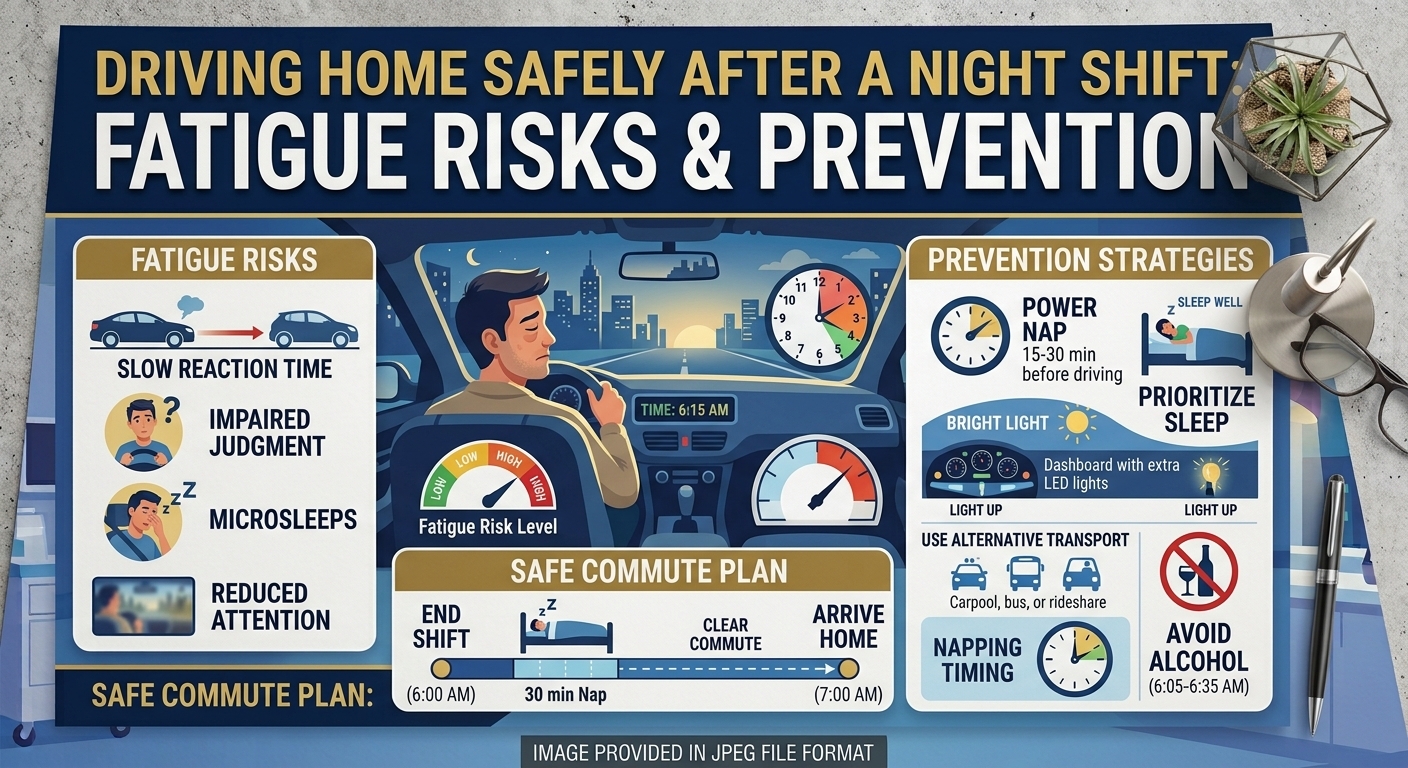
When those two forces collide at the end of a long shift, your driving suffers. Fatigue slows your reaction time, ruins your focus, and makes it hard to track what is happening around you. You might roll past a red light, fail to notice the brake lights flashing ahead of you, or drift across lane markers without even realizing it.
One of the most dangerous results of extreme exhaustion is a microsleep. A microsleep is a brief, unintended blackout that lasts anywhere from one to five seconds. During that window, your brain simply checks out, even though your eyes might stay open. At highway speeds, a three-second microsleep means you pilot a moving vehicle blind for the length of a football field.
Many tired workers assume they can outsmart fatigue by turning up the radio or rolling down the window. But severe sleep deprivation clouds your judgment. It tricks you into thinking you are completely fine, making it tough to see how impaired you actually are.
According to the National Highway Traffic Safety Administration (NHTSA), drowsy driving causes tens of thousands of crashes and hundreds of deaths each year. Traffic safety experts point out that these numbers are likely low because drivers rarely admit to falling asleep at the wheel after an accident.
The Centers for Disease Control and Prevention (CDC) notes that staying awake for twenty-four hours impairs your cognitive performance as much as having a blood alcohol concentration (BAC) of 0.10%. That level sits well above the legal driving limit. Driving home after a brutal night shift puts you right in that danger zone.
Concrete Pre-Drive Checks — Are You Actually Fit to Drive?
Before you turn your key in the ignition, check your condition honestly. Leave your ego and your daily habits at the door.
Look out for these red flags of severe fatigue:
- Your eyelids feel heavy, burning, or hard to keep propped open.
- You find yourself yawning over and over again.
- Your head nods or feels too heavy to keep straight.
- You catch yourself drifting out of your lane or tailgating.
- You miss your usual turns, exits, or familiar road signs.
- Your thoughts feel foggy, scattered, or irritable.
- You cannot remember the last few minutes of your drive.
Passing this mental check does not mean you are in the clear, because extreme tiredness messes with your self-awareness. But if you spot any of these warning signs before you leave the parking lot, stop right there.
Use this simple rule: If you are already struggling to stay awake before you pull out of the lot, do not rely on luck or willpower to get you home.
Practical Alternatives to Driving Home
If your pre-check tells you that you are too exhausted to drive, you need a backup plan. Forcing yourself onto the road puts your life and everyone else’s at risk.
If you realize you shouldn’t be behind the wheel, you have a few solid ways to handle it instead of taking a reckless gamble:
- Book a rideshare or taxi: Dropping twenty bucks on an Uber feels annoying when you just want your own bed, but it costs a whole lot less than a totaled car or a hospital bill.
- Team up with a coworker: Find someone who lives in your neighborhood and set up a rotating carpool so you can share the overnight driving load.
- Call in backup: Shoot a text to a roommate, partner, or family member before your shift ends and ask them to come scoop you up.
- Hop on public transit: If buses or commuter trains are running at dawn, use the ride to catch up on sleep instead of fighting your own eyelids.
- Crash in a workplace rest room: If your building has a designated call room, quiet lounge, or empty office space, use it to grab some solid rest before you even touch your car keys.
If you decide to sleep right there in your vehicle, make sure you park in a genuinely safe, well-lit, and legal spot—like an official rest stop or a business parking lot where overnight parking is completely fine.
Do not pull over onto a highway shoulder or a busy roadside, as parked cars on active shoulders face a massive risk of rear-end crashes.
A short power nap of twenty to thirty minutes can give you a temporary boost if your fatigue is mild. But a short nap is not a cure. If you wake up feeling just as foggy, heavy-eyed, and exhausted as before, do not use that nap as an excuse to drive. You still need more rest or a different ride home.
What to Do If You Feel Yourself Fading at the Wheel
Sometimes exhaustion sneaks up on you after you are already on the road. You might feel okay leaving the lot, but ten minutes down the highway, the heavy sleepiness hits.
If you notice yourself fading while driving, take immediate action:
- Do not try to push through the rest of the trip.
- Do not rely on blasting loud music, turning on the AC, or rolling down the window. Those tricks offer a brief distraction, but they do not reverse sleep deprivation or stop microsleeps.
- Do not convince yourself that you are almost home so you can make it.
The only safe response is to find a safe, legal place to pull off the road—such as a gas station, grocery store parking lot, or rest stop—as fast as possible. Once your car is parked, turn off the engine, lock your doors, and figure out a better way to finish your trip. Call a friend, request a rideshare, or rest until you are genuinely alert.
Remember that caffeine has hard limits. While a cup of coffee can help if you feel a little groggy, it cannot fix severe sleep debt, restore slow reaction times, or stop your brain from slipping into sudden microsleeps.
Writer’s Take
If you are nodding off, drifting across lanes, or struggling to keep your eyes open, pull over somewhere safe and legal rather than trying to finish the drive. This is the single most important rule of the night shift commute. No job, no schedule, and no desire to get into your own bed is worth your life. Drop the tough-guy routine and treat your commute home with the serious safety respect it demands.
Frequently Asked Questions
How dangerous is drowsy driving really?
Drowsy driving slows down your reaction time, ruins your judgment, and causes dangerous lapses in attention. Severe sleep deprivation can make your driving impairment match or exceed the legal limits of alcohol intoxication.
Is it safe to nap in my car before driving?
Taking a nap in your car can help restore some alertness if you use a safe, legal parking spot like a designated rest area. However, it does not cure severe exhaustion, and you should not drive if you still feel foggy or heavy-eyed after waking up.
What are the warning signs that I’m too tired to drive?
Key warning signs include heavy eyelids, frequent yawning, head nodding, drifting out of your lane, missing turns, and having trouble remembering the last few minutes of your journey. Catching these signs means you should stop driving immediately.
What should I do if I have no ride home and cannot stay awake?
Pull into a well-lit public lot or an official rest stop, lock your doors, and give your body the rest it’s begging for. If a short nap does not clear your head, use a rideshare service, public transit, or call a friend or family member to pick you up.
Sources
- National Highway Traffic Safety Administration (NHTSA): Drowsy Driving Research and Statistics
- Centers for Disease Control and Prevention (CDC): Drowsy Driving: Sleepfulness and Highway Safety

Daniel Carter is the founder of NightShiftWell. He spent over a decade working night and rotating shifts in logistics and warehouse operations before starting this site to share what actually works — and what doesn’t — for staying healthy on an inverted schedule.